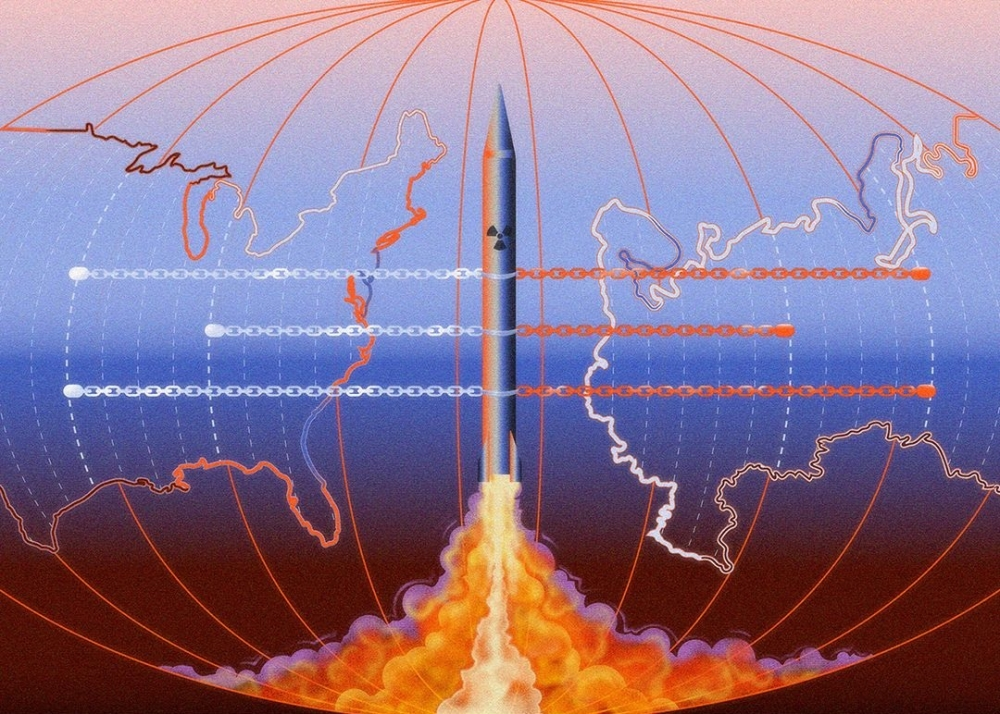
Amid escalating geopolitical tensions, NATO has issued an urgent call for restraint and responsibility following the de facto collapse of the New START treaty, the last remaining bilateral nuclear arms control agreement between the United States and Russia. This call comes at a critical juncture, as the world faces a vacuum in strategic arms control mechanisms for the first time in decades.
News agencies quoted a NATO official on Thursday as saying that “restraint and responsibility in the nuclear sphere are essential for global security.” The official noted that the alliance is closely monitoring Russia and China’s significant modernization and enhancement of their nuclear capabilities, and affirmed that NATO “will continue to take all necessary steps” to ensure its security, defense capabilities, and deterrence in the face of this new reality.
Historical background: The end of an era of strategic stability
The New START Treaty, signed in 2010 by Presidents Barack Obama and Dmitry Medvedev, represents the culmination of decades of diplomatic efforts that began during the Cold War to reduce the risk of nuclear confrontation. The treaty placed verifiable limits on the world’s two largest nuclear arsenals, capping deployed strategic warheads at 1,550 and deployed missiles and launchers at 700. Crucially, it established a robust system of mutual verification, including on-site inspections, providing transparency and predictability regarding the other party’s behavior.
However, this security edifice began to crumble when Russia announced in February 2023 that it was suspending its participation in the treaty, accusing Washington of violating the spirit of the agreement by supporting Ukraine. Although the treaty was officially scheduled to expire in 2026, Moscow's decision halted all verification activities, rendering the treaty meaningless and effectively ending its implementation.
Expected impact: Fears of a three-dimensional arms race
The collapse of New START raises serious concerns both regionally and internationally. Internationally, the absence of restrictions opens the door to a new and costly arms race between Washington and Moscow. Without transparency mechanisms, each side may resort to assuming the worst about the other's intentions, leading to increased spending on developing and expanding nuclear arsenals.
The landscape is further complicated by China’s rapid rise as a major nuclear power. Beijing, which has never been a party to any arms control treaties, is expanding its arsenal at an accelerated pace. The United States has long called for China’s inclusion in trilateral talks, a proposal Beijing has consistently rejected. Now, with no agreement between the two largest nuclear powers, it is becoming increasingly difficult to persuade China to join any future arms control framework, potentially ushering in an era of unregulated, three-dimensional strategic competition.
This situation places NATO allies, particularly in Europe, in a more precarious position, as they face a less stable and more uncertain security environment on their eastern borders. The alliance's call for restraint underscores the widespread concern that this strategic vacuum could lead to miscalculation or unintended escalation in the future.