In a move reflecting escalating international competition in the Arctic, NATO Secretary General Mark Rutte held strategic talks with US President Donald Trump, described as "very productive." These talks focused on establishing a joint framework aimed primarily at strengthening Greenland's strategic and economic security and preventing any expansion of Russian or Chinese influence in this vital region.
Details of the new Atlantic move
NATO spokeswoman Alison Hart confirmed that the discussions are paving the way for broader negotiations involving the United States, Denmark, and the self-governing government of Greenland. The stated goal is to ensure that Beijing and Moscow cannot gain a foothold, whether military or economic, on the world's largest island. Hart indicated that the focus will be on collective security in the Arctic, in cooperation with the "Seven Allies" in the region (the United States, Canada, Denmark, Norway, Iceland, Sweden, and Finland), implicitly excluding Russia, the eighth member of the Arctic Council.
The strategic importance of Greenland
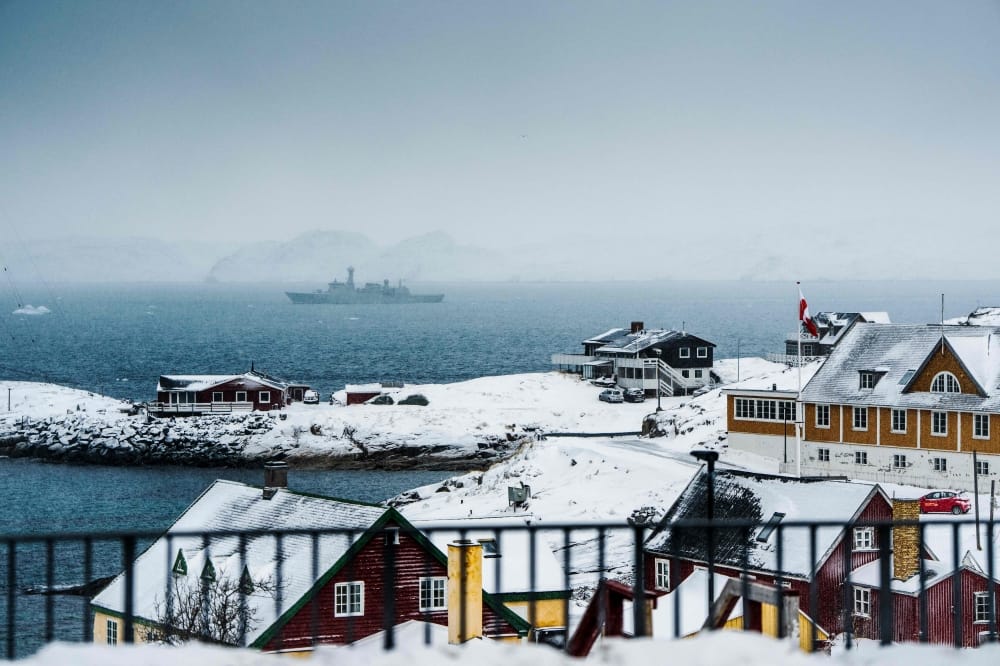
Greenland's importance stems not only from its vast size but also from its crucial geopolitical location between North America, Europe, and Russia. Historically, the island hosted the U.S. Thule Air Force Base (later renamed Petavik Space Base), a cornerstone of the U.S. and NATO missile early warning system since the Cold War. With the melting ice due to climate change, the island now overlooks new shipping lanes that could shorten global trade routes, further increasing its logistical value.
China and Russia's ambitions in the Arctic
These Western moves come in response to increased activity in the Eastern Arctic. In recent years, Russia has modernized its military arsenal in the North, reopened old Soviet bases, and deployed a large fleet of icebreakers. Meanwhile, China describes itself as a "near-Arctic country" and seeks to integrate the region into its Belt and Road Initiative through what it calls the "Polar Silk Road." Chinese companies have also shown significant interest in investing in infrastructure and mining Greenland's abundant rare earth elements, which are vital to the technological and military industries.
A shift in US policy
This approach represents an evolution in US policy towards the island. After President Trump sparked diplomatic controversy in his first term by suggesting he would "buy" Greenland, the current approach appears more pragmatic, focusing on security and economic partnerships with Denmark and local authorities in Nuuk (Greenland's capital) to block tempting Chinese investments and ensure the region remains exclusively under Western security umbrella.