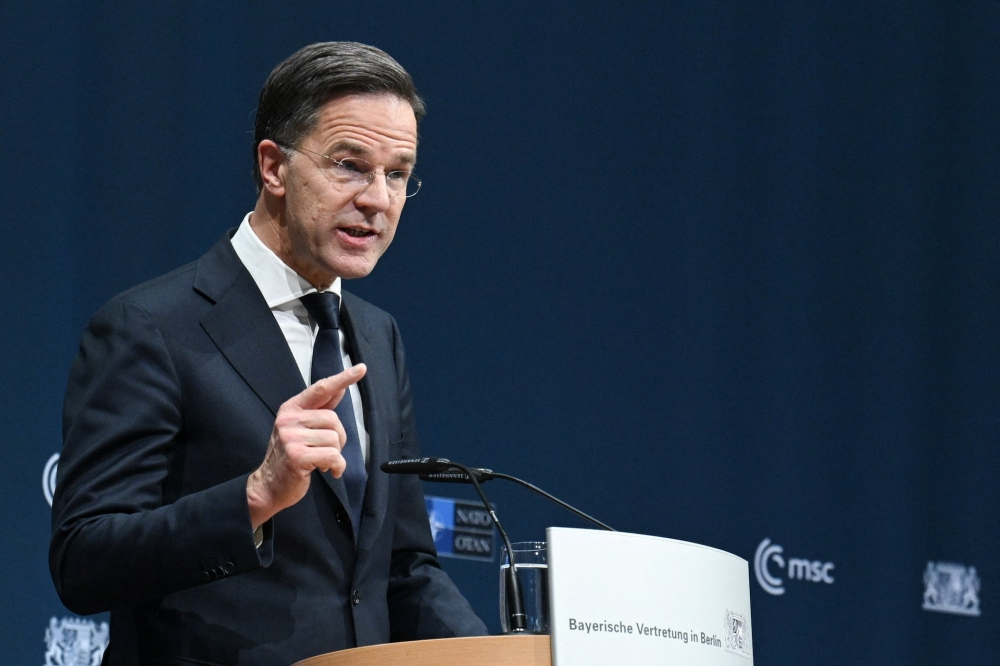
NATO Secretary General Mark Rutte affirmed that reaching a US-European consensus on a plan to end the war in Ukraine would be a pivotal moment and a crucial test of Russian President Vladimir Putin's commitment to peace. These remarks came amidst intense international diplomatic efforts to try to end the conflict that has been ongoing since February 2022.
Testing Russian intentions
In a speech delivered in the German capital, Berlin, Rutte pointed out that the recent history of the conflict shows that the Kremlin has only engaged in negotiations tactically. He said: “So far, Russian President Vladimir Putin has only acted as a mediator or negotiator when it served his military interests, often to buy time to regroup and continue the war.”.
Observers believe that this statement comes in the context of increasing Western pressure to force Moscow to reveal its cards, either to accept a serious political path or to bear responsibility for the continued attrition before the international community.
Trump's role and the controversial proposal
Rutte addressed the pivotal role of US President Donald Trump, describing him as “the only person capable of forcing Putin to the negotiating table,” given Trump’s stated desire to immediately end the bloodshed. These remarks come in the wake of Ukrainian officials announcing they have sent a revised plan to Washington to end the invasion, based primarily on a 28-point proposal Trump presented last month.
The original plan had sparked widespread reservations in Kyiv and among European allies, as it included clauses interpreted as painful concessions, including Ukraine giving up territories not fully controlled by Russia, which Ukraine considered an excessive accommodating of Russian demands that infringed on its national sovereignty.
Chinese support and the balance of power
The NATO Secretary General did not overlook the broader geopolitical dimension of the conflict, pointing the finger at Beijing. Rutte asserted that China is the “lifeline” of the Russian military machine, stating, “Without China’s support, Russia would not be able to continue this war.”.
Although China officially declared a position of neutrality and refrained from condemning the Russian invasion, the growing trade and economic partnership between Moscow and Beijing helped to mitigate the impact of Western sanctions on the Russian economy, enabling the Kremlin to continue funding its military operations.
The repercussions of the failure of peace on European security
Rutte warned of dire scenarios should peace efforts fail and Ukraine fall under Russian occupation. He explained that the financial and security costs to NATO would be enormous, as the alliance would have to significantly increase its military presence on Europe's eastern flank.
He added that this scenario would force allies to increase defense spending and accelerate the pace of military production to ensure effective deterrence, which would change the security map of the European continent for decades to come.
Further talks between German and American officials are scheduled for the weekend, amid expectations of a broader international meeting on Ukraine early next week, in an attempt to forge a unified vision to end the largest military conflict in Europe since World War II.