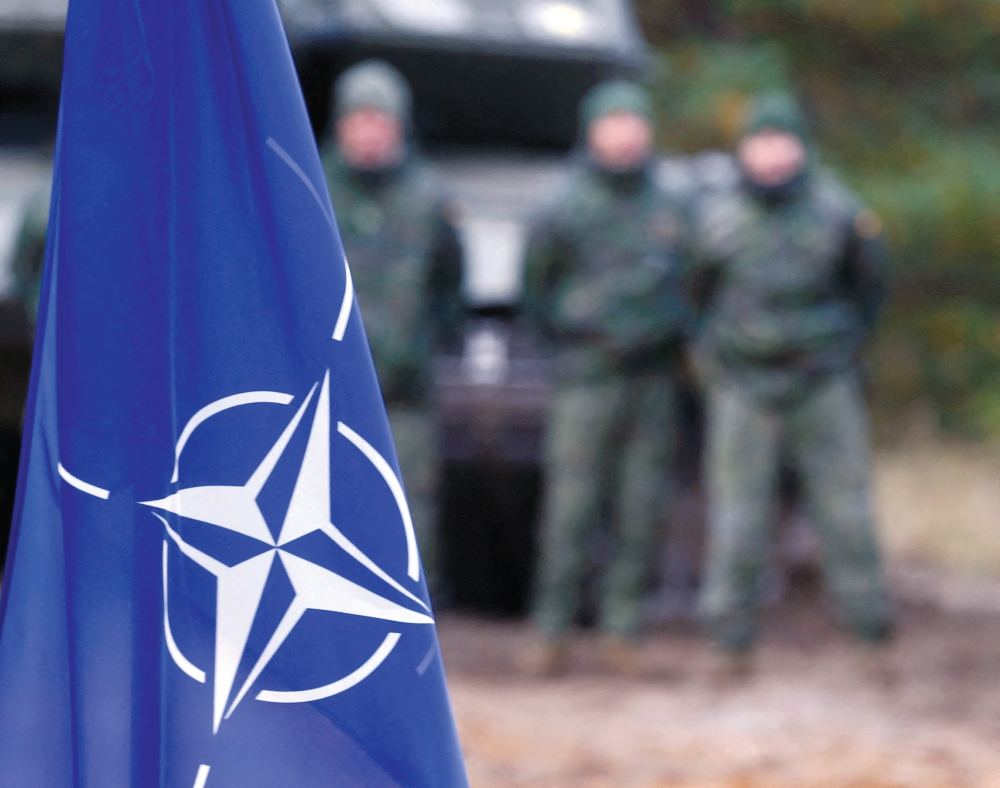
In a significant strategic shift aimed at reshaping the European security landscape, NATO plans to bolster its defenses on its eastern border with Russia by establishing a state-of-the-art defense zone that relies almost entirely on advanced technology rather than traditional human forces. This move is part of the alliance's efforts to address growing security challenges and modernize its defense system over the next two years.
Smart and automated defense zone
General Thomas Leuwen, deputy chief of operations at NATO's Allied Land Command in Izmir, Turkey, revealed details of this ambitious plan to the German newspaper Welt am Sonntag. He explained that the alliance aims to create a "defensive belt" that includes a "hot zone" any enemy force would have to cross before being able to advance. This zone would be supported by equipment that operates almost without soldiers, thus reducing human risks on the front lines.
The new strategy relies on a vast network of advanced sensors capable of accurately detecting enemy movements and activating automated defense systems, including armed drones, semi-autonomous combat vehicles, ground robots, and automated air and missile defense systems. Despite this heavy reliance on automation, General Lewin emphasized that the final decision to fire and use force will "always remain the responsibility of human beings," in accordance with international law and ethical principles.
Context of transformation and information technology
This project is not merely about deploying weapons; it represents a revolution in modern warfare. Sensors will be deployed to cover areas spanning thousands of kilometers, not only on the ground but also in space, airspace, and cyberspace. This integrated system will collect data on enemy movements and weapons use, sharing it in real time with all NATO countries, leveraging cloud computing and artificial intelligence technologies to manage this massive amount of information.
Strategic importance and securing the eastern flank
This move comes at a sensitive time, as Europe experiences unprecedented geopolitical tensions since the Cold War, particularly following the Russia-Ukraine conflict, which prompted NATO members to reassess their deterrence strategies. This step is a direct response to demands from NATO's eastern flank, where leaders of eight northern and eastern European countries (including Poland and the Baltic states) called last December for prioritizing the strengthening of defenses against potential Russian threats.
Initial trials of some components of this system have already begun in pilot projects in Poland and Romania, the two countries that form NATO's first line of defense. According to the plans, full operation of this advanced defense system is expected by the end of 2027, representing a significant leap forward in European deterrence capabilities and enhancing regional stability by replacing traditional barbed wire with smart digital walls.