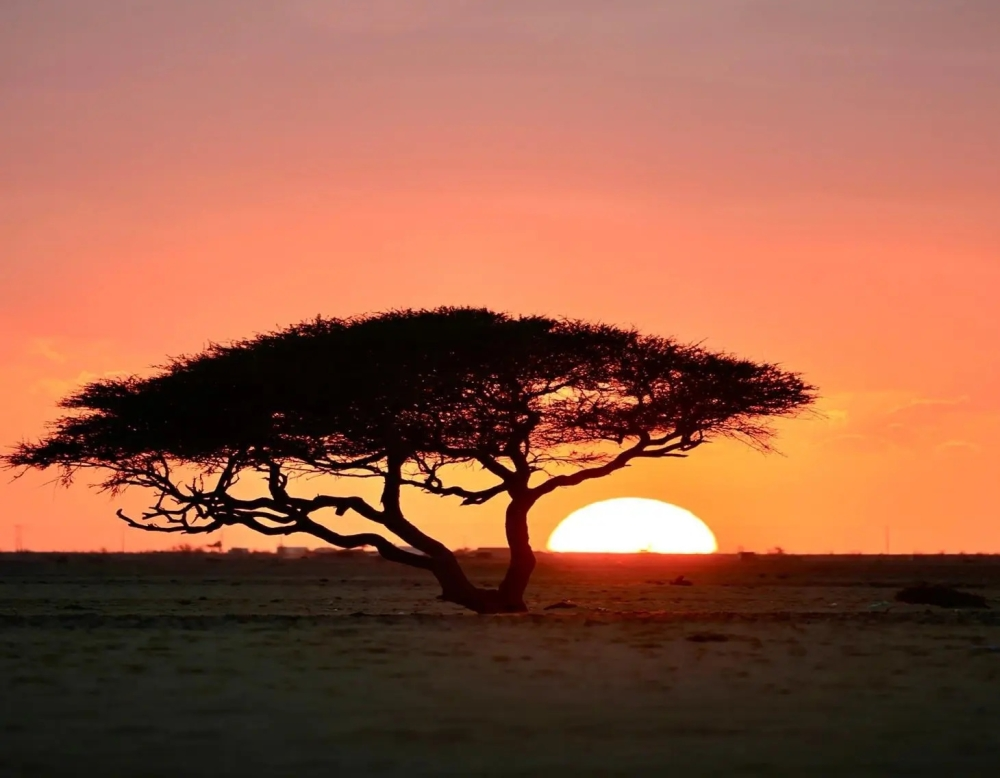
The National Afforestation Program confirmed today that the Tabuk region represents a strategic environmental treasure, possessing a unique stock of more than 63 native plant species suitable for sustainable afforestation projects. This announcement underscores the region's pivotal role in national efforts to develop vegetation cover and combat land degradation, in line with the objectives of the Saudi Green Initiative , which seeks to create a more sustainable future for the Kingdom.
Geographic diversity promotes environmental sustainability
The program explained that the natural environments in the Tabuk region are characterized by a unique topographical diversity, encompassing valleys, meadows, plains, and sand dunes, in addition to coastal environments, scattered islands in the Red Sea, and towering mountain ranges. This geographical diversity enhances the chances of success for afforestation projects across various terrains, making Tabuk a microcosm of the Kingdom's environmental diversity.
Context of the initiative and the importance of native plants
This step is of paramount importance within the framework of Saudi Vision 2030 , as the Saudi Green Initiative aims to plant 10 billion trees across the Kingdom in the coming decades. Reliance on native plants is a cornerstone of this strategy, given their superior ability to adapt to harsh climatic conditions, tolerate drought, and consume less water compared to imported plants, thus ensuring the long-term sustainability of vegetation without depleting water resources.
The program indicated that the plant species observed in Tabuk belong to families known in the Saudi environment, most notably the Amaranth, Acanthus, Oleander, Caper, Ziziphus, Rosa, Safflower, Apiaceae, Compound, Boraginaceae, Amaranth, Prawnonia, Myrtle, Eggplant, Rhubarb, Mustard, and Iris.
A rich list of trees and shrubs
The program indicated that these species include a wide variety of small and large perennial trees and shrubs, as well as herbaceous and annual plants. It listed the most prominent native plants widespread in Tabuk and suitable for afforestation, including: jujube, wild almond, mangrove, terebinth, tamarisk, tamarisk, hollyhock, hollyhock, moringa, moringa, hollyhock ...
He also noted that the list includes plants such as *al-Hadh*, *al-Qadqad*, *al-Jalman*, *al-Tahma*, *al-Dhamran*, *al-Aran*, *al-Qarzah*, *al-Marakh*, *al-Sawas*, *al-Harjal*, *al-Qaysum*, *al-Abitharan*, *al-Kurdia*, *al-Asaf*, *Umm Rumail*, *al-Rukhami*, *al-As*, *al-Armadh*, *al-Dhal*, *al-Awsaj*, and *al-Ab'ab*. The diversity extends to include *al-Qaswar*, *al-Mahrut*, *al-Arar*, *al-Shaqari*, and *al-Sawsan*.
Economic and social impact
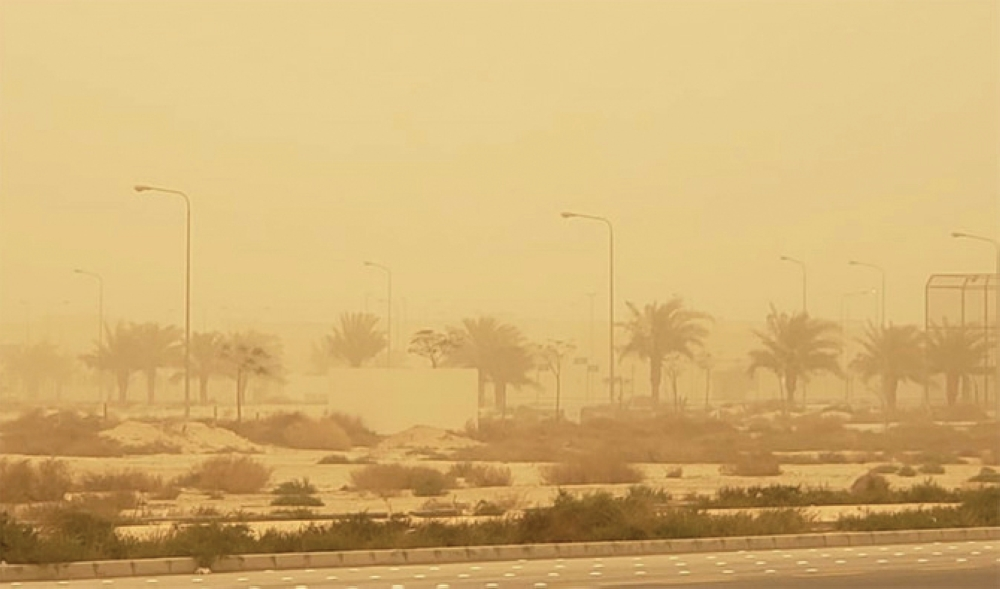
The impact of these projects is not limited to the environmental aspect alone, but extends to include important economic and social dimensions. The increase in vegetation cover in Tabuk, which hosts mega-projects such as NEOM and the Red Sea Project, contributes to improving the quality of life, lowering temperatures, and reducing dust storms, thus enhancing the region's attractiveness for ecotourism and investment.
The program concluded its statement by emphasizing its tireless efforts to lead afforestation initiatives in partnership with the public and private sectors and environmental associations, with the aim of spreading the culture of afforestation and establishing the importance of preserving local plants as a national heritage that ensures access to a green and sustainable future for future generations.