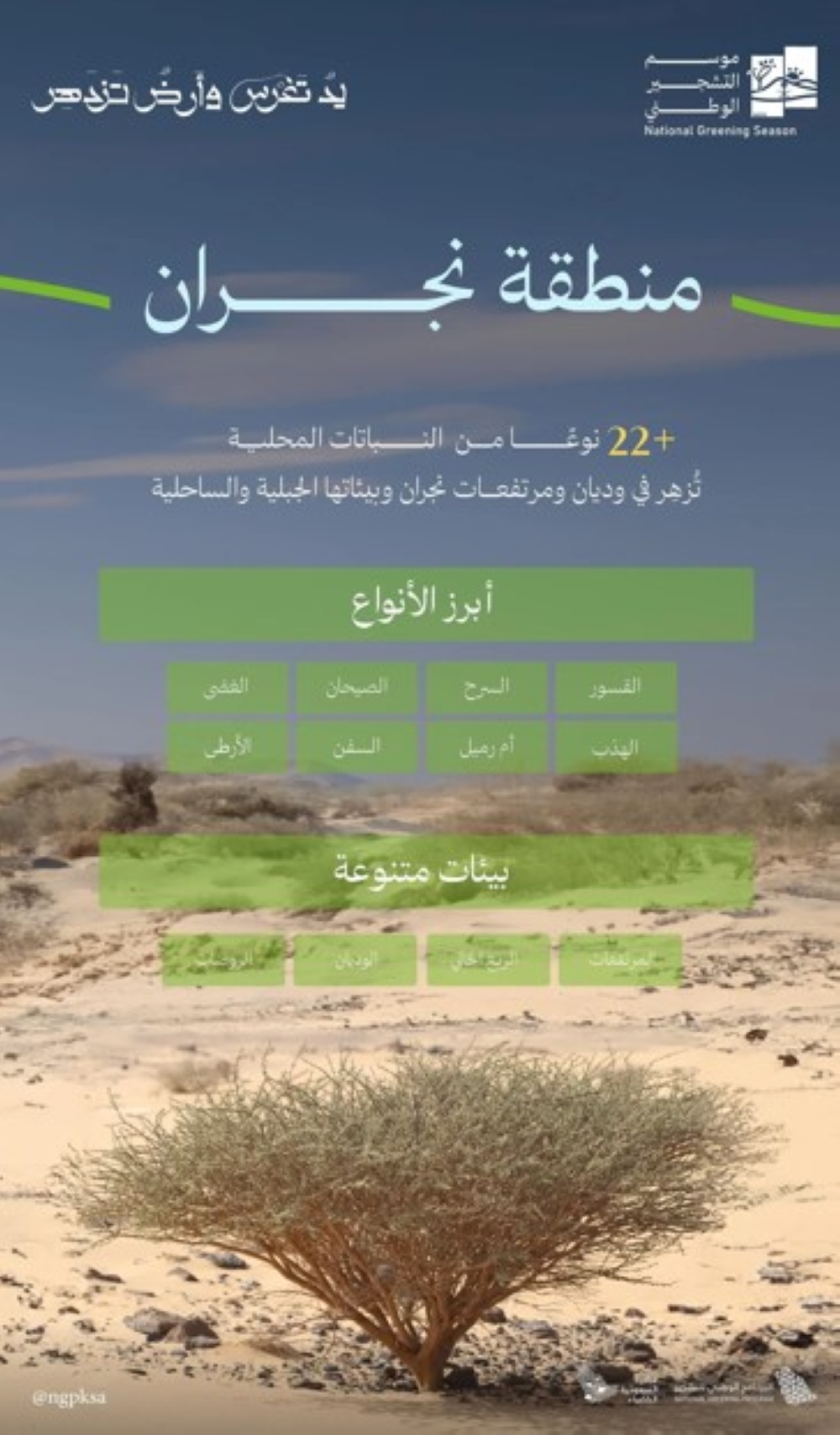
In a strategic move reflecting the Kingdom of Saudi Arabia's commitment to protecting its natural environment and enhancing its vegetation cover, the National Afforestation Program a detailed plant map of the Najran region. The program identified the most prominent native species suited to the region's geography, as part of ongoing efforts to achieve the goals of the Saudi Green Initiative and the Kingdom's Vision 2030, which aim to combat desertification and improve the quality of life.
Geographical and environmental diversity in Najran
The Najran region boasts unique geographical features that make it a fertile environment for biodiversity. Its topography ranges from towering mountain peaks in the west, through fertile valleys and meadows, to golden sand dunes on the edge of the Empty Quarter in the east. This topographical diversity has prompted in-depth technical studies by the National Afforestation Program to identify plant species capable of surviving and thriving in these varied environments, taking into account temperature, rainfall, and soil characteristics.
22 local species: Najran's natural identity
The program's technical report confirmed the identification and certification of more than 22 native plant species found in Najran's environment. These species are distinguished by their endemicity to the region, meaning they are fully genetically adapted to the harsh climatic conditions and water scarcity. Important tree and shrub species, which form part of the region's environmental heritage, topped the list, including:
- Perennial trees: such as “Sarh”, “Safen”, “Qaraz”, and “Hadhab”, which provide ample shade and contribute to soil cohesion.
- Natural windbreaks: The list included the *Ghadha*, *Arta*, and *Tarfa* trees, as well as *Nashm*, *Maran*, and *Sayhan* plants. These species play a vital role in deflecting winds and reducing sand encroachment, especially in open areas bordering the desert.
- Plants of environmental value: The list included varieties such as “Al-Sabir”, “Al-Basham”, and “Al-Kadhdhab”, in addition to “Um Rumail”, “Sharfath”, “Himrar”, “Azlam”, and “Al-Qaswar”.
Scientific foundations and environmental balance
The selection of these plants was not random, but rather based on a precise scientific classification to ensure ecological balance. The program classified these plants into several scientific families, most notably the legume family (Fabaceae), the tamarisk family (Terfaceae), the pistachio family (Pistacia terebinthus), the mallow family (Malvaceae), the borage family (Boraginaceae), and the caper family (Caperaceae). This classification establishes a solid scientific database to support future cultivation projects and ensures that the ecosystem is not disrupted by the introduction of invasive species that could harm biodiversity.
The report also highlighted the importance of other species that Najran is home to, such as Acanthus, Acacia, Acacia tortilis, Acacia ehrenbergiana, Acacia senegal, Acacia ehrenbergiana ...
The economic and environmental importance of local afforestation
Relying on native plants has significant economic and environmental dimensions. Environmentally, these plants contribute to lowering temperatures, absorbing carbon, and providing natural habitats for wildlife and birds. Economically, cultivating native species significantly reduces irrigation and maintenance costs compared to imported plants, as they require less water and exhibit greater pest resistance, thus promoting the sustainability of water resources in the Kingdom.
Call for community participation
In its concluding remarks, the National Afforestation Program emphasized that environmental protection is a shared responsibility, calling on individuals, government and private sectors, and non-profit organizations to actively participate in planting these specific species. This call aims to establish a culture of sound afforestation practices, correct misconceptions about haphazard planting, and promote volunteer work as a cornerstone in protecting the nation's natural resources and ensuring a green future for generations to come.