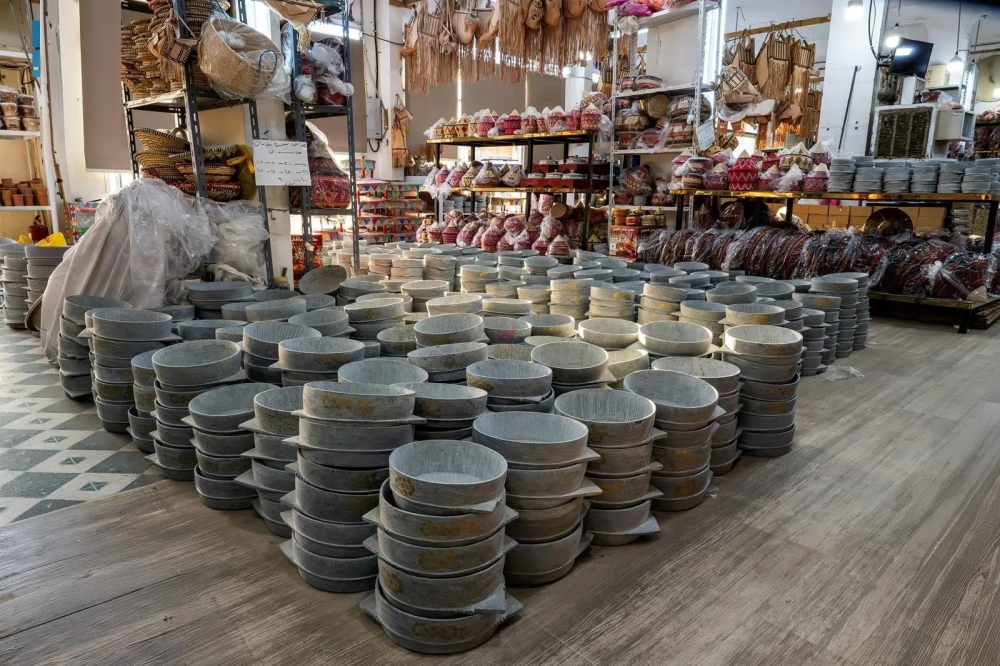
With the arrival of the holy month of Ramadan, the Najran region is adorned once again with its authenticity and rich heritage, where traditional utensils stand out as a fundamental element in reviving ancient Ramadan customs. These utensils are not merely tools for cooking and serving; they are a bridge connecting current generations to their ancestors' past, a living embodiment of a unique place that reflects the joy of the blessed month in the hearts of the people and evokes their inherited traditions.
Historical background and deep-rooted heritage
Located in southern Saudi Arabia, Najran boasts a history spanning thousands of years, having been a vital stop on the ancient Incense Route. This rich history has endowed it with a unique cultural identity, evident in its architecture, handicrafts, and distinctive cuisine. The production of stoneware, pottery, and wickerwork is an integral part of this heritage. Crafted from local materials, these items were essential to daily life decades ago, and today they are experiencing a resurgence in popularity as symbols of pride in identity and a commitment to preserving authentic traditions in the face of modernity.
“Al-Mudhan” and “Al-Raqsh”: Icons of the Najran table during Ramadan
The traditional markets of Najran witness a significant increase in demand for heritage products during Ramadan, with both locals and visitors eager to purchase them. Among the most sought-after items is the stone "al-Madhan," a vessel meticulously crafted from "al-Haradh" stone, renowned for its ability to retain heat for extended periods. Available in various sizes, the Madhan is lined with palm fronds and adorned with brightly colored leather in shades of red, white, and black, giving it a unique and aesthetically pleasing appearance. The Madhan is the traditional vessel for serving one of Najran's most famous Ramadan dishes: "al-Raqsh," a dish consisting of thin, sliced wholemeal bread mixed with broth and meat, providing a warm and hearty meal for the Iftar meal.
The cultural and economic importance of reviving heritage
The renewed interest in traditional utensils extends beyond the social aspect of strengthening family bonds around the Ramadan table; it also encompasses significant economic and cultural dimensions. Locally, this renewed interest supports local artisans and contributes to the sustainability of their crafts, passed down through generations, creating job opportunities and preserving traditional skills from extinction. Nationally, this trend aligns with the goals of Saudi Vision 2030, which focuses on preserving national heritage and promoting the Kingdom's cultural identity. Furthermore, these unique products attract tourists and those interested in culture, boosting cultural tourism in the Najran region and showcasing the diversity and richness of Saudi heritage to the world.