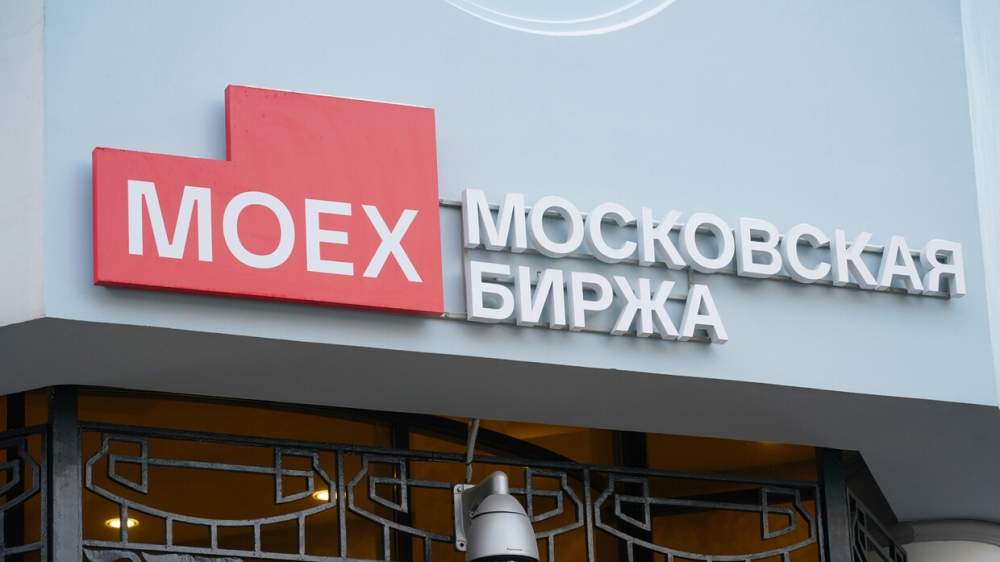
The Moscow Stock Exchange ended the week on a positive note, with its main indices recording a notable rise on Friday, reflecting a state of cautious optimism among investors in light of the current economic and geopolitical conditions.
According to closing data, the Moscow Exchange's main ruble-denominated index (MOEX) rose by 6.52 points, or 0.24%, to reach 2779.36 points. Meanwhile, the dollar-denominated RTS index saw a slight increase of 0.09%, adding 1.02 points to close at 1140.76 points.
General context and performance of the Russian market
This performance comes amid a complex economic context facing Russia. The Moscow Exchange, established in its modern form in 2011 following the merger of the MICEX and RTS exchanges, is the most important indicator of the health of the Russian economy and the performance of its major companies, particularly in the energy, mining, and banking sectors. The difference in performance between the MOEX and RTS indices often reflects fluctuations in the ruble-dollar exchange rate; when the MOEX rises more than the RTS, it may indicate relative ruble weakness, and vice versa.
Factors affecting stock market performance
The performance of the Russian stock market is influenced by a range of domestic and international factors. Globally, energy prices, particularly oil and gas, remain the primary driver of the earnings of major listed Russian companies, and consequently, of the performance of market indices. Any rise in global oil prices positively impacts the shares of energy giants like Gazprom and Rosneft, pushing the market as a whole higher.
Domestically, the Russian central bank's monetary policy decisions play a crucial role. Decisions to raise or lower interest rates directly impact borrowing costs and market liquidity, thus influencing investor decisions. Furthermore, domestic economic data, such as inflation rates and industrial growth, provide investors with insights into the strength of the economy.
Importance and expected effects
Despite the relative isolation imposed by Western sanctions, the performance of the Moscow Stock Exchange remains highly significant. Domestically, its rise reflects the confidence of local investors in the ability of Russian companies to adapt and generate profits. It also enhances the value of savings and investments for Russian citizens. Internationally, the market's performance is closely watched as a gauge of the Russian economy's resilience in the face of external pressures. Positive performance suggests that the economy is finding ways to adapt to the new reality, relying on domestic demand and redirecting trade towards new markets in Asia and other regions.