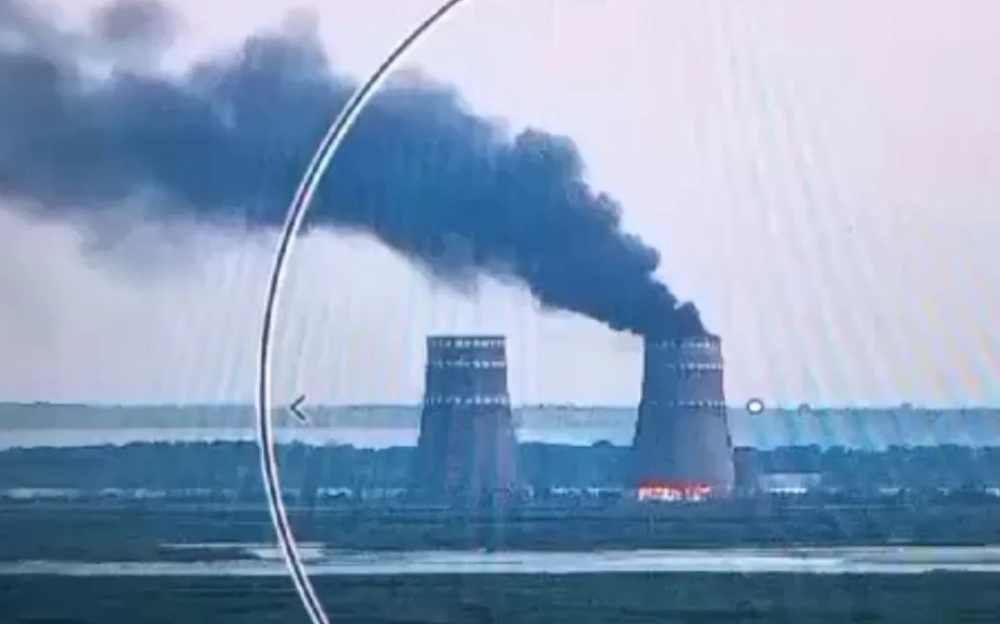
Russian authorities controlling the Zaporizhzhia nuclear power plant in southern Ukraine announced that Ukrainian strikes damaged the plant's infrastructure, including severing one of its two main power lines. While the Moscow-appointed administration asserted that radiation levels remained within normal limits, the incident underscores once again the catastrophic risks surrounding Europe's largest nuclear power plant as the conflict continues.
tense historical context
The Zaporizhzhia nuclear power plant, with its six reactors, lies on the banks of the Dnieper River and before the war produced one-fifth of Ukraine's electricity. Russian forces seized the plant in the early days of the full-scale invasion in March 2022, and since then the facility has been at the heart of an active conflict zone. Despite being under Russian military control, its day-to-day operations are still managed by Ukrainian technical staff, creating a tense and stressful working environment.
Throughout the conflict, the plant has become a point of constant recrimination between Moscow and Kyiv. Russia accuses Ukrainian forces of systematically targeting the plant with drones and artillery fire, aiming to create a nuclear disaster and blame it on Russia. Ukraine, in turn, denies these accusations, asserting that Russia uses the plant as a military shield, storing equipment and troops there, and launching attacks from it, relying on the assumption that Ukrainian forces will not return fire for fear of triggering a nuclear accident.
The importance of the event and its potential impact
The greatest danger lies in a complete loss of external power to the plant. Even in a cold shutdown, nuclear reactors require a continuous power supply to operate their cooling systems, which prevent the nuclear fuel from overheating and melting down, potentially leading to a large-scale radioactive leak. With one of the two main power lines damaged, the plant now relies on a single backup line, leaving it extremely vulnerable. Should this last line fail, the plant would be forced to rely on backup diesel generators, a temporary and unreliable long-term solution.
Internationally, these recurring incidents have raised serious concerns at the International Atomic Energy Agency (IAEA), whose Director General, Rafael Grossi, has repeatedly warned that the situation is “extremely precarious.” The agency has repeatedly called for the establishment of a safe and demilitarized zone around the plant to avert a disaster that could surpass the consequences of the 1986 Chernobyl disaster, as any major radioactive leak could affect Ukraine and neighboring European countries, causing a long-term environmental and health crisis.