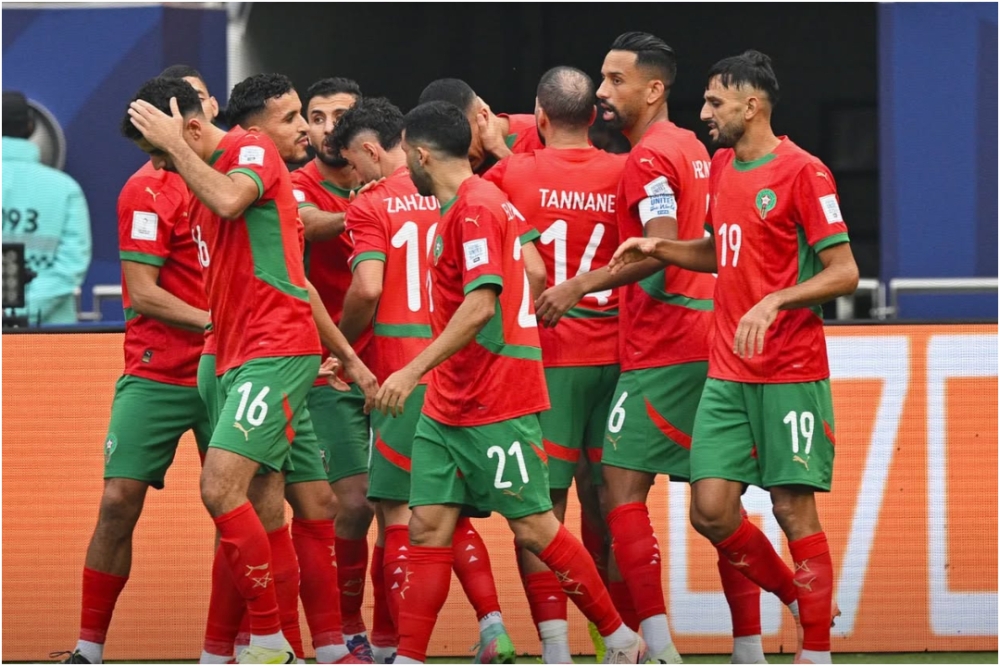
On Thursday, the eyes of Arab football fans will be on the Lusail World Cup Stadium in Qatar, where the Moroccan national team will meet its Jordanian counterpart in the final match of the 2025 Arab Cup, in a match that promises a lot of excitement and competitiveness between two teams that deservedly reached the final stage.
The Moroccan national team, fielding a reserve squad, enters the match looking to cap off an exceptional year filled with successes and achievements that have cemented Moroccan football's place on the world stage. However, their ambitions clash with the formidable Jordanian team, which has been delivering impressive performances and dreams of clinching its first major title, thus writing a new chapter of glory for "Al-Nashama" (the Jordanian national team).
Historical background and context of the tournament
The Arab Cup, revived under the auspices of FIFA, is considered an important platform for fair competition among Arab national teams. Historically, the tournament has seen the crowning of several prestigious teams, with Morocco having won the title once before, in 2012. Meanwhile, Jordan aims to surpass its previous best result, which was fourth place in 1988 when it hosted the tournament. This final underscores the significant progress made in the level of football in both countries.
Morocco: The Golden Era Continues
Morocco is experiencing a golden era in football, beginning with its historic achievement at the 2022 Qatar World Cup, where the Atlas Lions became the first Arab and African team to reach the semi-finals. The successes didn't stop there, as this year saw the senior national team qualify for the 2026 World Cup, the youth team crowned champions of the World Cup in Chile, and the African Nations Championship (CHAN) and the African Youth Championship (CHAN). The reserve team's reaching the final reflects the depth of talent within Morocco and the strength of the footballing foundation being built.
Jordan: The dream of the Jordanian national team is getting closer to reality
On the other hand, the Jordanian national team enters the final with high morale, inspired by their impressive run in the 2014 AFC Asian Cup, where they reached the final at the same venue (Lusail Stadium) before losing to Qatar. Under the guidance of Moroccan coach Jamal Sellami, the "Nashama" (Jordanian national team) displayed exceptional tactical discipline and fighting spirit, enabling them to achieve five consecutive victories in the tournament, making them the only team to accomplish this feat, while also boasting the strongest attack and the second-best defense.
A tactical confrontation with a Moroccan flavor
The match takes on a special character with two Moroccan coaches at the helm of the two teams, Jamal Sellami facing his compatriot Tarik Sektioui. Despite the absence of some key players from both sides, such as Musa Al-Taamari for Jordan and the stars of the Moroccan national team, the match promises to be a tactical battle between a solid Moroccan defense that has conceded only one goal, and a well-organized Jordanian attack seeking solutions in the absence of their injured striker, Yazan Al-Naimat. Moroccan goalkeeper Mehdi Benabid stated, "Our team is very strong defensively, and we close down spaces quickly," highlighting the significant challenge awaiting the Jordanian attack.
This final represents more than just a title match; it's a clash between Jordan's ambition to make history and Morocco's desire to reaffirm its dominance and continue its winning streak. Whether the Atlas Lions claim their second title or the Nashama achieve their first, the biggest winner is Arab football, which proves day after day its development and its ability to deliver world-class performances.