The Moroccan Public Prosecutor's Office, in a session before the Court of First Instance in Rabat, demanded that prison sentences of up to two years be imposed on 18 Senegalese fans, on the grounds that they were accused of involvement in widespread riots that took place during the final of the African Nations Championship for local players last January.
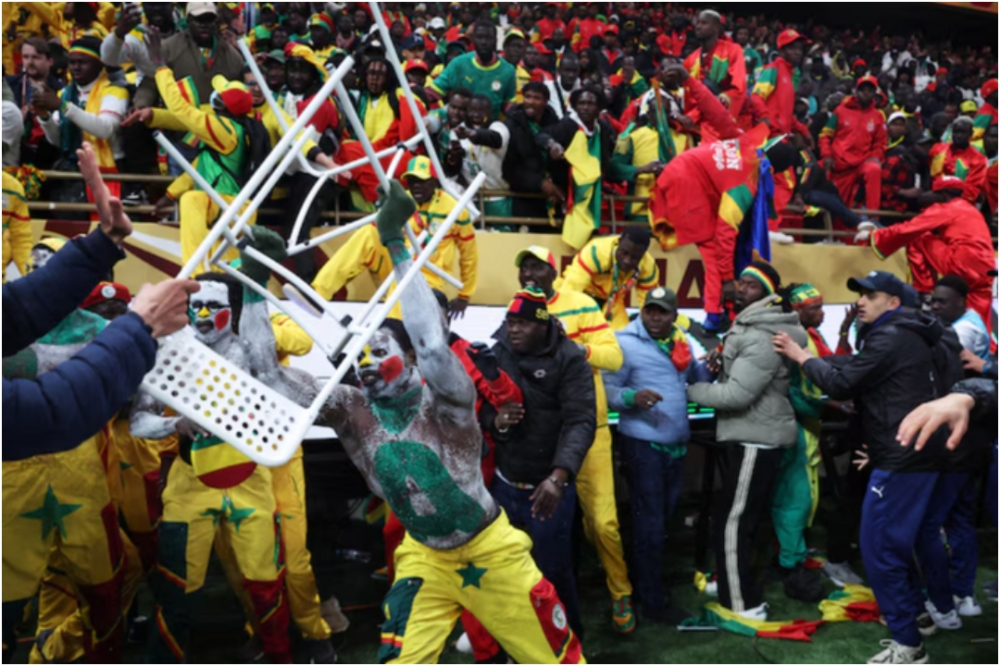
The incident stems from the final match between the Moroccan and Senegalese national teams at the Prince Moulay Abdellah Stadium in Rabat. The match, which ended in a Senegalese victory, was marred by unfortunate events after its conclusion, with a number of fans storming the pitch, damaging property and sports equipment, and clashing with security forces.
General context and historical background of the event
This trial comes as Morocco works to bolster its position as a global sporting destination capable of hosting major events. Following the Moroccan national team's historic performance at the 2022 World Cup, and with the Kingdom preparing to host the 2025 Africa Cup of Nations and co-host the 2030 World Cup, stadium security and hooliganism have become top priorities. Stadium violence is a global challenge, and through this case, Moroccan authorities aim to send a firm message of zero tolerance for any behavior that threatens the safety of sports facilities and fans.
Details of the charges and evidence
The public prosecutor charged the defendants with “rioting,” a charge under Moroccan law that encompasses various acts such as committing violence during a sporting event, damaging equipment, invading the pitch, and throwing projectiles. The prosecution based its case on a range of evidence, most notably CCTV footage from the stadium, which, according to the prosecution, documented the defendants’ involvement in “deliberately disrupting the match” and “committing acts of violence that were broadcast live on television.” The prosecution also presented medical reports confirming injuries sustained by several security personnel and stadium staff. The material damage to the stadium, which had been completely renovated prior to the tournament, was estimated at over €370,000.
The importance of the event and its expected impact
Domestically, this case represents a test for the Moroccan judiciary in dealing with cases of hooliganism committed by foreign nationals, and underscores the application of the law to all without discrimination. Internationally, the trial's outcome will be closely scrutinized, particularly by international football bodies such as FIFA and CAF. Morocco's ability to guarantee a fair trial with strict application of the law will bolster global confidence in its capacity to secure major sporting events, most notably the 2030 World Cup. The defendants denied the charges against them, while the defense argued that the Confederation of African Football (CAF) had already sanctioned the Senegalese Football Federation for its fans' behavior, thus constituting double jeopardy. The prosecution rejected this argument, asserting that administrative sporting sanctions do not negate individual criminal responsibility.