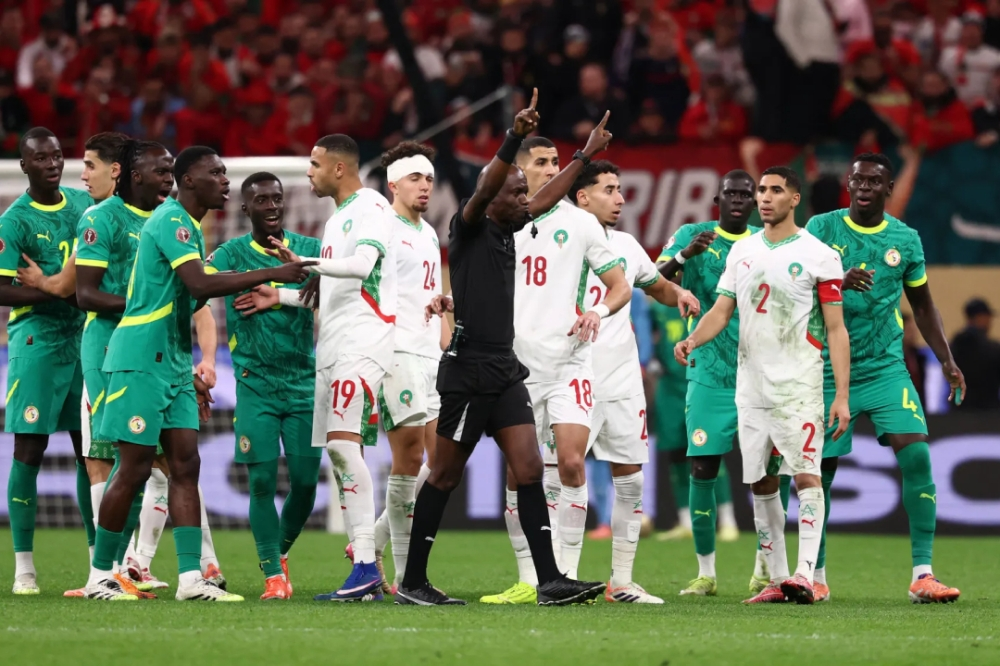
The issue of the strained relationship between the Royal Moroccan Football Federation and the Confederation of African Football (CAF) has resurfaced, following statements and positions that have brought back into focus controversial events, most notably the crisis of the Moroccan national team's withdrawal from the African Nations Championship for local players (CHAN 2022) held in Algeria.
General context and historical background of the event
The crisis stems from Morocco's decision, as the reigning champions of the last two editions of the tournament, to withdraw from the 2022 edition. This decision came after Algerian authorities, the host country, refused to grant permission for a direct flight by Royal Air Maroc, the official carrier of the Moroccan national teams, from Rabat to Constantine, the city that was scheduled to host Morocco's matches. The Royal Moroccan Football Federation based its request on the regulations governing the organization of continental tournaments, which stipulate the necessity of providing travel arrangements for participating delegations.
This stance did not arise in a vacuum, but was a direct reflection of the existing political tensions between the two neighboring countries, which led to the severing of diplomatic relations and the closure of Algerian airspace to Moroccan aircraft. This situation placed the Confederation of African Football (CAF) in a difficult position, finding itself mediating a crisis that transcended its sporting dimensions and extended into regional political complexities.
The importance of the event and its expected impact
The absence of the Moroccan national team, as defending champions, had a significant impact on the tournament in several ways. Domestically, Moroccan fans were deeply disappointed that their team was denied the opportunity to defend its title and achieve a historic third consecutive championship. Regionally, the incident deepened the rift between two major North African footballing powers and highlighted the extent to which political differences can infiltrate the sporting landscape, threatening the future of sports cooperation in the region.
Internationally, the crisis raised questions about CAF's ability to enforce its regulations and laws and ensure the impartiality of competitions, free from political influence. It also highlighted the challenges of organizing continental tournaments amidst political disputes between member states. Many analysts believe this incident constituted a true test of African football governance and underscored Morocco's growing role as an influential force in global sports decision-making circles, led by its federation president, Fouzi Lekjaa, who also serves on the FIFA Council, thus giving any conflict with him ramifications that extend beyond the African continent.
In conclusion, the CHAN crisis was not just a withdrawal from a tournament, but an important chapter in the book of the complex relationship between sports and politics in Africa, and its repercussions remain present in every discussion about the future of football management and organization on the continent.