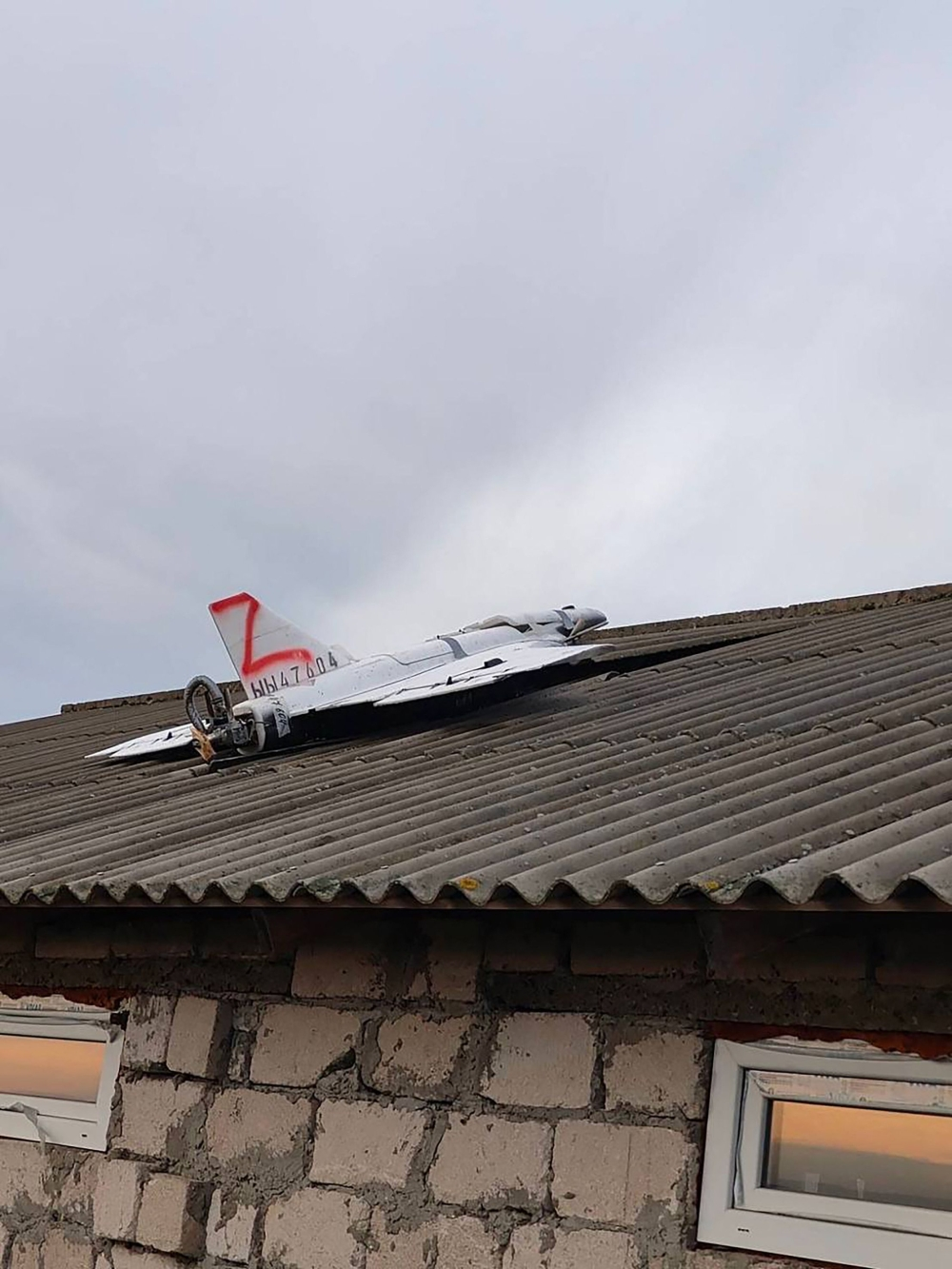
Moldova announced on Saturday the temporary closure of its airspace for over an hour as an emergency precautionary measure following the detection of two drones, believed to be Russian-made Gerbera models, incurding its airspace. President Maia Sandu strongly condemned the incident, describing it as part of Russia's "violent aggression" against neighboring Ukraine, reflecting the spillover of the war into neighboring countries.
In detailing the incident, the Moldovan Ministry of Defense explained in an official statement that the airspace closure lasted from 10:43 PM to 11:53 PM local time, with the aim of ensuring the safety of civil aviation. The statement added that the two drones were not detected by Moldovan radar systems, but rather their incursion was reported by Ukrainian border authorities, who confirmed that they had crossed Moldovan airspace before heading deeper into Ukrainian territory. As a result of this measure, two flights arriving from Paris and Barcelona were diverted to neighboring Romania, while another flight departing from the capital, Chisinau, was delayed.
Tense context and historical background
This is not the first such incident. This former Soviet republic, which aspires to join the European Union, has experienced repeated violations of its airspace since the start of Russia’s full-scale invasion of Ukraine in February 2022. Moldova’s geographical location, sandwiched between Romania (a NATO and EU member) and Ukraine, places it at the heart of geopolitical tensions. The presence of the pro-Russian breakaway region of Transnistria, which hosts a Russian military base, further complicates the situation, posing a constant security challenge to Chisinau’s sovereignty.
Importance and potential impacts
These violations are of paramount importance both domestically and internationally. Domestically, they are fueling growing public anxiety and putting pressure on the government to bolster its air defense capabilities, something Chisinau is already pursuing by seeking assistance from its Western partners. Regionally, the incident underscores the spillover risks of the Ukrainian war and how its flames could spread to destabilize neighboring non-NATO countries.
Internationally, these developments reinforce the Western narrative about the threat posed by Russian policies to European security as a whole. They also highlight the vulnerability of states situated in the “gray zone” between Russia and the West, and underscore the importance of providing political and military support to Moldova to enable it to defend its sovereignty and reaffirm its European orientation in the face of continued pressure from Moscow.