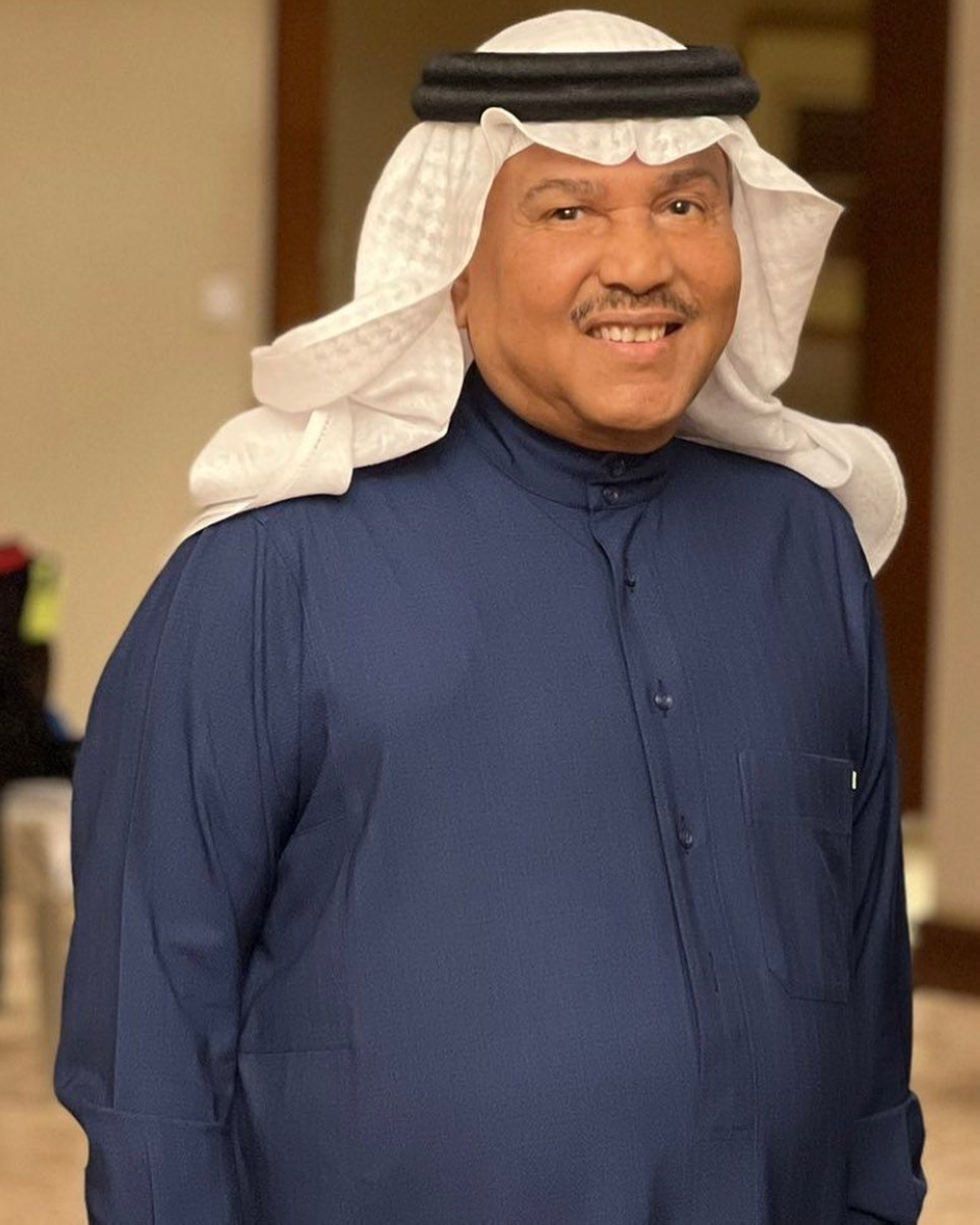
The office of renowned Saudi artist Mohammed Abdu, known as "The Artist of the Arabs," a new phase in his career, putting an end to recent speculation surrounding his upcoming concerts. In an official statement published on the "X" platform, it was revealed that he will be limiting his live performances in the future due to personal and health reasons. The statement emphasized that this decision does not signify a complete retirement, but rather a carefully considered transition towards a more selective approach to his artistic appearances.
The statement explained that the aim of this step is to reorganize the artist's schedule to suit his current health condition and alleviate the pressure of his intensive artistic commitments. Conversely, the statement emphasized his complete commitment to performing at all Saudi national events, affirming that answering the call of duty will always remain his top priority, in keeping with his long and distinguished artistic career, during which his voice has become deeply intertwined with the hearts and minds of Saudis and Gulf Arabs.
Historical context of the career of the Arab artist
Mohammed Abdu is an Arab artistic icon whose career spans more than six decades, beginning in the early 1960s. During this time, he was not merely a singer, but a pioneer in the development of Saudi and Gulf music, and one of its most important ambassadors to the Arab world. The late Tunisian President Habib Bourguiba bestowed upon him the title "Artist of the Arabs" in recognition of his talent and influence. He has presented hundreds of timeless works that have become part of the musical memory of generations, such as "Al-Amakin" (The Places), "Sawtak Yunadini" (Your Voice Calls Me), and "Lana Allah" (God is With Us), which have cemented his position as one of the pillars of art in the Arab world.
The importance of the decision and its expected impact
This decision carries significant weight on several levels. Locally , it will transform Mohammed Abdu's few concerts and the national events in which he participates into exceptional occasions eagerly anticipated by the public, thus enhancing their artistic and popular value. It also opens the door to a broader discussion about how to honor and manage the careers of veteran artists in the later stages of their lives. Regionally , the decision will impact the concert calendar in major Arab capitals such as Dubai, Cairo, and Kuwait, where Mohammed Abdu's concerts were among the most prominent annual artistic events. Internationally , reducing his appearances means fewer opportunities for Arab communities in Europe and America to enjoy his art in person, after his concerts had served as a cultural bridge connecting them to their homeland.
Observers believe this move reflects wisdom and maturity in managing his artistic career, as the artist balances his health and personal considerations with his loyalty to his audience and his artistic journey. Instead of withdrawing completely, Mohammed Abdo chose to keep his voice present at the most crucial moments, confirming that the curtain will not fall on the career of the "Artist of the Arabs," but rather that its chapters will continue, albeit at a different pace.