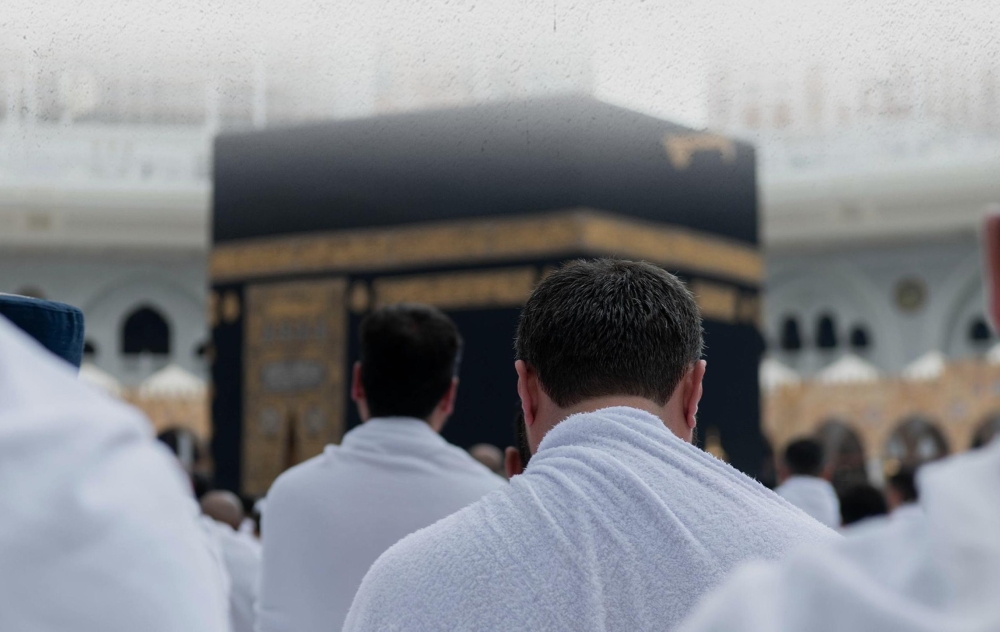
In a new achievement reflecting the efficiency of the operational and organizational plans at the Two Holy Mosques, the Ministry of Hajj and Umrah, in cooperation with the General Authority for the Care of the Grand Mosque and the Prophet's Mosque, announced record numbers of Umrah pilgrims and worshippers. Official statistics revealed that the total number of Umrah pilgrims from within and outside the Kingdom of Saudi Arabia performed during the month of Jumada al-Thani alone exceeded 11.9 million, a figure that reflects the steady increase in the number of visitors to the holy sites.
Detailed statistics revealed that the number of Umrah pilgrims arriving from outside the Kingdom during the same month exceeded 1.7 million, coming from various Islamic countries and around the world. This significant influx is a direct result of the advanced digital facilities and integrated logistical services implemented by the Kingdom, which have effectively streamlined arrival procedures, from obtaining visas electronically to performing the rituals with ease and peace of mind.
Vision 2030 objectives and the Guests of God Service Program
These figures cannot be viewed in isolation from the broader context of the Kingdom's Vision 2030, specifically the "Guests of God Service Program," which aims to transform the Hajj, Umrah, and visitation experience. Through this ambitious vision, the Kingdom seeks to increase its capacity to receive Umrah pilgrims to 30 million annually by 2030. The figures recorded in Jumada al-Thani are a strong indicator of the success of the phased plans to achieve this strategic goal, supported by the expansion projects of the Two Holy Mosques and the development of infrastructure in Makkah and Madinah.
The role of technology and the development of service systems
Digital transformation played a pivotal role in accommodating these millions of pilgrims. The Nusuk platform and other smart applications contributed to efficient crowd management and group movement. The Ministry and the General Authority for Hajj and Umrah are continuously working on joint initiatives aimed at enhancing the quality of services provided within the Two Holy Mosques and at all points of the pilgrim's journey, including transportation services via the Haramain High-Speed Railway and the development of accommodation and catering services. This ensures a comprehensive spiritual experience that prioritizes the pilgrim's comfort and safety from the moment they plan their trip until they depart the Kingdom.
Economic and social impact
Beyond its religious and spiritual significance, this surge in Umrah pilgrims carries important economic and social implications. It contributes to stimulating economic activity in the two holy cities and enhances cultural exchange among Muslims from around the world. These statistics underscore the Kingdom's constant readiness and high capacity to manage millions of pilgrims, thanks to the combined efforts of all security, health, and service sectors, ensuring the safety and well-being of the guests of God.