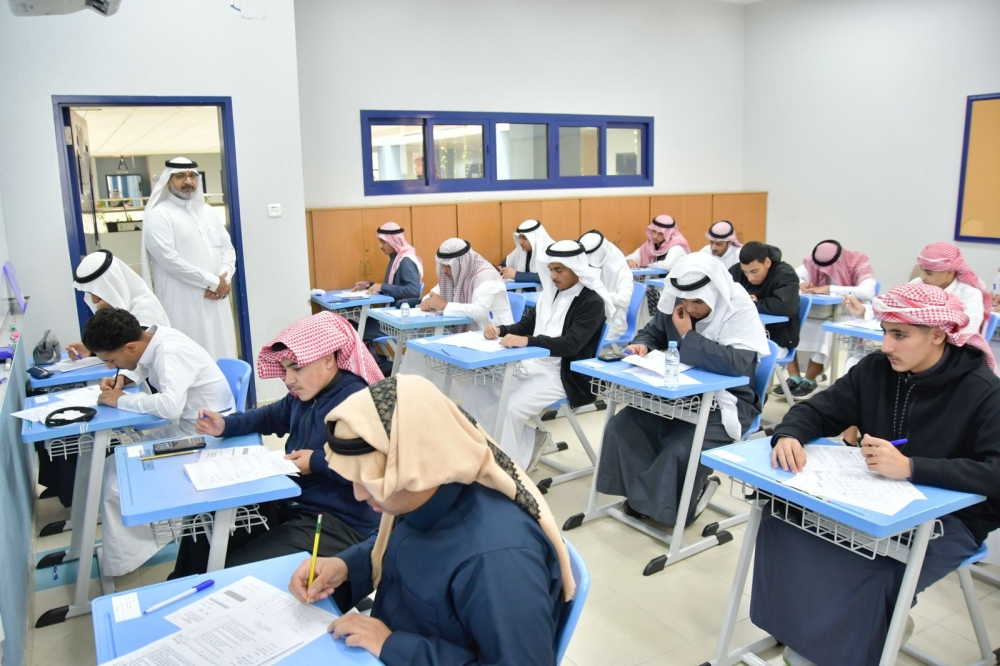
In a move aimed at enhancing transparency and improving the efficiency of the education system, the Ministry of Education has approved a new and detailed administrative structure for managing final examinations. This decision comes within the framework of the Ministry's commitment to governing educational processes and ensuring the highest standards of integrity and operational efficiency. This is achieved through a precise distribution of tasks that prevents conflicts of interest and eliminates duplication of roles within schools, reflecting a firm commitment to developing the educational assessment environment.
Governance and institutional development context
These regulatory measures are part of a comprehensive education development strategy, where tests are no longer merely a means of measuring achievement, but rather a standardized tool reflecting the quality of educational outcomes. Historically, test administration relied heavily on individual efforts within schools, but the shift towards a structured, institutional approach has become essential to meet international standards in measurement and evaluation. This new structure aims to standardize procedures across all schools, ensuring equal opportunities for all students and reducing administrative waste and time spent on traditional processes.
Hierarchical structure and examination committees
In its new procedural guide, the ministry adopted a hierarchical administrative model beginning with the "Academic Achievement Committee" as the highest supervisory body, headed by the school principal, to ensure the process proceeds according to approved regulations and systems. Four specialized executive arms stem from this central committee, managing all logistical, technical, and procedural aspects of the examinations with meticulous precision to guarantee fairness
- Control and Control Committee: The guide assigned its tasks to the Undersecretary for School Affairs, to take full control of the logistical operations before and after the test, including preparing the halls, preparing the seating numbers, ensuring that the walls are free of any educational aids, up to receiving the answer sheets and storing them in a safe place.
- Supervision and Observation Committee: Headed by the Undersecretary for Student Affairs, it takes the lead during the exam to manage the field, maintain order inside the halls, manage the observers' schedules, supervise the opening of the question envelopes, monitor the movement of students entering and exiting, record absences, and issue official violation reports.
- The Correction, Review and Audit Committee: Its tasks begin after the performance, headed by the Undersecretary for Educational Affairs, to supervise the delivery of answer sheets to the examiners, accompanied by the approved solution models, and to follow up on the accuracy of the correction and review to ensure that every student gets his full right without any errors in the assessment.
- The Monitoring and Results Committee: It is also headed by the Undersecretary for Educational Affairs, and it is responsible for entering grades into the electronic systems, extracting preliminary results, printing and saving the final approved “whitewashed” copies, and conducting a final audit of student data.
Preventing conflicts of interest and promoting integrity
To ensure maximum transparency and credibility in the results, the Ministry has implemented a strict regulation to prevent conflicts of interest. This regulation mandates that any committee member be reassigned to a position outside the classroom of a first-degree relative. This measure is a cornerstone in building trust between the community and the school, and it underscores that the sole criterion for success is the student's academic achievement.
Expected impact locally and educationally
This meticulous organization is expected to enhance school discipline during examination periods and minimize errors in monitoring and results. Furthermore, the clear separation of tasks and responsibilities will foster teamwork within the educational institution and alleviate pressure on teaching staff through well-defined roles. In the long term, this governance will lead to more accurate and reliable educational outcomes, enabling decision-makers to develop curriculum and teaching methodologies based on real and verifiable data.