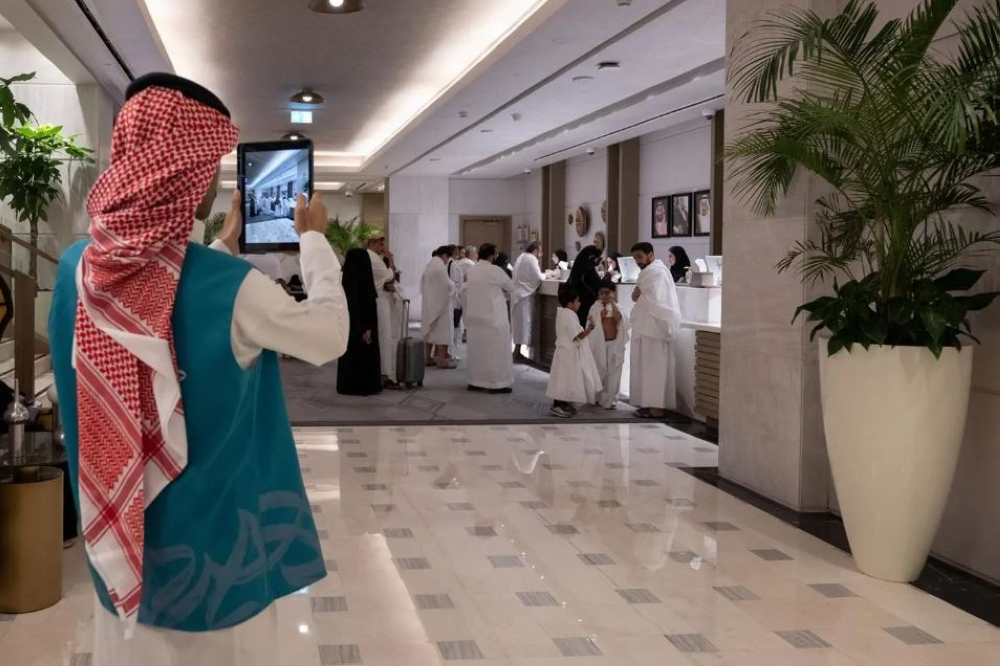
The Saudi Ministry of Tourism has emphasized the need for owners of buildings and hospitality facilities in both Mecca and Medina to adhere to regulations and laws, strongly warning against housing pilgrims without official permits. These strict warnings come as part of early preparations for the Hajj season, with relevant authorities seeking to regulate the hospitality sector and prevent any violations that could affect the safety and comfort of pilgrims, while also threatening hefty fines for violators.
The historical development of organizing the hospitality sector in the Holy Sites
Over the decades, the Kingdom of Saudi Arabia has given considerable attention to developing the Hajj and Umrah system. Historically, hosting pilgrims was handled through individual efforts or simple arrangements, but with the increasing number of pilgrims year after year, it became essential to establish an institutional regulatory framework to govern this vital sector. Recent years, particularly with the launch of Saudi Vision 2030, have witnessed radical transformations aimed at enhancing the quality of services provided to pilgrims. The shift from haphazard to meticulously organized practices reflects the leadership's commitment to providing a safe and healthy environment, making the elimination of irregular practices a fundamental step in this comprehensive development process.
Temporary accommodation permits and standard operating procedures
In its efforts to regulate the Hajj accommodation sector, the Ministry of Tourism has introduced a service for issuing "temporary lodge" licenses. This service is for building owners who wish to legally operate hospitality businesses in Mecca and Medina. The Ministry has emphasized that buildings holding these licenses may only operate during the Hajj season. The Ministry has also launched an additional service enabling operators of tourist hospitality facilities to increase their capacity during the season, subject to specific regulations and guidelines that ensure no overcrowding and the highest quality standards. These exceptions are valid only during the Hajj period.
Strategic dimensions of preventing the accommodation of pilgrims without a license
The decision to strictly enforce the ban on unlicensed accommodation for pilgrims is of paramount importance and has far-reaching implications. Domestically, this measure helps protect the national economy from the informal economy and ensures fair competition among legitimate investors in the hotel and hospitality sector. Regionally and internationally, the Kingdom's commitment to implementing the highest safety and security standards enhances the confidence of Muslim countries in Saudi Arabia's ability to efficiently and effectively manage millions of pilgrims. Providing licensed and regulated accommodation reduces emergencies and health risks, positively impacting the Kingdom's global image and its efforts in serving the Two Holy Mosques.
Deterrent penalties and intensified monitoring tours
To ensure the effective implementation of these regulations, the Ministry of Tourism announced strict penalties for violators. Operating a tourism hospitality or accommodation establishment without a license carries a fine of up to one million Saudi riyals. The warnings were not limited to unlicensed operators but also included holders of "temporary lodge" licenses. Operating these establishments before the Hajj season is a clear violation of licensing requirements and incurs fines of up to one million riyals, in addition to the immediate cancellation of the license. Concurrently, the Ministry is intensifying its oversight efforts through continuous inspection tours in Mecca and Medina to ensure that all facilities comply with quality standards and regulatory requirements, thus guaranteeing services that enrich the pilgrims' experience and enable them to perform their rituals with ease and peace of mind.