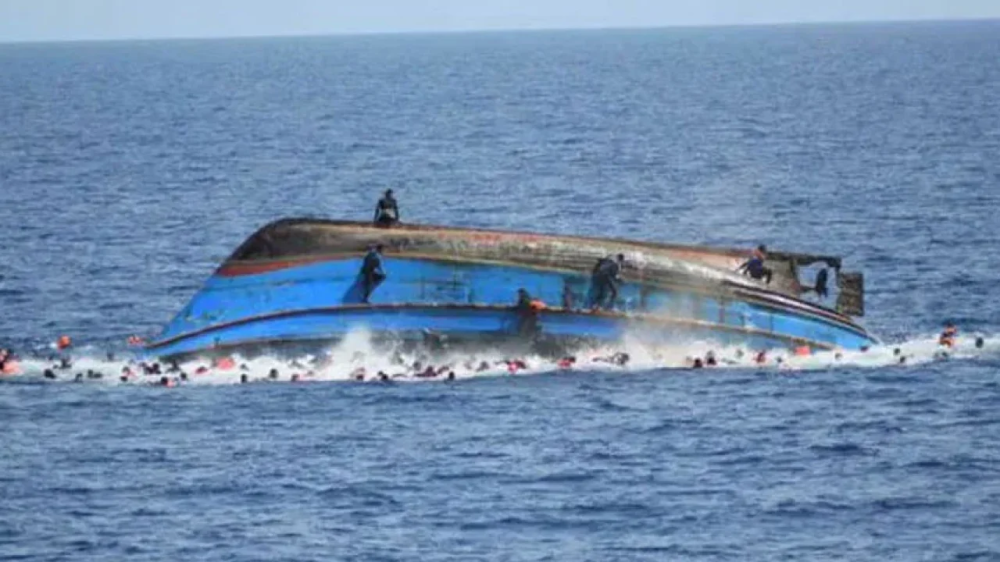
A new human tragedy unfolded off the Aegean coast this morning, as the Greek coast guard confirmed the recovery of a woman's body and the disappearance of three others after a boat carrying migrants sank off the island of Samos. This incident once again highlights the grave dangers faced by asylum seekers attempting to cross the Mediterranean Sea to reach Europe.
Details of the incident and rescue operations
Greek authorities reported that the boat sank in the early morning hours, with 26 migrants managing to survive and swim to the rocky area of Petalides on the island. Upon arrival, the survivors informed local authorities that other people who had been with them on the boat were still missing at sea.
In response to the report, the Coast Guard launched a large-scale search and rescue operation in the area, involving a Coast Guard vessel, an aerial survey helicopter, as well as a private boat and foot search teams combing the coast in search of any possible survivors or victims' bodies.
Samos: A Hotspot
The island of Samos, located in the eastern Aegean Sea, is one of the closest Greek islands to the Turkish coast, making it a prime destination for smugglers who often use flimsy, unseaworthy rubber dinghies to transport migrants. Despite the short distance, the strong currents and sudden winds in this strait make the journey a deadly risk, especially given the overcrowding of the boats.
Historical background and context of the migration crisis
This incident is not isolated; it is part of an ongoing migration crisis that Greece and the European Union have faced for years. In 2015 and 2016, Greece was the main gateway for more than a million refugees and migrants fleeing the horrors of war and poverty in the Middle East (especially Syria and Iraq), Africa, and Asia. Although the numbers decreased significantly after the EU-Turkey agreement in 2016, the flow of migrants has not stopped completely, and the Greek islands continue to receive new arrivals regularly.
Ongoing impacts and risks
These recurring incidents are raising concerns among human rights and international organizations, as data indicates that the Eastern Mediterranean route continues to claim hundreds of lives annually. Greek authorities face significant challenges in balancing the protection of the EU's maritime borders with their humanitarian obligation to save lives. This latest incident underscores the continued activity of smuggling networks that exploit migrants' desperation, necessitating broader international and regional cooperation to mitigate these tragedies and address the root causes of migration.