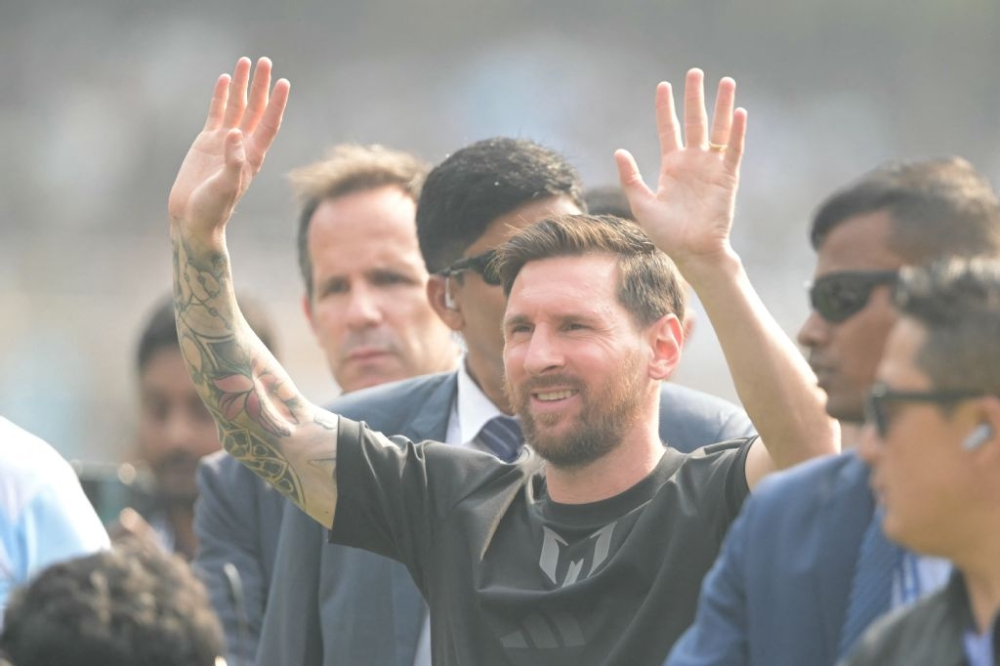
The visit of Argentine football legend Lionel Messi to the Indian city of Kolkata, which was supposed to be a historic celebration, turned into a scene of utter chaos and fan violence. After thousands of football fans flocked to see the world champion, the Salt Lake Stadium ended up in a state of vandalism, with its seats smashed, amid widespread anger over the poor organization that prevented fans from enjoying the sight of their favorite star.
Fan disappointment and details of the riot
The story began with unparalleled enthusiasm, as West Bengal gave the Argentine star a rapturous welcome. Thousands flocked to the stadium wearing Messi jerseys, paying exorbitant prices—up to $100 per ticket, an amount equivalent to a month's salary for many locals. However, tight security measures and poor planning prevented the fans from clearly seeing the Inter Miami star.
According to local reports and eyewitness accounts, Messi only made a quick lap of honor to greet the crowd and left the stadium without playing as expected, sparking outrage among the fans. The situation worsened when supporters noticed that the police and military personnel assigned to security were busy taking selfies with the player instead of managing the crowd, leading to fans storming the pitch and throwing broken seats and water bottles in a display of their anger.
Calcutta: The historical context of the love for football
To understand the scale of the public reaction, one must consider the cultural specificity of Kolkata. Unlike most of India, which is fiercely loyal to cricket, West Bengal is considered the historical and spiritual heartland of football in the country. The city has a long history of hosting legends of the game, having previously hosted Pelé, Maradona, and even Messi himself in a friendly match in 2011.
This deep-rooted passion made Messi's visit an event that went beyond a mere sporting event; it was seen as a national holiday for fans of the game in the region, which explains the enormous frustration that quickly turned into violence when the organizational arrangements did not live up to the event's standards.
Official repercussions and apologies
The event did not pass without political and administrative repercussions. Mamata Banerjee, Chief Minister of West Bengal, quickly expressed her shock and offered a sincere apology to Messi and the fans via the "X" platform, announcing an immediate investigation. These swift actions resulted in the arrest of the event's main organizer, amidst promises to explore mechanisms for compensating the financially affected fans.
For its part, the Indian Football Federation distanced itself from the crisis, confirming in an official statement that it was not involved in planning or organizing this "special event," and pointing out that the organizers did not obtain any official approvals from it, which highlights the organizational gap that occurred.
Future of the promotional tour
Despite the unfortunate events in Kolkata, which also saw the unveiling of a giant 21-meter-tall statue of Messi holding the World Cup trophy, the Argentine star is scheduled to continue his tour of India, which includes the cities of Hyderabad, Mumbai, and New Delhi. This incident raises serious questions about the ability of local organizers to manage events of this scale and the potential impact on India's reputation for hosting international sporting events in the future.