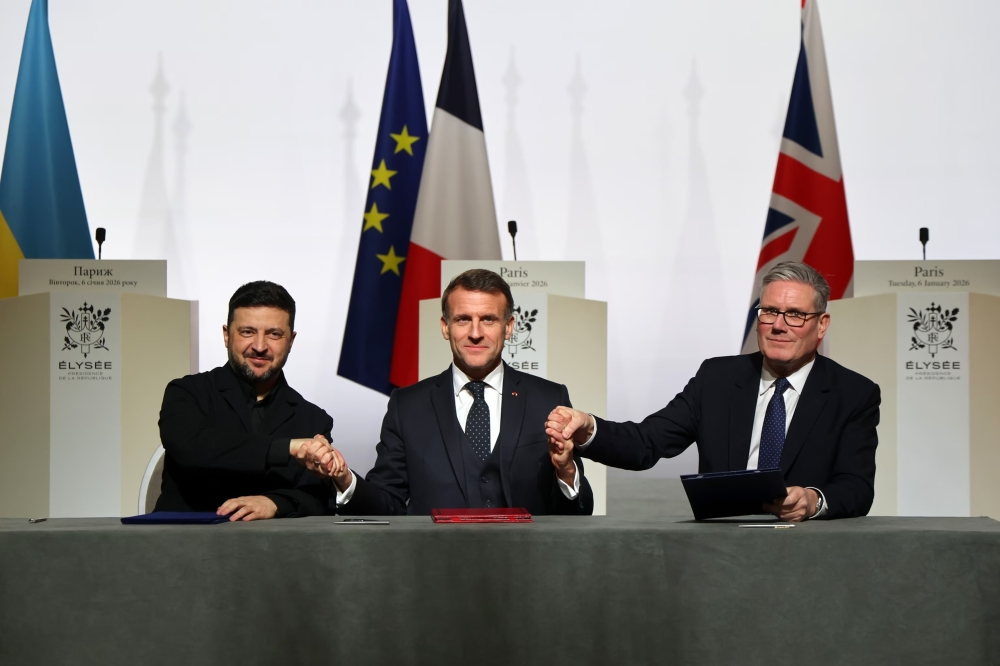
Italian Prime Minister Giorgia Meloni her country's firm stance against sending any Italian military forces to Ukrainian territory during her participation in the "Coalition of the Willing" meeting hosted by Paris. This announcement definitively clarified the limits of Italian involvement in the ongoing conflict, particularly in light of the discussions surrounding the nature of the "security guarantees" that might be offered to Kyiv should a ceasefire agreement be reached with Russia.
Details of the Italian position at the Paris meeting
An official statement from Meloni's office indicated that she had clearly informed European allies and US envoys that Rome, while unwaveringly supporting Ukraine's sovereignty and independence, draws a red line regarding the deployment of Italian troops on the ground. The Prime Minister reiterated key points of Italy's current defense doctrine, which precludes direct involvement that could be interpreted as a global war, preferring instead to focus on logistical, political, and economic support.
General context: What are the proposed security guarantees?
This statement comes at a sensitive time, as Europe witnesses intense diplomatic activity aimed at shaping the future relationship between the West and Ukraine. The concept of "security guarantees" discussed at the meeting centers on providing deterrent mechanisms to prevent Russia from launching further aggression in the future, without necessarily implying the immediate activation of Article 5 of the NATO treaty or the permanent deployment of Western combat forces. According to the Italian and American perspective, these guarantees focus on:
- Strengthening Ukraine’s own military capabilities so that it can defend itself.
- Establishing effective and comprehensive ceasefire monitoring mechanisms.
- Continued arms and training support for the Ukrainian army.
Geopolitical dimensions and the impact of the decision
Meloni's stance reflects a broad consensus within Italian political circles and most NATO countries, which are keen to prevent the conflict from escalating into a direct war between Russia and the alliance. Historically, since the beginning of the Russian invasion in February 2022, Italy has maintained a supportive position towards Kyiv, but has always been cautious about the type of long-range offensive weapons or the deployment of troops—a delicate balance Meloni is trying to maintain to ensure continued public support for her foreign policy.
Meloni described the meeting in Paris as "constructive and tangible," noting that the guarantees would be part of a "broader set of agreements" being worked on in close coordination with the United States. This coordination is interpreted as a European attempt to unify ranks before any potential negotiations that might be necessitated by future international developments, to ensure that Ukraine is not the weakest link in any future settlement.
In conclusion, this declaration reinforces the prevailing European doctrine: "All support for Ukraine, but without our soldiers," placing the greater responsibility on material and technical support to ensure Kyiv's resilience in the face of ongoing security challenges.