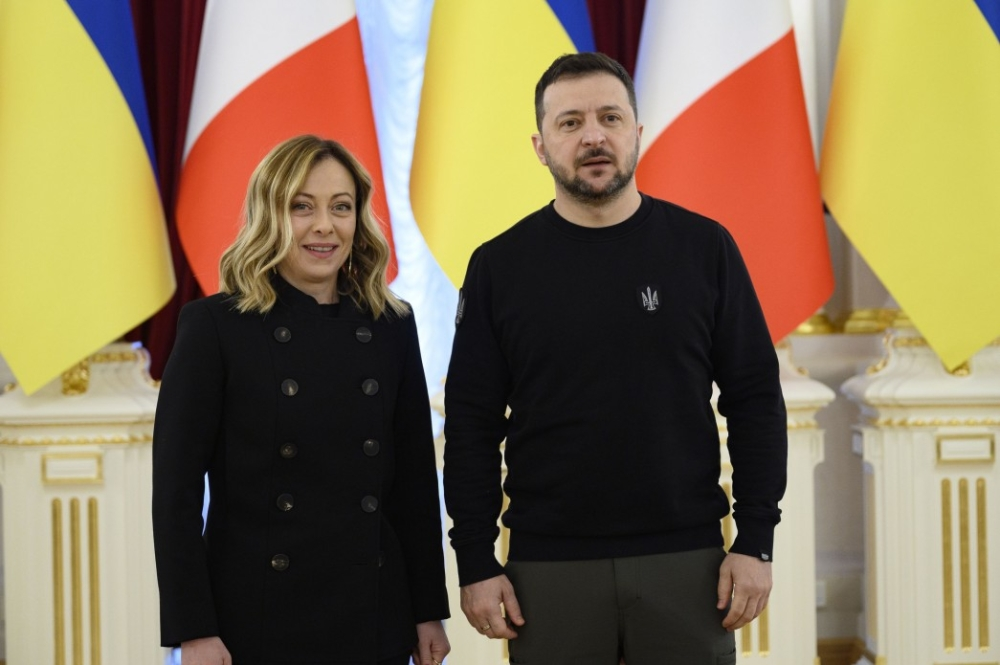
At her annual press conference, Italian Prime Minister Giorgia Meloni stressed the need to reassess the European diplomatic strategy towards the Ukrainian crisis, emphasizing that the time has come to open direct channels of dialogue between the European Union and Russia, while continuing to support Kyiv.
European Voice Unification
Meloni proposed creating a "special European envoy" position for Ukraine, arguing that this step is essential to ensuring a unified European stance. She explained that the multiplicity of voices and individual initiatives from member states could weaken the European bloc's influence in any future negotiations. She stated, "If Europe decides to participate in the current stage of negotiations by speaking to only one side, I fear its positive contribution will ultimately be limited.".
Risks of moving alone
The Italian Prime Minister warned against the dangers of fragmented diplomatic efforts, noting that a lack of coordination plays into the hands of Russian President Vladimir Putin. She added, "If we make the mistake of re-engaging with Russia on one hand, and of acting in a piecemeal fashion on the other, we will be doing Putin a favor, and that is the last thing I want." These remarks underscore Rome's commitment to avoiding unilateral decision-making and instead striving to forge a unified position that allows Europe to speak with one voice.
The geopolitical context and the Italian position
Meloni's statements take on particular significance given Italy's historical and political context. Since taking office, Meloni has been keen to dispel any doubts about her right-wing government's stance, adopting a strongly pro-NATO and pro-Ukraine position, despite Rome's historical and economic ties with Moscow before the war. Her current proposal should be interpreted not as a retreat from supporting Ukraine, but rather as an attempt to strengthen the European Union's political role, positioning it as an active participant in shaping future settlements, rather than merely providing military and financial support.
Expected impact and future of the G7
This proposal is expected to spark extensive debate in Brussels, where EU member states are seeking a balance between diplomatically isolating Russia and maintaining communication channels to prevent unintended escalation. Regarding the possibility of Russia's return to the G7, Meloni dismissed speculation, stating that it is "premature" to discuss the matter at this stage, thus emphasizing that the call for dialogue does not imply a full normalization of relations before the conflict is resolved.