The Saudi Red Crescent Authority in Madinah announced details of its exceptional operational plan for the holy month of Ramadan 1447 AH, confirming that it has raised its level of preparedness and readiness to the highest degree to serve the millions of visitors and pilgrims who flock to the Prophet's Mosque. This plan is part of a comprehensive system of services provided by the Kingdom of Saudi Arabia to ensure the safety and comfort of the pilgrims.
General context and importance of preparations
Madinah holds immense spiritual significance for Muslims worldwide, and during Ramadan, it witnesses the arrival of millions of worshippers and visitors. This massive human gathering necessitates top-level logistical and health preparations to address any emergency. Historically, the Kingdom's government has consistently dedicated all its resources to serving the Two Holy Mosques and their visitors. The Red Crescent's annual plans are a cornerstone of the crowd management and emergency medical care system, reflecting a firm and unwavering commitment spanning decades.
Details of the operational plan
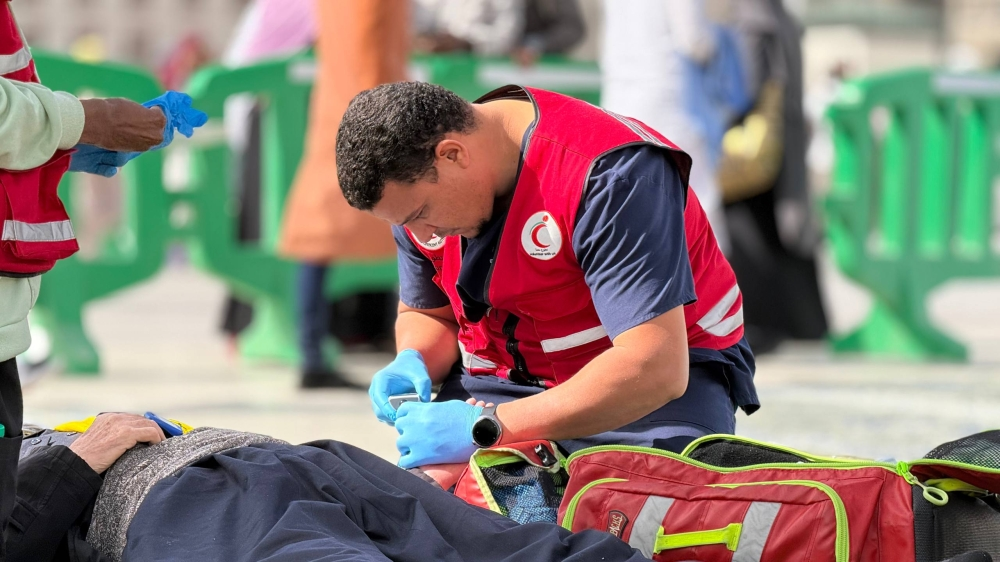
Dr. Ahmed bin Ali Al-Zahrani, Director General of the Authority's branch in the region, explained that the plan, which has commenced, will continue until the 6th of Shawwal and relies on the operation of 10 vital operational sectors. These sectors strategically cover all routes leading to the Prophet's Mosque and the main roads in Madinah to ensure rapid response to emergencies. This plan is supported by a comprehensive fleet of 97 ambulance units , including 70 advanced vehicles, 15 golf carts designated for congested areas inaccessible to cars, and 12 rapid intervention teams equipped with motorcycles and electric scooters for efficient crowd control. Specialized vehicles have also been prepared to respond to disasters and multiple injuries, while the air ambulance remains fully prepared to intervene when needed.
Qualified personnel and volunteers
To manage these massive operations, 472 specialized medical and technical staff have been assigned. This team is bolstered by an army of 1,500 volunteers, both men and women , who have received on-the-ground training and are deployed around the clock in the courtyards, arcades, and surrounding major mosques of the Grand Mosque. These volunteers play a vital role in providing first aid, guidance, and assistance, embodying the spirit of solidarity and generosity within Saudi society.
Focus on peak times and expected impact
The authority indicated that the plan includes detailed scenarios for managing peak times, with efforts being doubled and field deployments intensified during Taraweeh and Tahajjud prayers, the 27th night of Ramadan, and the completion of the Quran recitation, culminating in securing Eid prayers. The success of this plan will not only have a local impact by ensuring the safety of visitors, but will also extend regionally and internationally, enhancing the Kingdom's image as a nation capable of managing the world's largest religious gatherings efficiently and professionally, and providing reassurance to Muslims everywhere that their safety and well-being are a top priority.