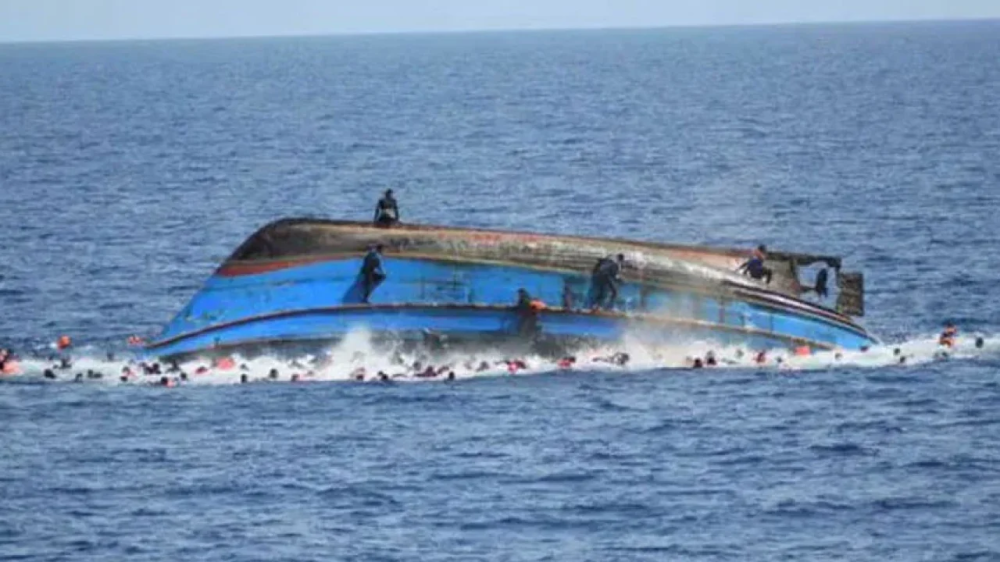
In a new humanitarian operation highlighting the growing challenges of irregular migration in West Africa, Mauritanian authorities announced that their coast guard forces successfully rescued a boat carrying 132 migrants of various African nationalities that was about to sink. A statement issued by the coast guard indicated that one of its naval units intercepted the boat and rescued all its passengers off the country's coast, noting that they had embarked from the Senegalese coast on a perilous six-day journey before becoming adrift in the Atlantic Ocean.
General context: The Atlantic route... one of the most dangerous migration routes in the world
This incident occurs within the broader context of the migration crisis along the West African Atlantic route, one of the world's most dangerous sea migration routes. Migrants, often departing from countries like Senegal, Gambia, and Guinea, use traditional wooden fishing boats known as "pirogues," ill-equipped to withstand the unpredictable and powerful currents of the Atlantic Ocean. These desperate journeys aim to reach the Spanish Canary Islands, considered a gateway to the European Union. This route has seen a significant increase in migration numbers in recent years due to deteriorating economic conditions, insecurity, and climate change in the Sahel and West Africa.
The importance of the event and its expected impact
Domestically, these repeated operations place considerable strain on Mauritania's resources, given its long and difficult-to-fully controllable coastline. However, the successes of the coast guard, such as this operation and another a week earlier in which 227 migrants were rescued off Nouadhibou, demonstrate Mauritania's pivotal role as a strategic partner of the European Union, particularly Spain, in efforts to combat irregular migration. Nouakchott relies on European technical and logistical support to strengthen its capacity to monitor maritime borders and manage migration flows.
Regionally, the incident underscores the continued operation of organized human trafficking networks that exploit the desperation of young people seeking a better future. It also serves as a wake-up call to countries of origin, highlighting the urgent need to address the root causes that drive their citizens to risk their lives at sea. Internationally, every successful rescue operation is a stark reminder of the ongoing human tragedy in the Atlantic, where countless lives are lost in unreported “silent shipwrecks.” These events compel international organizations and the European Union to reassess their strategies and seek comprehensive solutions that integrate security, economic development, and the protection of migrants’ human rights.