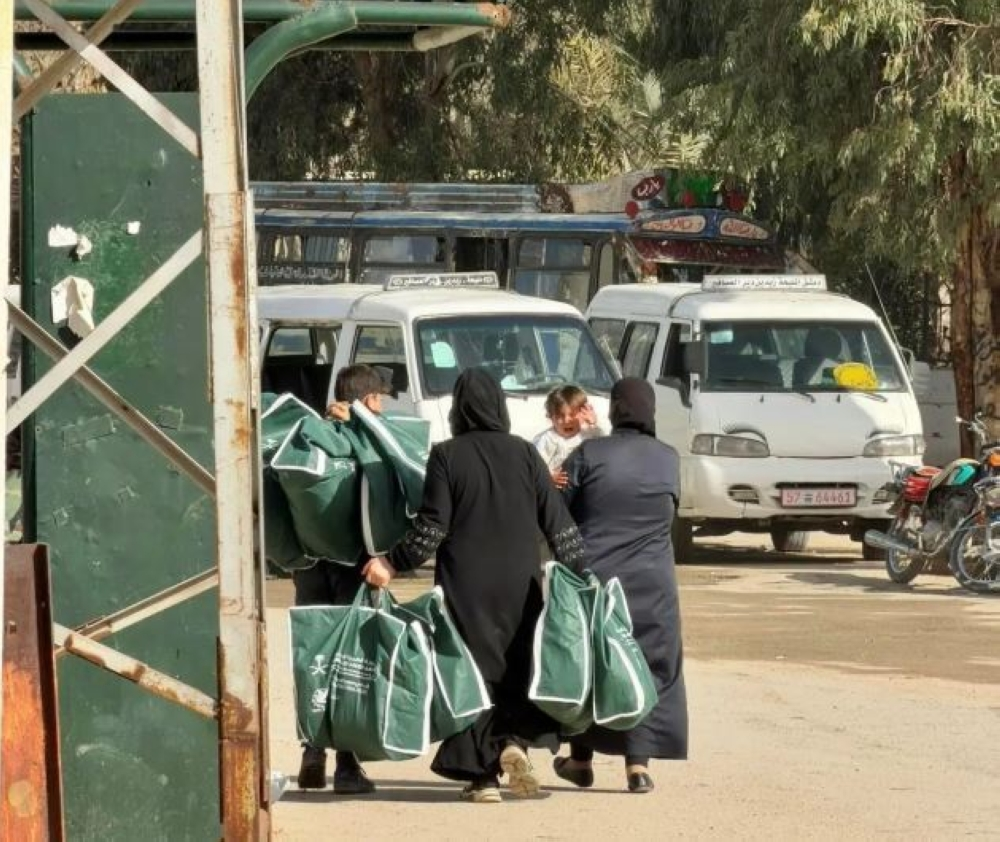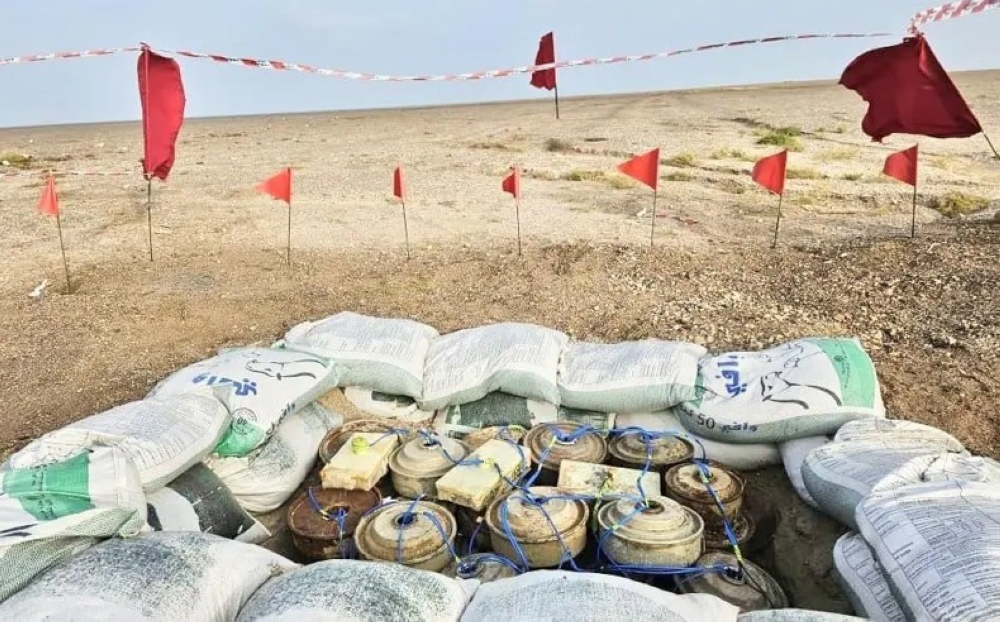
The Saudi Project for Landmine Clearance in Yemen (MASAM), affiliated with the King Salman Humanitarian Aid and Relief Center, announced a new milestone in its humanitarian mission. During the second week of February, its field teams successfully removed 840 landmines, unexploded ordnance, and improvised explosive devices (IEDs) from various regions across Yemen. This achievement is part of the ongoing efforts of the Kingdom of Saudi Arabia to restore security and normalcy to the lives of the Yemeni people.
Background of the crisis and the importance of the Masam project
Since the outbreak of conflict in Yemen in late 2014, the country has experienced one of the world's worst landmine crises. Houthi militias have indiscriminately planted hundreds of thousands of landmines and improvised explosive devices (IEDs) in residential areas, farms, roads, schools, and water sources, without maps or distinguishing between military and civilian targets. These deadly weapons continue to pose a lethal and persistent threat to civilians, impede the return of displaced persons, obstruct humanitarian aid, and cripple development even after fighting has ceased in many areas.
In this context, the “Masam” project was launched in June 2018 as a direct humanitarian response to this disaster. The project aims to identify and remove landmines and unexploded ordnance, train specialized Yemeni personnel, and raise awareness among local communities about the dangers of these deadly objects, thus contributing directly to saving innocent lives and paving the way for a safe and stable future in Yemen.
Details of the last week's operations
The recent clearance operations, which resulted in the removal of 840 dangerous items, included a variety of lethal weapons, distributed as follows:
- 16 anti-personnel mines.
- 149 anti-tank mines.
- 660 pieces of unexploded ordnance.
- 15 explosive devices.
The field teams focused their efforts in several key governorates, including Taiz (Al-Mukha, Dhubab, and Sabr districts), Al-Hudaydah (Hays district), Ma'rib (Raghwan district), Shabwah (Ayn district), Aden, Lahj, and Hajjah. This wide geographical distribution reflects the extent of mine contamination and the systematic deployment of MASAM teams to reach the most affected areas.
Human impact and future influence
Every mine removed represents a new lease on life for a child, a woman, or a farmer. The importance of demining operations extends far beyond simply removing a physical threat; it rebuilds trust and hope within communities. Locally, these efforts enable civilians to return safely to their homes, cultivate their abandoned lands, and reopen roads for trade and aid. Regionally and internationally, Project Masam serves as a model for effective humanitarian intervention, highlighting the Kingdom of Saudi Arabia’s leading role in supporting stability and peace in Yemen and the region, and contributing to the achievement of the Sustainable Development Goals related to peace and security.
With this weekly achievement, the total number of mines, unexploded ordnance, and improvised explosive devices (IEDs) removed since the project's inception has risen to over 541,511. These mines and IEDs were planted indiscriminately to claim innocent lives. The Kingdom, through its humanitarian arm, the King Salman Humanitarian Aid and Relief Center, continues its support for the "Masam" project until all Yemeni lands are cleared and Yemen returns to being a safe and prosperous country for its people.