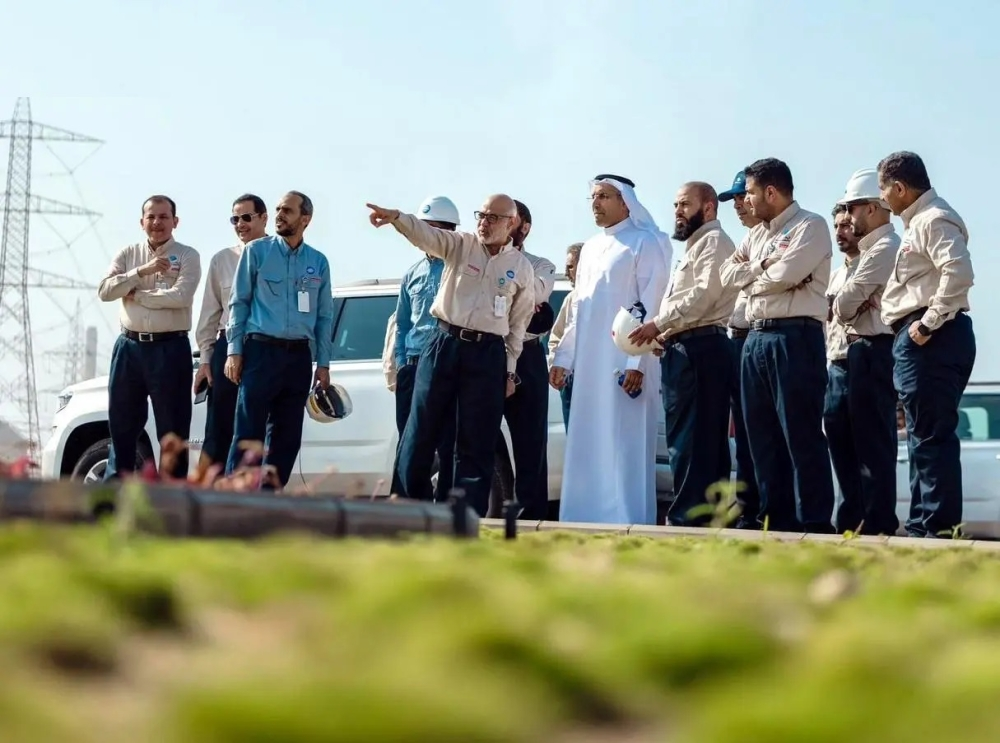
As part of proactive preparations for the holy month of Ramadan, which sees millions of pilgrims flocking to the Grand Mosque in Mecca, the President of the Saudi Water Authority, Engineer Abdullah bin Ibrahim Al-Abdulkarim, conducted a comprehensive inspection tour of the water system in Mecca and the Holy Sites. The tour aimed to ensure the highest levels of operational readiness to guarantee the sustainability and reliability of water supplies, in order to meet the anticipated surge in demand during the holy month.
Details of the field visit and work plan
Engineer Al-Abdulkarim's tour encompassed all stages of the water supply chain, from the production systems at the Shu'aiba desalination plants, through the strategic transmission lines, to the pumping stations and storage and distribution facilities. During his visit, he reviewed the operational processes at the central control room and the National Water Company's control centers, examining performance indicators, seasonal demand management plans, and coordination mechanisms among the various system components to ensure a swift response to any emergency. The tour also included a visit to the Wadi Mahram tunnel and miqat, a strategic route supporting water supplies to the Holy Sites during peak seasons. In a related context, the head of the Water Authority met with the Deputy Minister of Hajj and Umrah, Dr. Abdul Fattah Mashat, to discuss ways to enhance integration between the two entities to improve performance efficiency and contribute to providing the highest quality services to pilgrims.
Historical context and the importance of securing water in Mecca
These preparations are of paramount importance when considering the historical and geographical context of Mecca. Located in a desert region, securing water for the holy city's inhabitants and visitors has been a challenge throughout the ages. With the enormous increase in the number of pilgrims performing Hajj and Umrah, Saudi Arabia has devoted exceptional attention to developing advanced water infrastructure. Today, the Kingdom is the world's largest producer of desalinated water, relying primarily on seawater desalination technologies to meet the growing demand in major cities and the holy sites. Ensuring the provision of sufficient quantities of high-quality potable water for the millions of Muslims who flock to the holiest places on earth is not merely a service project, but an integral part of the religious and historical responsibility that the Kingdom bears as the Custodian of the Two Holy Mosques.
Strategic importance and international influence
Domestically, these executive efforts reflect the Kingdom's commitment to achieving the goals of Vision 2030, of which the Guests of God Service Program is a key pillar. Successfully managing a vital season like Ramadan enhances the confidence of citizens and residents in the efficiency of government services. Regionally and internationally, the Kingdom's ability to successfully manage and organize services for these millions of pilgrims sends a powerful message about its immense logistical and organizational capabilities. The Islamic world closely monitors the quality of services provided at the Two Holy Mosques, and ensuring the availability of essential necessities, especially water, is a key indicator of the level of care the wise leadership bestows upon visitors to the holy sites, thus reinforcing the Kingdom's position and leadership in the Islamic world.
At the conclusion of his tour, Al-Abdulkarim emphasized that these preparations are being managed with a proactive methodology based on institutional integration and operational discipline, harnessing all technical and human capabilities, in implementation of the wise leadership’s directives to provide the best services to the guests of God, and to enhance the reliability of the water system during peak seasons.