A global platform to promote the role of women in the halal economy
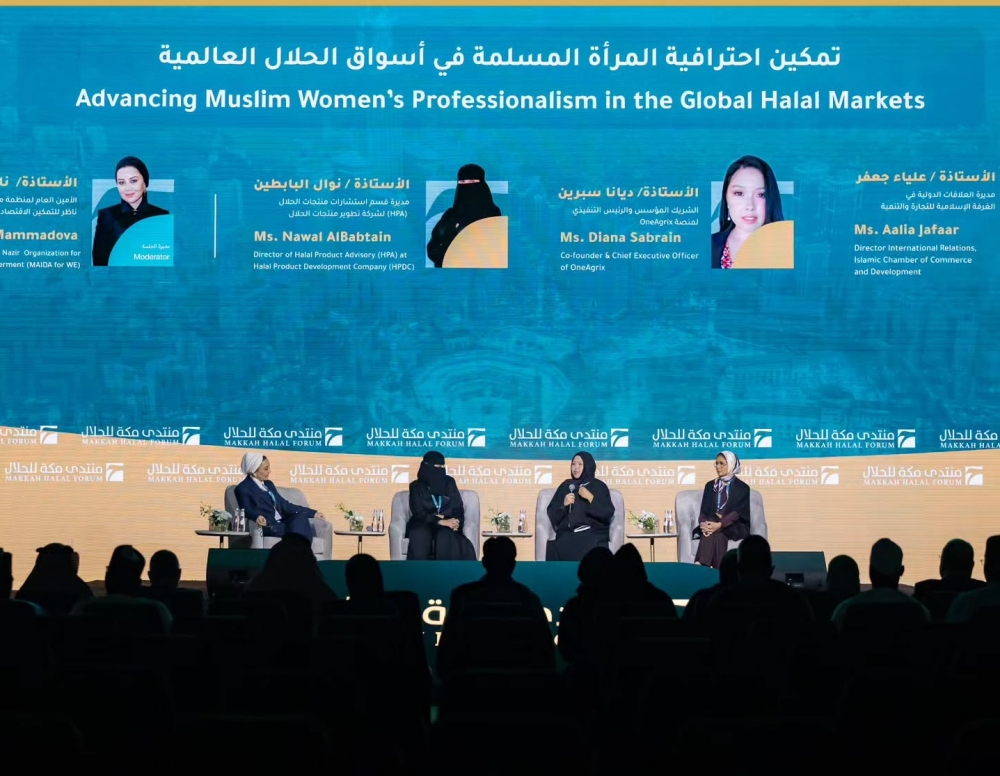
The Makkah Halal Forum 2024 witnessed in-depth discussions on the growing role of women as strategic partners in the governance and development of the global halal industry, valued at trillions of dollars. A panel discussion titled “Empowering Muslim Women in Global Halal Markets” highlighted women as active participants in an integrated economic system where value chains intersect with digital transformation and economic empowerment, thus reinforcing Makkah’s position as a pivotal hub for the global Islamic economy.
Background and context of the global halal industry
The concept of “halal” has transcended its role as a mere food standard to become a comprehensive economic system encompassing diverse sectors such as finance, tourism, cosmetics, and pharmaceuticals. With the growing Muslim population worldwide and increasing awareness of the importance of halal products, this market has witnessed tremendous growth. This expansion has necessitated the establishment of unified international governance and standards to ensure quality and reliability, which is precisely what the Makkah Halal Forum seeks to achieve, making the empowerment of women a fundamental part of this vision.
Leadership insights from pioneering women in the sector
The participants in the session emphasized the importance of moving women's role from symbolic participation to genuine effectiveness. Nawal Al-Babtain, Director of the Halal Products Consulting Department, explained that her work in providing consultations to companies seeking halal certification helps bridge the gap between the Saudi market and global markets. She praised the supportive environment provided by the Kingdom's Vision 2030, which has enabled women to play a leading role in this vital sector.
For her part, Natavan Mamadova, Secretary General of the “Maida Nazer” organization, stressed that empowering women is a shared responsibility that contributes to enhancing the sustainability of the entire sector, pointing to the leadership qualities that women possess, which make them an important element in achieving the public interest.
Technology and entrepreneurship as tools for empowerment
Diana Spren, co-founder and CEO of OneAgrix, highlighted how technology can be an effective tool for empowering women in the halal industry. She noted that her digital platform aims to promote the concept of halal globally and facilitate market access, emphasizing the importance of leveraging artificial intelligence to support women's entry into the industry and increase their presence in global markets, even in non-Muslim environments.
Strategic importance and expected impact
Focusing on empowering women in the halal industry is not only a step towards achieving equality, but also an economic imperative. Locally, this approach aligns with the goals of Vision 2030, which aims to increase women's participation in the labor market and diversify the economy. Regionally, the Kingdom offers a leading model for other Islamic countries in integrating female talent into promising economic sectors. Internationally, women's presence in leadership and advisory positions enhances the professionalism and credibility of the halal industry and facilitates building bridges of trust with business partners worldwide.
Alia Jafar, Director of International Relations at the Islamic Chamber of Commerce and Development, emphasized the importance of women’s role in shaping the Islamic economic landscape, calling for enhanced coordination among Islamic countries to support female entrepreneurs and provide transparent and reliable information on investment opportunities in this promising sector.