The end of the era of paper certificates and the beginning of smart governance
In a historic move aimed at reshaping the global halal industry, the third edition of the Makkah Halal Forum 2026 announced the dawn of a new era based on advanced technologies. The forum witnessed the announcement of the end of the era of traditional paper certificates and the transition to a fully integrated digital system utilizing artificial intelligence and blockchain technology to ensure the highest levels of transparency and governance, and to track products from their source to the end consumer.
General context: A trillion-dollar industry and an ambitious national vision
This initiative comes at a time when the global halal market is experiencing rapid growth, valued at trillions of dollars, and extending beyond food and beverages to include promising sectors such as pharmaceuticals, cosmetics, tourism, and Islamic finance. This move aligns directly with the goals of Saudi Vision 2030, which prioritizes digital transformation and economic diversification. By adopting these technologies, the Kingdom is not only reinforcing its position as the heart of the Islamic world but also solidifying its role as a global leader in setting standards of trust and quality in the halal industry.
A technological revolution to ensure reliability
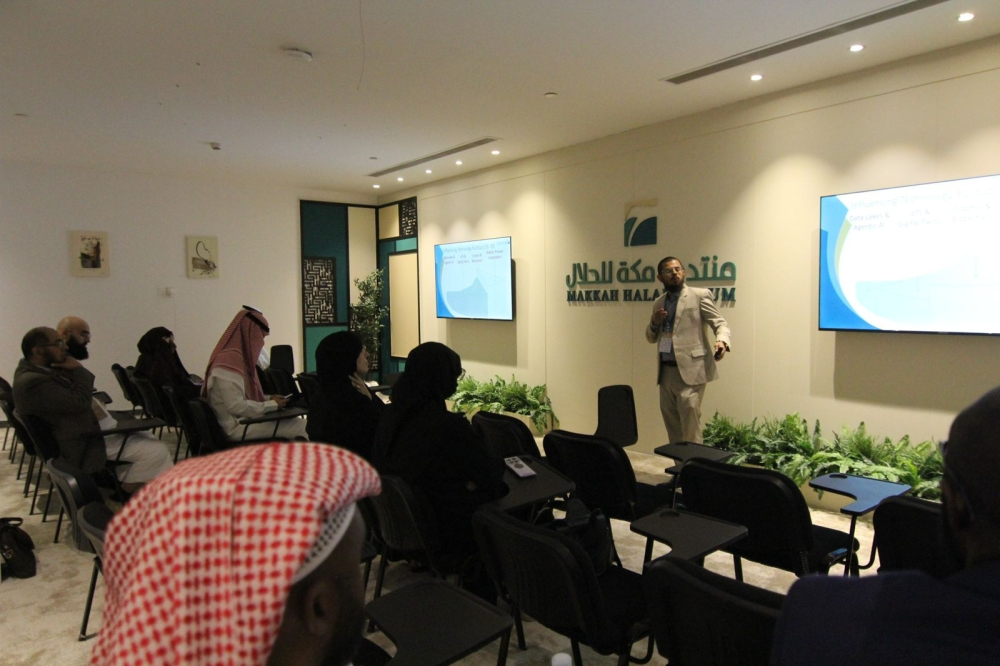
During a workshop titled “The Future of Halal,” digital transformation experts affirmed that the period between 2026 and 2030 will witness a true technological revolution. Digital transformation specialist Talha Sheikh explained that halal certificates will be transformed into “encrypted digital assets” via blockchain, making them impossible to forge or tamper with. This transformation will eliminate bureaucracy and enable consumers to instantly verify a product's origin and certificate validity through a simple QR code scan, thus enhancing trust across the entire supply chain.
Artificial intelligence: speed in execution and accuracy in compliance
Artificial intelligence specialist Daniel Ahmed presented the concept of “Agent AI,” which will act as an intelligent assistant to analyze complex documents and automate checklists and audits. This technology will accelerate product entry to market and significantly reduce import times, while maintaining final decision-making authority with human intervention to ensure full compliance with legal requirements, thus achieving an ideal balance between efficiency and Sharia compliance oversight.
Economic and strategic impact
For his part, Hassan Khalawi, representing technical integration, warned that companies that delay adopting these technologies could find themselves outside the competitive market. He described the technology as a “financial shield” that protects profit margins by reducing the costs of human error and allows companies to expand globally without needing to increase their workforce. At the international level, standardizing criteria through a reliable digital platform will facilitate trade between countries exporting and importing halal products and enhance the status of the Saudi halal certificate as a global quality mark.
Practical applications towards smart governance
Professor Wadih Al-Halabi presented practical examples of how smart systems can be used to monitor slaughtering processes in abattoirs and automatically verify compliance with Sharia requirements. In addition, these systems can monitor temperatures during transport and storage to ensure product safety and monitor adherence to health standards in large central kitchens. Thus, the halal industry is moving from the traditional concept of compliance to smart governance that guarantees quality and reliability at every stage.