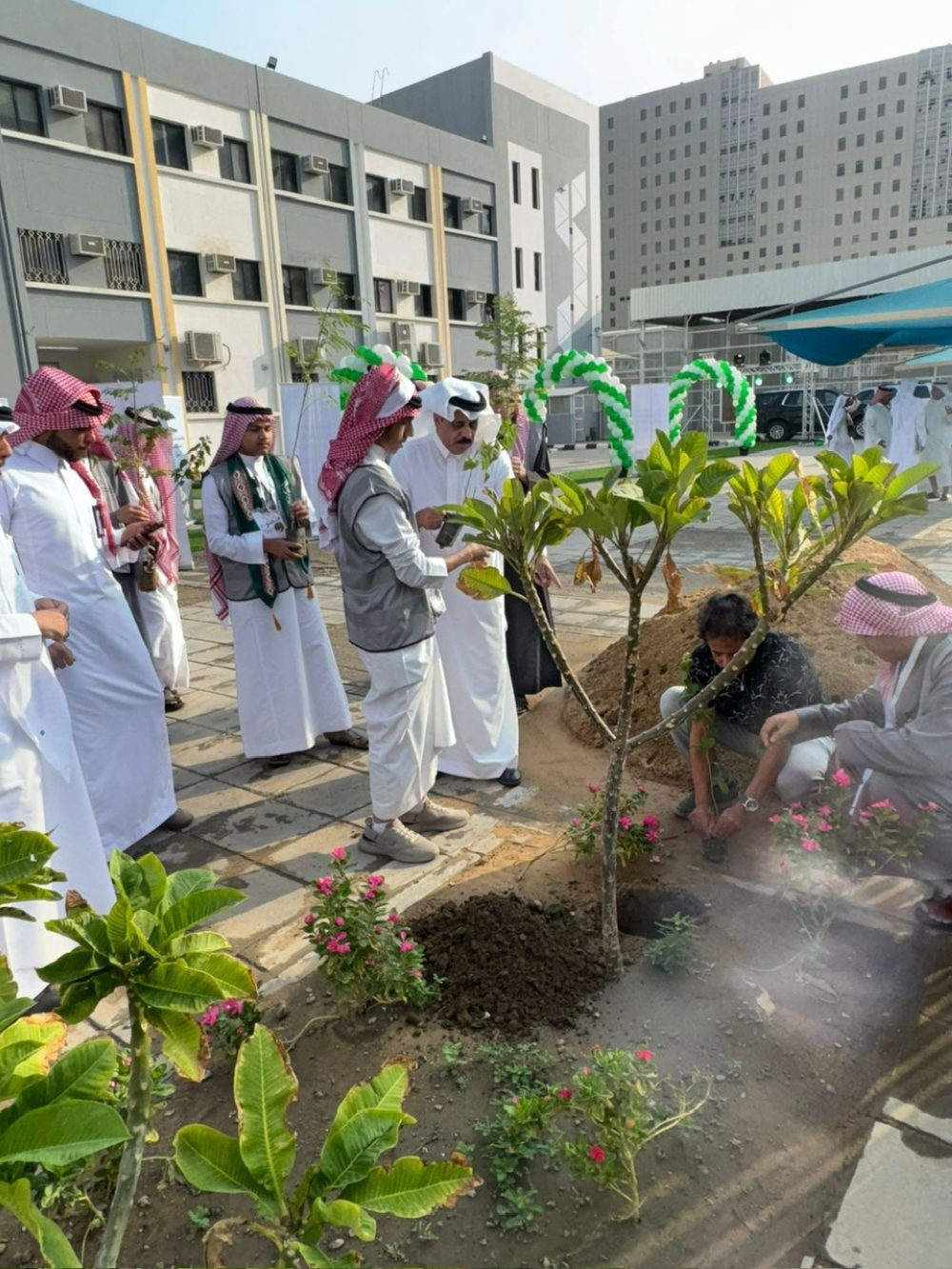
In a significant step aimed at promoting environmental sustainability within educational institutions, the General Directorate of Education in Makkah, represented by its Community Responsibility Department, launched the "Agricultural Nursery" initiative. This initiative is part of a comprehensive strategy to improve the school environment and humanize educational buildings, with more than 10,000 seedlings allocated for distribution and planting in various schools throughout the region.
Enhancing quality of life and keeping pace with Vision 2030
This initiative is not isolated from broader national trends; rather, it is a direct reflection of the objectives of "Saudi Vision 2030," specifically the "Green Saudi Arabia" initiative and the "Quality of Life" program. Increasing vegetation cover within cities and government facilities is a fundamental pillar in combating desertification, reducing temperatures, and improving air quality, which is what Makkah Education seeks to achieve by transforming schoolyards into vibrant green spaces.
Educational and psychological dimensions of the initiative
The goals of the "Agricultural Nursery" initiative extend beyond aesthetics and the environment to encompass the psychological and educational well-being of both students and teachers. Educational and psychological studies indicate that green learning environments effectively reduce stress and improve mental health, which positively impacts academic achievement and job satisfaction. The initiative focuses on utilizing underutilized spaces within schools, transforming them from mere empty areas into natural havens that enhance the school's appeal as a nurturing environment for creativity.
Applied education and instilling values
From an educational perspective, the initiative aims to integrate the agricultural nursery into the school curriculum, reinforcing the concept of "practical learning." Instead of relying solely on theoretical lessons about plants and the environment, students engage in hands-on farming, developing teamwork, patience, and responsibility. Involving students in planting and caring for the plants instills in them a sense of belonging to the land and an awareness of the importance of preserving natural resources, contributing to the development of a generation conscious of climate issues and environmental sustainability practices.
In conclusion, this step by Makkah Education represents a model to be emulated in activating the social responsibility of educational institutions, stressing that the school is not just a place to receive knowledge, but rather an incubator for raising an integrated generation that is aware of its duties towards its environment and homeland.