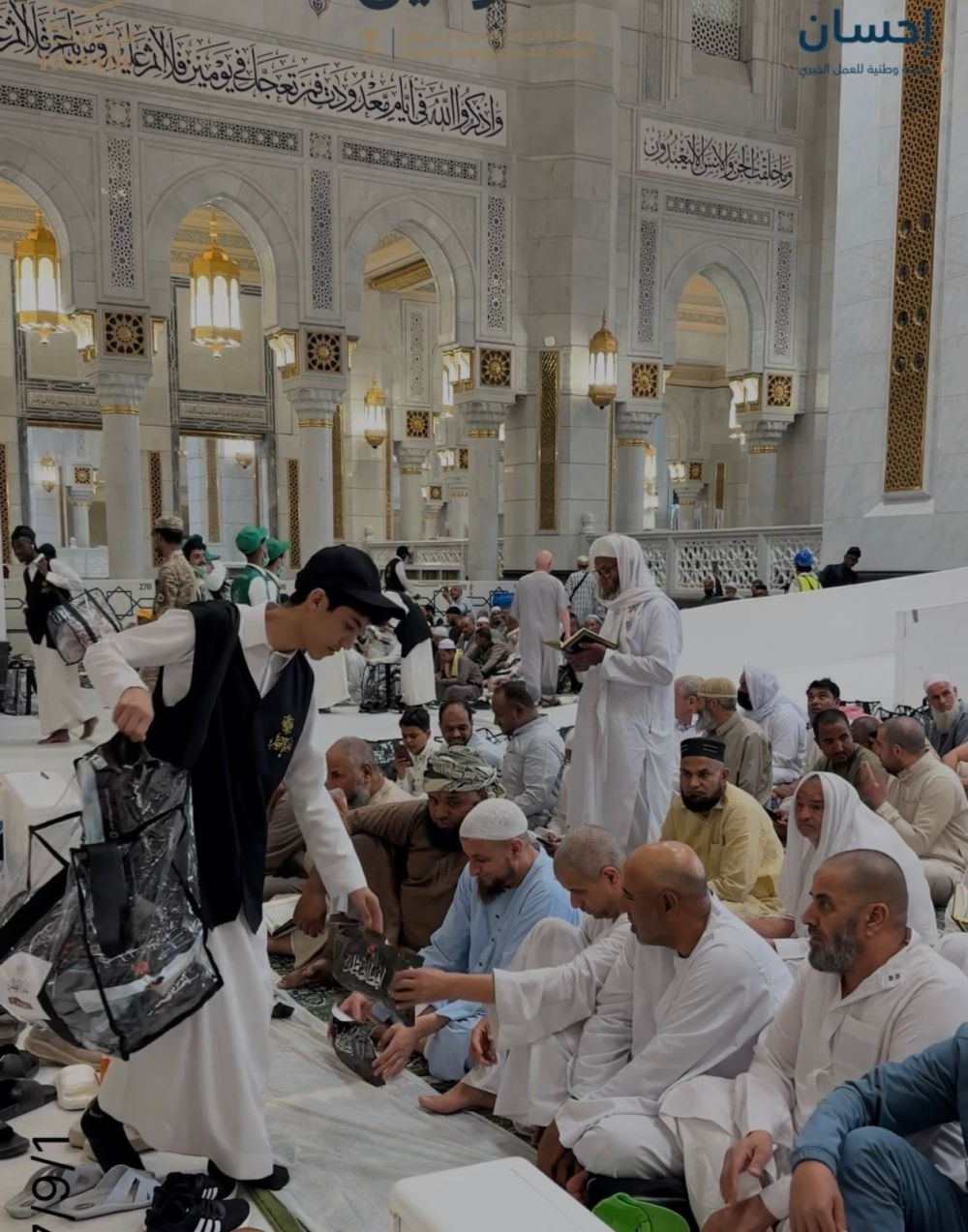
In an initiative reflecting the spirit of giving and solidarity that characterizes the holy month of Ramadan, the General Directorate of Education in Makkah launched a major community project to serve visitors to the Grand Mosque, aiming to distribute 150,000 iftar meals throughout the month. This initiative is being implemented at a rate of 5,000 complete meals daily, reaching fasting pilgrims within the precincts of the Grand Mosque.
Historical background: A legacy of generosity in serving pilgrims and Umrah performers
This initiative is an extension of the long-standing tradition of generosity and hospitality that characterizes the Kingdom of Saudi Arabia, and specifically the city of Mecca. For centuries, the people of Mecca have been dedicated to serving pilgrims visiting the Holy Mosque, and the iftar meals provided during Ramadan are a prime example of this inherited generosity. While these efforts were once individual or familial, today they have taken on a structured, institutional character, involving various sectors of the government and society. This ensures that the service reaches the largest possible number of beneficiaries with the highest quality standards, reflecting the significant progress in managing and organizing services for the pilgrims.
The importance of the initiative and its societal impact
The initiative's significance lies not merely in providing food, but in embodying the highest ideals of social responsibility within the education sector. By engaging 500 male and female volunteers from among teachers and other education staff, in collaboration with the "Al-Sadiq Educational Association," the administration instills the values of volunteerism and community service in educators, setting a positive example for future generations. Locally, this step strengthens community bonds and highlights the vital role of government institutions in serving pilgrims, leaving a profound and positive impact on visitors from around the world and reinforcing the Kingdom's image as a leading spiritual destination offering the highest levels of service to its guests.
Alignment with the Kingdom's Vision 2030
These volunteer efforts align directly with the goals of Saudi Vision 2030, which places great emphasis on developing the non-profit sector, enhancing community engagement, and encouraging volunteer work. The Vision aims to reach one million volunteers by 2030, and initiatives like the "Iftar for the Fasting" project, adopted by the Makkah Education Department, effectively contribute to achieving this national objective. They demonstrate that building a vibrant and cohesive society, one that cherishes its Islamic and national values, is a fundamental pillar of the Kingdom's vision for the future.
In conclusion, this initiative is not just a “continuous charity” on behalf of education staff, but a practical message about their pivotal role in building human beings and creating values, and an affirmation that their educational mission extends beyond the walls of schools to include serving the community and the nation in the holiest of places and the most honorable of times.