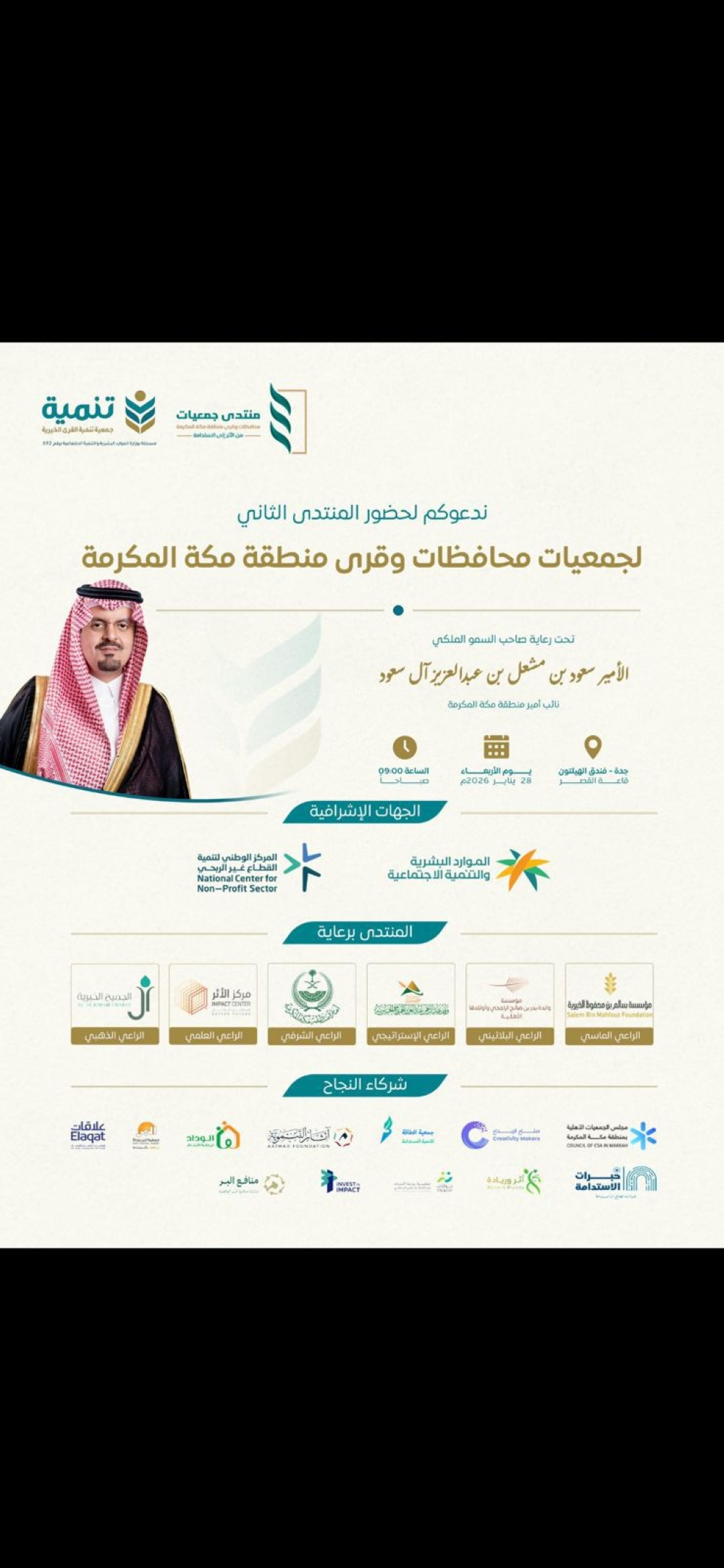
Under the patronage of His Royal Highness Prince Saud bin Mishaal bin Abdulaziz, Deputy Governor of Makkah Region, Jeddah is preparing to host the “Second Forum of Associations of Makkah Region Governorates and Villages,” organized by the Charitable Villages Development Association (Tanmia). The forum, to be held on January 28th under the theme “From Impact to Sustainability,” marks a significant milestone in the development of the non-profit sector in the Kingdom.
Strategic background: The non-profit sector and Saudi Vision 2030
This forum is being organized within the context of a comprehensive national transformation led by Saudi Vision 2030, which has given the non-profit sector strategic importance as a key partner in development. The Vision aims to increase this sector's contribution to the GDP from less than 1% to 5% by 2030 and to encourage both volunteerism and institutional work. From this perspective, non-profit organizations are no longer merely channels for providing aid, but have become development engines relied upon to create sustainable solutions to social and economic challenges—a role the forum seeks to solidify.
Forum objectives: From traditional giving to creating a sustainable impact
The forum primarily aims to bring about a qualitative shift in the thinking and performance of NGOs, moving them from the stage of providing services to the stage of creating measurable and sustainable impact. To achieve this, the forum focuses on building an integrated impact measurement system by raising awareness among rural associations of its importance and directly linking their programs to the objectives of Vision 2030. It also seeks to empower them to use modern and effective measurement tools, such as Key Performance Indicators (KPIs), the Social Return on Investment (SROI) methodology, and the Theory of Change, which ensure that resources are directed towards the most effective initiatives.
A platform for unifying efforts and building capacities
Engineer Mohammed Omar Al-Nahari, Chairman of the Board of Directors of the Tanmia Association, affirmed that the forum represents a strategic platform for unifying efforts and enhancing the efficiency of associations in the region. He explained that the association places paramount importance on empowering community leaders, building their institutional capacities, and strengthening partnerships with the public and private sectors and academic institutions. These partnerships are the cornerstone for achieving the financial and operational sustainability of development initiatives and transforming successful experiences into inspiring models that can be applied on a wider scale.
Expected impact: Local and regional impact with a national perspective
The forum is expected to leave a clear mark on several levels. Locally, it will contribute to improving the quality of life in the region's villages and governorates by supporting development projects that meet the actual needs of the population. Regionally, it will enhance the integration and coordination of civil society work in the Makkah region, an area of paramount religious and economic importance. At the national level, the forum offers a pioneering model that can be replicated in other regions and directly supports the achievement of the Kingdom's Sustainable Development Goals.
Broad participation and exchange of experiences
The forum will see the participation of over 300 organizations and NGOs, attracting more than 1,000 participants, including leaders in the non-profit sector, decision-makers, and experts. Its agenda will include panel discussions and specialized workshops, as well as an accompanying exhibition showcasing key initiatives and success stories. At least 10 cooperation agreements and strategic partnerships are planned, enhancing opportunities for integration among various entities and supporting the sustainability of development projects in the region, which encompasses 17 governorates and approximately 4,000 villages, serving more than six million beneficiaries.