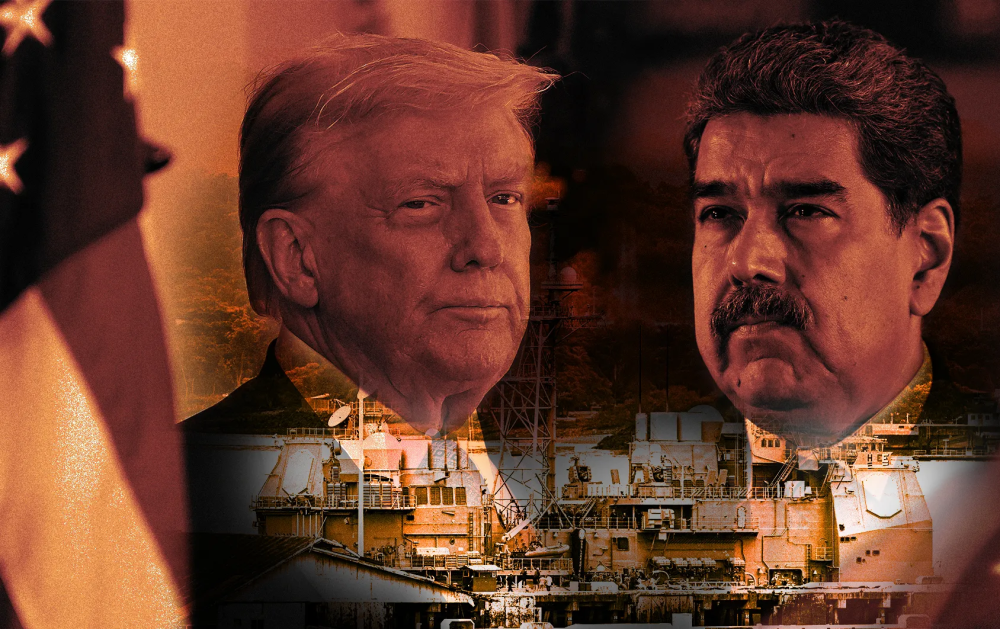
In a new escalation of tensions between Caracas and Washington, Venezuelan President Nicolás Maduro accused the United States of “piracy” after US forces in the Caribbean seized an oil tanker off his country’s coast. This incident further complicates the geopolitical landscape in the oil-rich region.
Piracy and crew kidnapping charges
The Venezuelan president launched a scathing attack on the operation via state television, describing it as an unprecedented criminal act. “They kidnapped the crew, stole the ship, and ushered in a new era—an era of criminal piracy in the Caribbean,” Maduro said. Venezuela considers these actions a violation of its sovereignty and a direct threat to its main economic lifeline: oil exports.
The White House confirms: We will confiscate the oil
In contrast, the United States did not deny the incident; the White House officially confirmed the seizure. White House spokeswoman Caroline Leavitt told reporters that the tanker would be taken to a U.S. port, emphasizing that the United States intended to seize the ship's cargo of crude oil in accordance with applicable laws and sanctions.
New sanctions target the Maduro family
In conjunction with the maritime incident, Washington expanded its sanctions to target those closest to the Venezuelan president. A US Treasury official confirmed to AFP that new sanctions had been imposed on three of Nicolás Maduro's nephews, in addition to targeting several companies involved in transporting Venezuelan oil. This move aims to tighten the financial and political noose around the ruling regime in Caracas.
Context of the conflict: Oil as a political weapon
This incident cannot be separated from the tense historical and political context between the two countries. For years, the United States has imposed a series of harsh sanctions on Venezuela's state-owned oil sector (PDVSA), the country's main source of income and home to the world's largest proven oil reserves. These sanctions, which have intensified since 2019, aim to pressure Maduro to step down and hold free and fair elections, as Washington does not recognize the legitimacy of his presidential election victory.
Regional and international repercussions
This escalation carries significant implications both regionally and internationally. On the one hand, it underscores the continuation of Washington's "maximum pressure" policy, and on the other, it highlights the challenges facing global energy markets. Furthermore, targeting members of the Maduro family signals a new phase of direct personal sanctions, potentially closing the door to any imminent diplomatic negotiations to resolve the political and economic crisis gripping Venezuela and impacting the stability of Latin America.