In a strategic move reflecting a significant shift in the Ukrainian crisis, French President Emmanuel Macron, British Prime Minister Keir Starmer, and Ukrainian President Volodymyr Zelenskyy signed a declaration of intent on Tuesday, paving the way for the deployment of a multinational force in Ukraine. This agreement is part of future security arrangements aimed at securing the country following a potential ceasefire agreement, a scenario that remains the subject of intensive diplomatic discussions.
Dimensions of the agreement and the historical context
This announcement comes nearly four years after the start of the Russian invasion of Ukraine, a period during which Kyiv has received unprecedented Western military and financial support, without the direct involvement of Western forces on the ground for fear of escalating the conflict. The talk of deploying a "multinational force" represents a significant development in European security doctrine regarding the conflict, as this future presence aims to provide "a form of reassurance" and deterrence in the days following the cessation of hostilities, according to statements by French President Macron after the Allies' meeting in Paris.
This move indicates the desire of the major European powers, specifically France and Britain, to play the role of on-the-ground guarantor of peace, thus going beyond the stage of providing only arms support to the stage of engaging in maintaining security and stability, to ensure that Russian aggression is not renewed once the war has ended.
Zelensky and tangible security guarantees
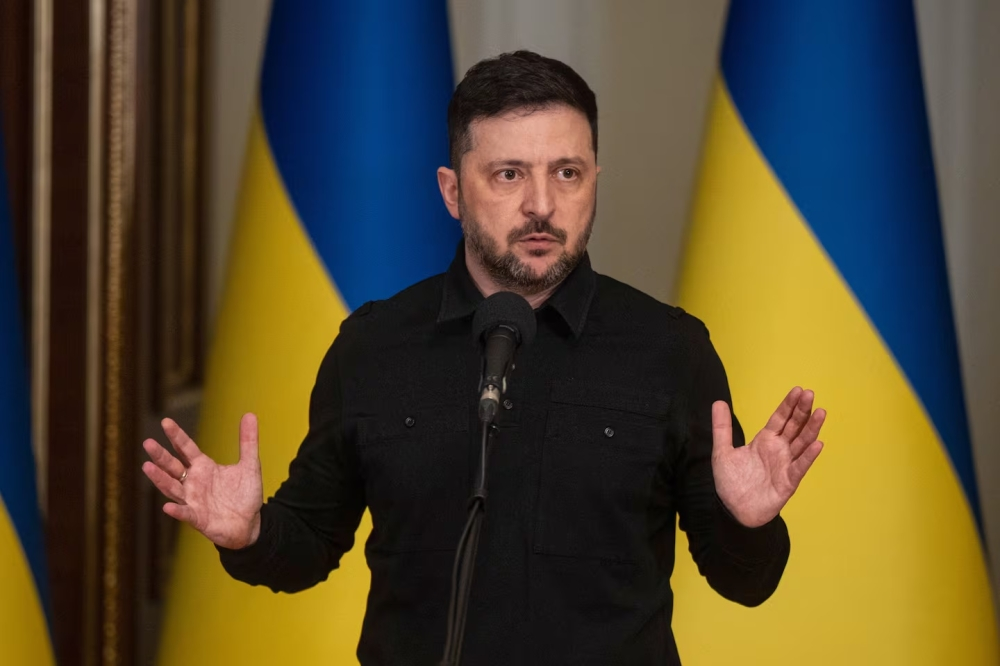
For his part, Ukrainian President Volodymyr Zelenskyy welcomed the documents, describing them as a qualitative shift from "mere words" to "concrete substance." At a press conference, Zelenskyy emphasized that the alliance now possesses fundamental documents demonstrating a genuine commitment to working for Ukraine's security. This welcome reflects Kyiv's urgent need for solid security guarantees that go beyond political promises, especially given the immense devastation wrought by the war and the need to rebuild trust in the European security architecture.
The American role and the border dilemma
In a related development, US envoy Steve Wittkopf revealed, following talks in Paris, that significant progress had been made on the agreement concerning security guarantees for post-war Ukraine. Wittkopf stated, "We believe we have largely finalized the security protocols, which are important so that the Ukrainian people know this war is over for good.".
However, the US envoy clearly pointed to the challenges ahead, explaining that border issues and territorial options would be "the most problematic and sensitive area" in the upcoming negotiations, while expressing his hope for reaching realistic compromises. This statement demonstrates the extent of the complexities awaiting international actors as they move from security arrangements to border demarcation and territorial sovereignty—a matter that will ultimately determine the political landscape of Eastern Europe.