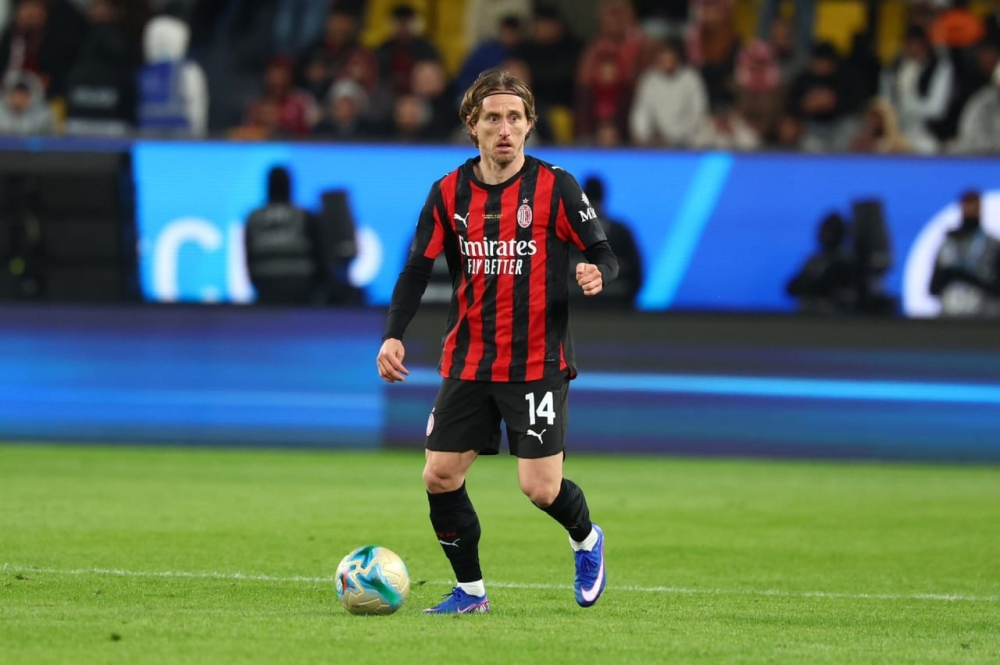
In a football phenomenon that defies the laws of biology and time, Croatian star Luka Modric to make history in Italian football, proving that age is just a number on an identity card. At 40, Modric has transformed from a player once considered a substitute at the end of his Real Madrid career into an indispensable pillar of Massimiliano Allegri's AC Milan squad.
Incredible numbers in Serie A
The numbers don't lie, and what "The Maestro" has offered in Serie A this season is exceptional by any measure. Modric has started in all 15 league matches, playing the full 90 minutes in 13 of them, accumulating 1,325 minutes of playing time – a figure that even surpasses the team's goalkeeper, Mike Maignan. This incredible physical consistency has earned him the fifth-highest rating among midfielders in Serie A, competing with stars a decade younger than him, such as Nicolo Barella and Hakan Calhanoglu.
The leadership gap in Madrid and Alonso's heartbreak
Across the Mediterranean, Real Madrid is experiencing a period of tactical disarray and a loss of identity in midfield. Reports from Valdebebas confirm that Modric's departure has left a huge leadership void in the dressing room, especially with the absence of other experienced figures, the injury to Dani Carvajal, and the departure of Lucas Vazquez. Sources indicate that the current Real Madrid coach, Xabi Alonso, was one of the strongest advocates for keeping Modric, understanding that experience cannot be bought and that guiding young stars requires a "general" on the pitch.
Perez's policy: Youth first
To understand the context of this departure, one must consider the overall strategy of Real Madrid president Florentino Pérez. Historically, the club has not hesitated to part ways with its legends (such as Raúl and Casillas) when fan sentiments clash with the administration's vision for the future. The decision made in the spring of 2024 not to renew Modric's contract was part of a strict plan for "restructuring" and relying entirely on the young quartet (Tchouaméni, Camavinga, Valverde, and Arda Güler).
The impact of departure on tactical balance
Although Modric offered to take a pay cut to stay, and despite Alonso's tactical desire, the club's economic and long-term interests prevailed. The result today is a stark paradox: Milan benefits from a masterful footballing mind that orchestrates the tempo of the game, while Real Madrid possesses a young, sometimes lacking the wisdom to manage crucial moments. Modric's departure wasn't merely a player transfer; it signaled the end of an era and the beginning of another, one that Real Madrid seems still grappling with, while the Croatian enjoys his newfound success at the San Siro.