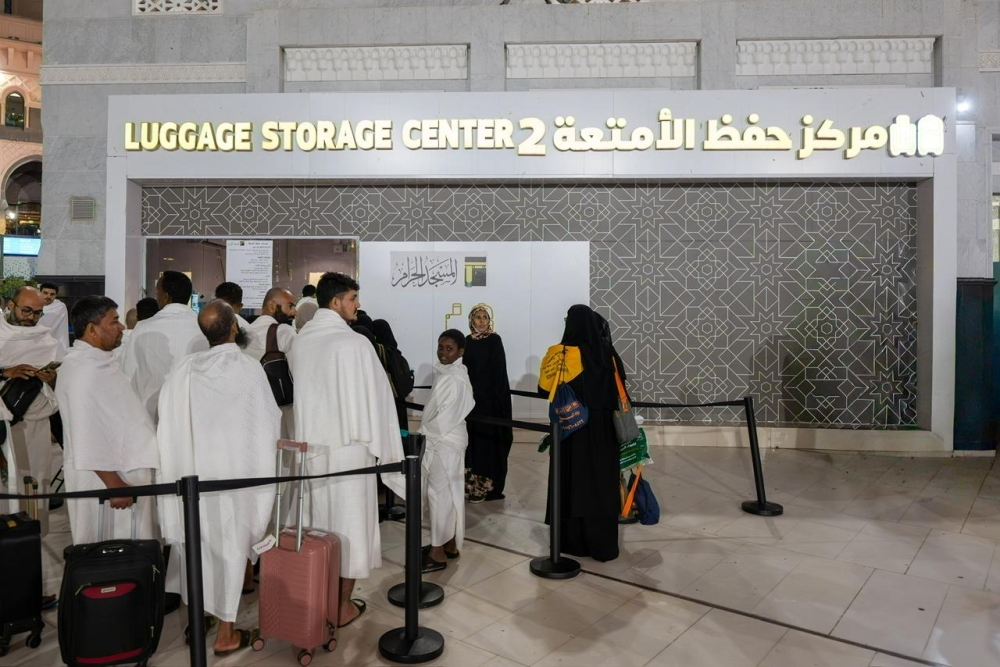
In a pioneering step aimed at facilitating the performance of religious rites, the General Authority for the Care of the Two Holy Mosques announced the launch and development of five luggage storage centers for pilgrims . This strategic initiative coincides with peak seasons such as the holy month of Ramadan and the Hajj season, to ease the movement of worshippers and pilgrims, enhance comfort and organization, and ensure smooth and convenient movement within the courtyards and facilities.
The evolution of services at the Two Holy Mosques throughout history
Historically, crowd management and handling the luggage of pilgrims has posed a significant challenge for organizers. In the past, the presence of personal belongings in the courtyards of the Two Holy Mosques obstructed pedestrian traffic and disrupted the flow of Tawaf and Sa'i. Therefore, the wise leadership of the Kingdom of Saudi Arabia has been committed over the decades to finding radical and innovative solutions. Services for pilgrims have evolved from simply providing basic spaces to establishing a smart and advanced infrastructure aligned with the Kingdom's Vision 2030, which prioritizes serving the guests of God to ensure the performance of religious rites in a safe and organized environment.
Map of luggage storage centers for pilgrims in the Grand Mosque
To ensure comprehensive geographical coverage, the Authority identified four key locations within the Grand Mosque in Mecca, carefully and meticulously distributed. These locations include the western courtyard behind Restroom No. 6, Ajyad Street next to Restroom No. 1, the eastern courtyard near the Mecca Library, and the services building in the Third Saudi Expansion beyond Shu'ab Amer. To enhance service efficiency and speed of response, the Authority designated luggage collection points at the main entrances, including King Abdulaziz Gate, King Fahd Gate, Umrah Gate, and Gate 100, making it easy for pilgrims to drop off their luggage upon arrival.
Expansion of services at the Prophet's Mosque
In Medina, the Prophet's Mosque has established a new and advanced luggage storage center, located in the outer courtyards between exits 365 and 366. This center operates according to the highest organizational and security standards to ensure the safety of personal belongings and the speed of processing, in line with the expected massive influx of visitors during Ramadan and the Hajj season. All these centers operate with an integrated system that guarantees rapid access to services from all parts of the Prophet's Mosque, thus enhancing the spiritual experience for visitors.
Guidelines for using the free service
The authority confirmed that the luggage storage service is provided completely free of charge to all visitors and operates around the clock. To ensure maximum benefit for visitors, regulations stipulate a maximum storage period of four hours. This measure aims to optimize service rotation and prevent overcrowding. This service is an integral part of the authority's ongoing development programs to enhance the quality of services offered at the Two Holy Mosques.
Strategic dimensions and service impact locally and internationally
The launch of luggage storage centers for pilgrims is not merely a procedural step, but also carries strategic dimensions and far-reaching implications. Locally, these centers directly contribute to reducing traffic and pedestrian congestion in the areas surrounding the Two Holy Mosques, thus enhancing crowd management efficiency and facilitating the work of security and health authorities. Regionally and internationally, these initiatives reflect the Kingdom of Saudi Arabia's unwavering commitment to providing the highest quality services to Muslims from around the world. Providing a barrier-free environment reinforces the Kingdom's positive image as a leading nation in managing mass gatherings and underscores its exceptional ability to utilize cutting-edge technologies and facilities to serve Islam and Muslims, leaving a lasting and positive impression on pilgrims and Umrah performers upon their return home.