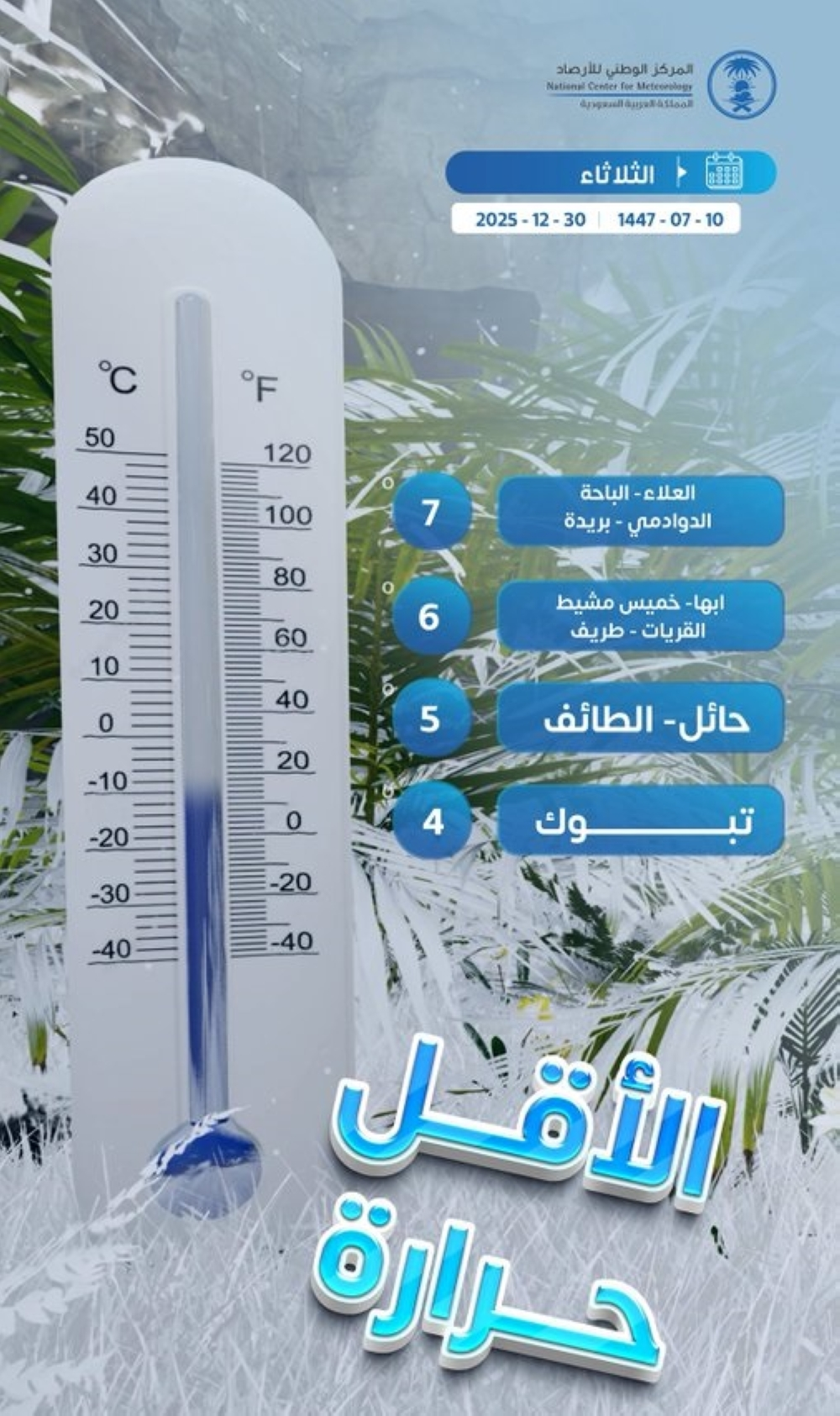
Various regions of the Kingdom of Saudi Arabia witnessed a noticeable drop in temperatures on Tuesday, as data issued by the National Center for Meteorology revealed a clear variation in the climatic conditions, with the Tabuk region leading the way by recording the lowest temperature in the Kingdom.
Details of recorded temperatures
According to official reports, Tabuk recorded a temperature of 4 degrees Celsius, making it the coldest region of the day. The ranking of other cities and governorates with the lowest temperatures is as follows:
- Tabuk: 4 degrees Celsius.
- Hail: 5 degrees Celsius.
- Taif: 5 degrees Celsius.
- Abha: 6 degrees Celsius.
- Khamis Mushait: 6 degrees Celsius.
- Al Qurayyat: 6 degrees Celsius.
- Tarif: 6 degrees Celsius.
- Al-Ula: 7 degrees Celsius.
- The courtyard: 7 degrees Celsius.
- Dawadmi: 7 degrees Celsius.
- Buraidah: 7 degrees Celsius.
climatic and geographical context
This drop in temperatures is consistent with the Kingdom's geographical patterns at this time of year. Northern regions such as Tabuk, Al Qurayyat, and Tarif are directly affected by cold air masses from the north, typically resulting in the lowest temperatures. Conversely, topography plays a pivotal role in the southern and western highlands, such as Abha, Al Baha, and Taif, where the higher altitude naturally lowers temperatures compared to coastal or low-lying areas.
The role of the National Center for Meteorology and Continuous Warnings
The National Center of Meteorology operates around the clock to monitor weather fluctuations using the latest technologies and advanced radar systems. The center's role extends beyond simply monitoring temperatures; it also issues early warnings (ranging from yellow to red) to alert citizens and residents to associated weather phenomena such as dust storms, strong winds, or reduced horizontal visibility, as indicated in previous weather reports regarding the possibility of surface winds stirring up dust and sand.
Safety recommendations and guidelines
With the cold waves continuing and temperatures dropping to near freezing at times, authorities recommend taking precautions. This includes wearing appropriate winter clothing, especially for children and the elderly, and using heating appliances carefully to avoid carbon monoxide poisoning or fires in enclosed spaces. Drivers are also advised to follow traffic and safety guidelines when driving in areas experiencing fog or dust storms associated with these weather conditions, to ensure everyone's safety.