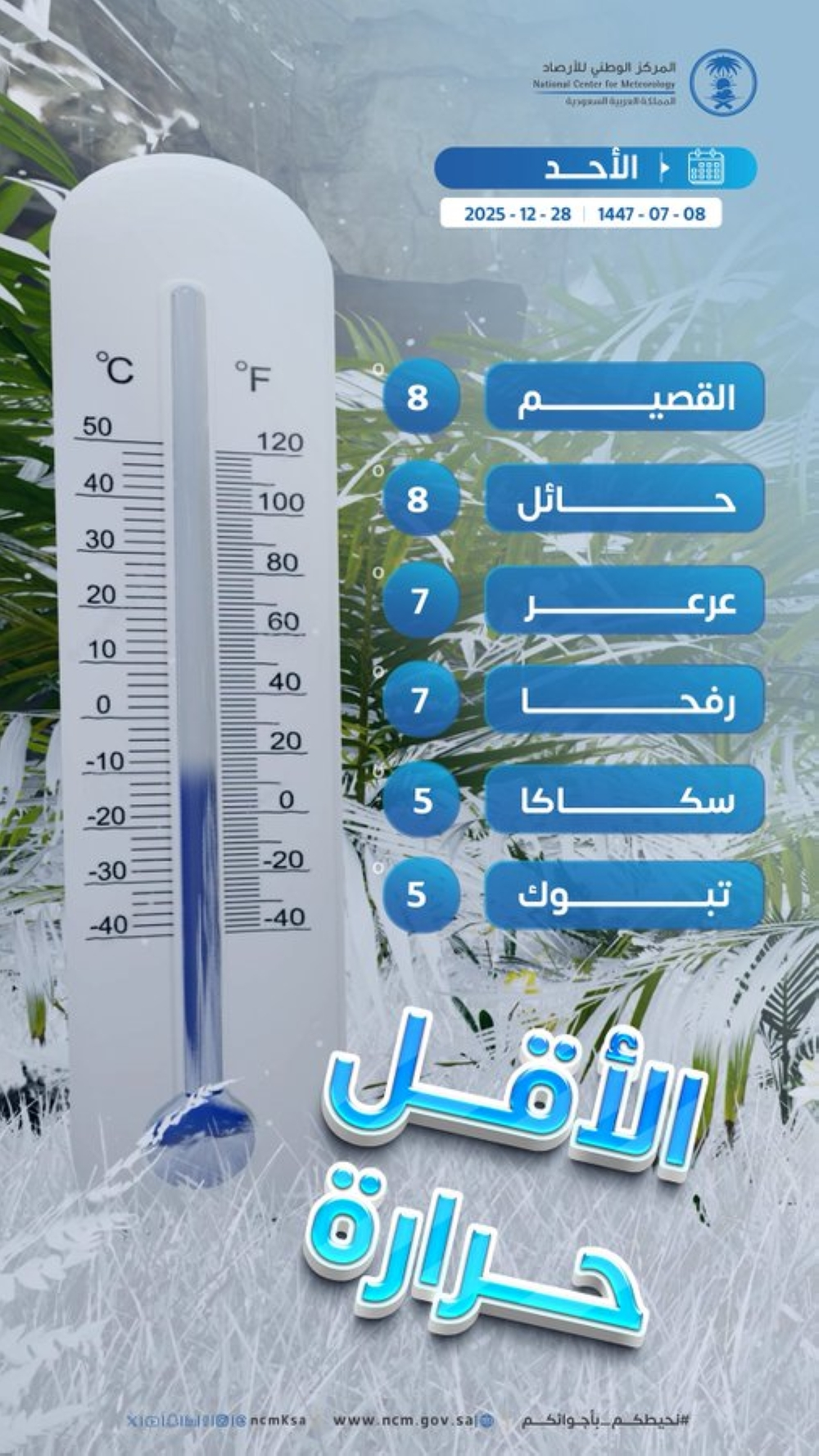
Northern Saudi Arabia experienced a significant drop in temperatures on Sunday, with Tabuk and Sakaka recording the lowest temperatures compared to other regions. According to a statement issued by the National Center for Meteorology, both Tabuk and Sakaka registered 5 degrees Celsius, indicating the onset of the cold winter weather that characterizes these areas at this time of year.
Details of recorded temperatures
The National Center of Meteorology explained in its daily weather report that the drop in temperatures included several northern and central cities, and the ranking of the least hot cities was as follows:
- Tabuk: 5 degrees Celsius.
- Sakaka: 5 degrees Celsius.
- Arar: 7 degrees Celsius.
- Rafha: 7 degrees Celsius.
- Al-Qassim: 8 degrees Celsius.
- Hail: 8 degrees Celsius.
The geographical and climatic context of the northern regions
The northern regions of the Kingdom, specifically Tabuk, Al-Jawf, and the Northern Borders, are the primary gateway for cold air masses arriving from Europe and the Levant. Tabuk, in particular, is characterized by its diverse geography and high altitude, making it susceptible to sharp drops in temperature, sometimes falling below freezing during the winter months. Snowfall is also common on its renowned highlands, such as Jabal Al-Lawz.
The importance of preparing for cold waves
This drop in temperatures is part of the typical winter weather patterns in the Kingdom, but it always necessitates taking precautions. These cold waves directly affect the daily activities of residents, requiring the wearing of heavy winter clothing, especially for children and the elderly, and caution while driving in the early morning due to the possibility of fog formation that may accompany the drop in temperature and the rise in humidity.
Impact on vital sectors
The impact of the drop in temperatures extends beyond daily life, affecting the agricultural and pastoral sectors. Farmers in the Qassim, Hail, and northern regions are closely monitoring weather data to protect their crops from potential frost that could damage agricultural production. Following the National Center for Meteorology's reports is crucial for ensuring public safety and taking necessary precautions to cope with ongoing weather fluctuations.