Several regions in Saudi Arabia experienced a noticeable drop in temperatures. The National Center for Meteorology revealed details of the weather conditions that prevailed on Tuesday, noting that the cities of Qurayyat and Rafha recorded the lowest temperatures compared to the rest of the Kingdom's cities and governorates. This drop is part of a cold wave affecting the northern and central regions, which is typical for this time of year when winter's cold intensifies.
List of the coldest cities
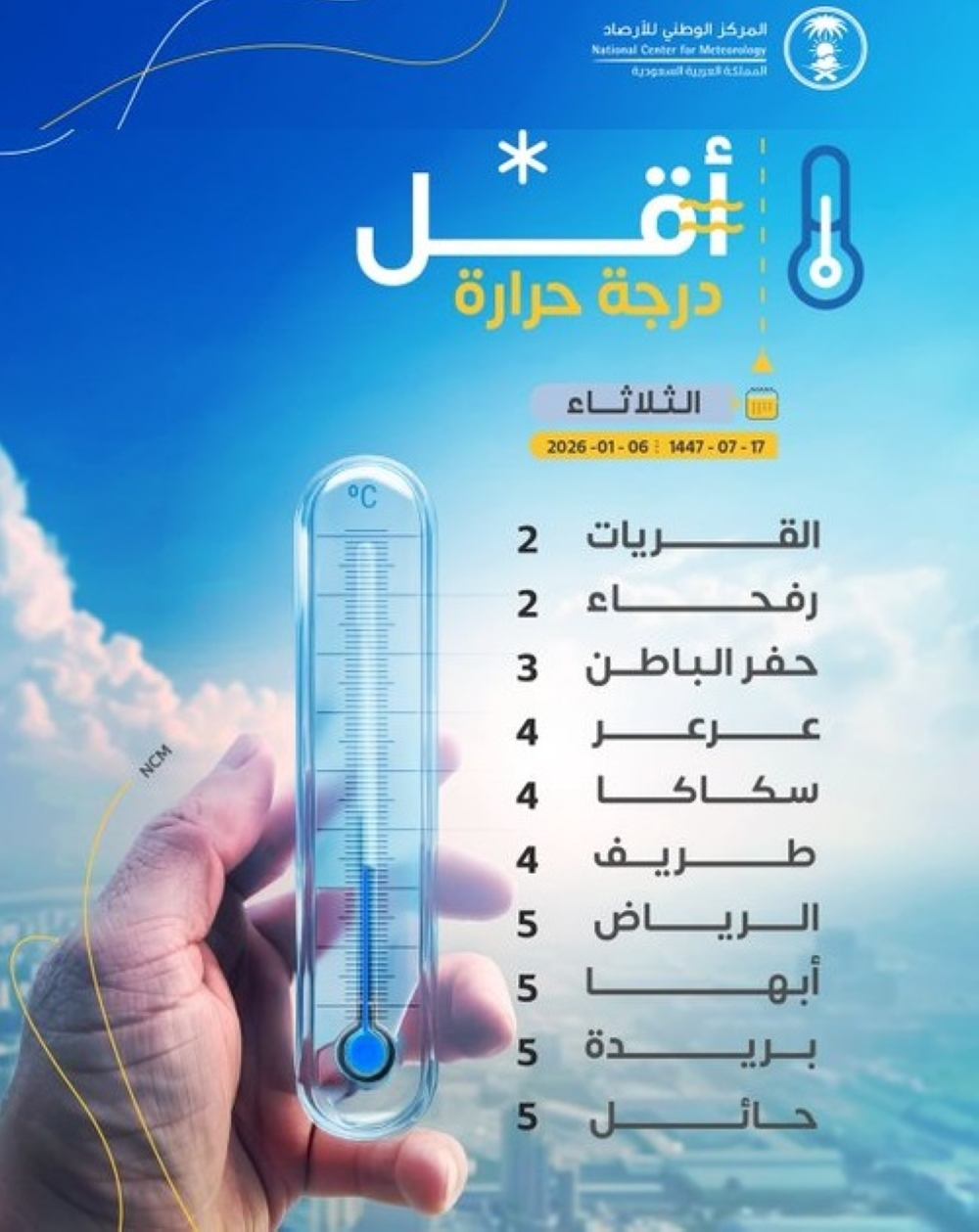
According to official data from the center, Al-Qurayyat and Rafha shared first place on the list of the coldest cities, each recording only 2 degrees Celsius. The following list shows the ranking of cities according to their recorded temperatures:
- Al Qurayyat: Two degrees Celsius.
- Rafha: Two degrees Celsius.
- Hafar Al-Batin: 3 degrees Celsius.
- Arar: 4 degrees Celsius.
- Sakaka: 4 degrees Celsius.
- Tarif: 4 degrees Celsius.
- Riyadh: 5 degrees Celsius.
- Abha: 5 degrees Celsius.
- Buraidah: 5 degrees Celsius.
- Hail: 5 degrees Celsius.
Climate context and the impact of cold waves
The northern regions of Saudi Arabia, such as the Northern Borders, Al-Jawf, and Tabuk, possess climatic characteristics that make them highly susceptible to cold air masses from the north. Historically, these areas experience their lowest temperatures during January and February, sometimes reaching or dropping below freezing, requiring residents to take extra precautions regarding heating and wearing heavy winter clothing. This temperature variation across the Kingdom reflects its vast geographical expanse and diverse topography, with the southern and central highlands having significantly different climates than the coastal regions.
Fog and reduced visibility alerts in the Eastern Province
In conjunction with the drop in temperatures, the National Center of Meteorology issued an important weather alert for the Eastern Province, specifically in Al Udeid Governorate. The center warned of dense fog forming during the early morning hours of Wednesday. According to the report, the phenomenon will begin at 1:00 AM and continue until 8:00 AM, leading to a significant decrease in horizontal visibility, sometimes to near zero (1 to 3 kilometers).
The importance of adhering to safety instructions
These warnings are of utmost importance for drivers on highways and open roads, as fog poses traffic hazards requiring extreme caution. Authorities consistently advise reducing speed, using fog lights, and maintaining a safe distance between vehicles in such conditions to avoid accidents. Those with respiratory illnesses and the elderly are also advised to avoid direct exposure to severe cold and fog due to potential health complications, and to regularly check weather forecasts to plan their daily activities and ensure their safety.