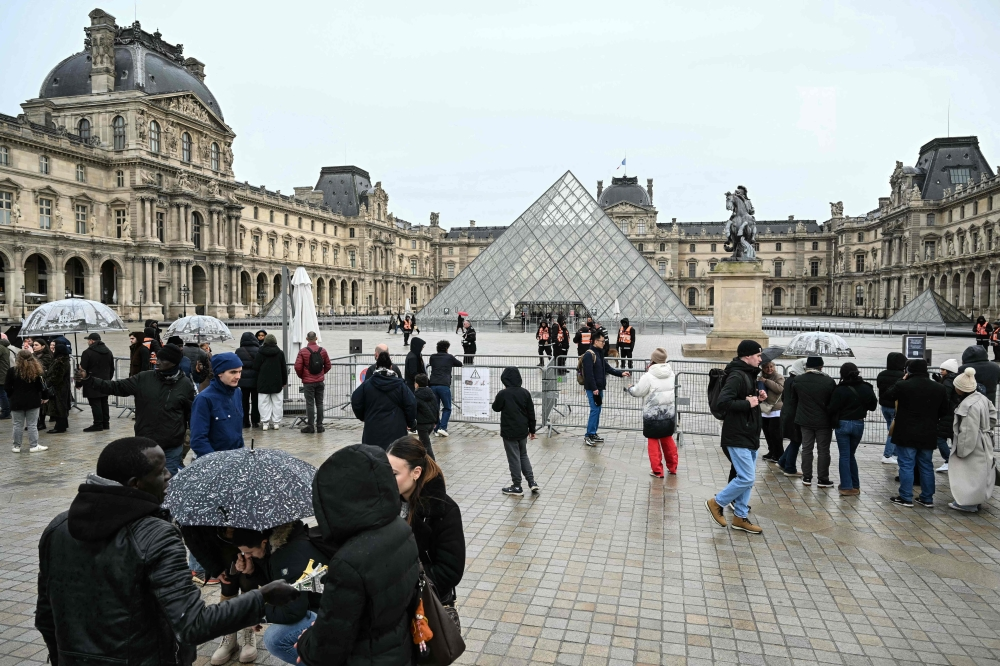
The Louvre Museum in Paris, one of the world's most prominent cultural landmarks and most visited museums, partially closed its doors on Monday due to a strike by staff protesting their working conditions. This action disrupted the plans of thousands of tourists and visitors who had flocked to see its priceless artistic treasures.
Background of the strike and employee demands
The strike began on December 15, with labor unions calling on employees to walk off the job to protest what they described as “deteriorating working conditions.” The main demands center on staff shortages, which increase the workload for existing employees, as well as wage disparities between museum staff and other employees of the French Ministry of Culture. According to union statements and museum management, the strike has forced the museum to only partially reopen, limiting visitors' experience to viewing a select number of masterpieces, most notably the Mona Lisa and the Venus de Milo. Since the start of the protest, the museum has been completely closed four times and partially open on four other occasions, reflecting the ongoing crisis between staff and management.
Historical context and importance of the Louvre Museum
The impact of this strike cannot be understood without considering the Louvre's iconic status. Dating back to the 12th century, the building was originally a defensive fortress before becoming a royal palace for the kings of France. Following the French Revolution, it was converted into a public museum in 1793. Today, the Louvre houses a vast art collection spanning millennia of human civilization, from ancient Egyptian artifacts and Greek and Roman treasures to masterpieces of the European Renaissance. The museum welcomes millions of visitors annually (approximately 7.8 million in 2022), making it not only a cultural icon of France but also a key driver of Paris's tourism economy.
Local and international impacts of the lockdown
The impact of the Louvre's closure, even if partial, extends far beyond simply depriving visitors of an artistic experience. Domestically, it represents a blow to Paris's tourism sector, which relies heavily on its iconic landmarks. It also highlights broader labor tensions in the French public sector, where strikes have become a common tool for negotiating wages and working conditions. Internationally, news of the disruption to one of the world's most popular tourist destinations damages France's image as a reliable and well-organized tourist destination, especially as the country prepares to host major global events. Furthermore, the strike comes at a time when the museum is facing other challenges, including the recent exposure of a large-scale ticket fraud scheme that resulted in losses estimated at over €10 million, and a water leak that damaged one of its ornate 19th-century ceilings.