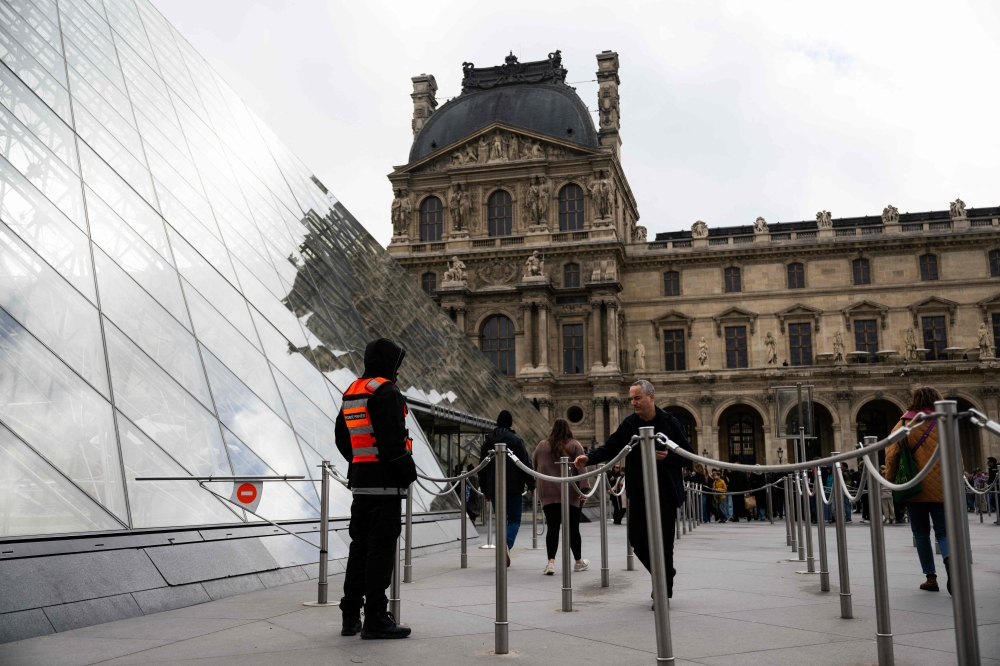
The Louvre Museum has suffered another unfortunate incident, adding to the series of challenges the institution has recently faced. Museum management revealed that the Egyptian antiquities library sustained material damage due to a water leak on November 26th. This incident further complicates matters within the world's most visited museum, especially coming on the heels of a major theft that rocked its halls last October.
Details of the damage and extent of losses
According to Francis Steenbock, the museum's assistant commissioner general, the incident damaged between 300 and 400 items housed in the library. Officials explained that the damaged materials consisted of Egyptology journals and scientific and research documents dating from the late 19th and early 20th centuries. Despite the concern raised by the news, the museum administration was quick to reassure the cultural and academic communities, emphasizing that no heritage works or unique artifacts were damaged, and that the losses were limited to paper documents that could be restored and repaired through specialized binding and drying processes before being returned to the shelves.
The historical importance of the Egyptian Antiquities Department
This incident is particularly sensitive given the importance of the Egyptian Antiquities Department within the Louvre Museum. This department is one of the most important and prestigious Egyptian antiquities departments in the world, established in 1826 by royal decree of Charles X. The renowned scholar Jean-François Champollion, who deciphered the Rosetta Stone, was appointed its first curator. The library attached to this department is a vital resource for researchers and Egyptologists worldwide, housing records and studies that document discoveries and excavations over two centuries, making the preservation of its contents essential for the continuation of historical research.
Causes of the accident and dilapidated infrastructure
Initial investigations revealed that the leak was caused by the improper opening of a valve in the heating and ventilation system of the Mullen Wing. This incident has highlighted the state of the museum's infrastructure, with Steinbock describing the water system as "completely dilapidated." A comprehensive replacement of this system is scheduled to begin in September 2026, suggesting that the museum may face similar risks until the upgrades are completed.
A tense context and future challenges
This incident cannot be separated from the broader context of the Louvre's current situation, where labor unions, particularly the CFDT-Kultur union, have been vocal in their condemnation of what they describe as a long-standing "deterioration of conditions." This comes just a month after the theft of €88 million worth of jewels, placing security measures and maintenance systems under intense scrutiny. In an effort to offset the exorbitant costs of restoration and upkeep of the aging historic building, the museum's management plans to increase admission prices by 45% for visitors from outside Europe by 2026, a move aimed at ensuring the sustainability of this cultural landmark, which welcomed approximately 8.7 million visitors in 2024.