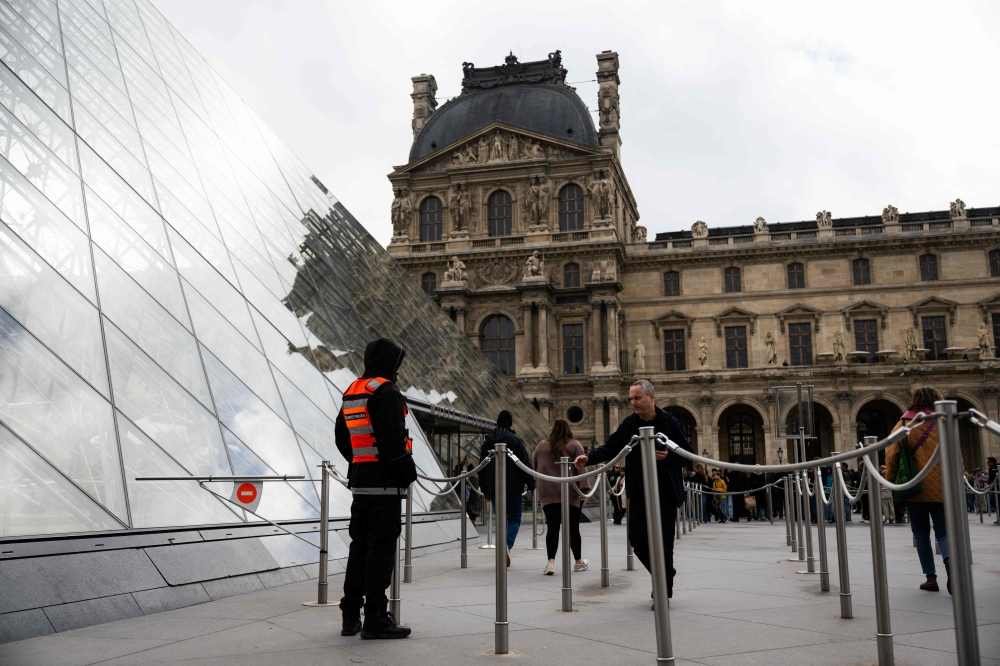
The Louvre Museum announced a partial reopening to visitors on Wednesday, despite an ongoing strike by museum staff. This decision comes a day after the museum's complete closure on Monday, which caused confusion and disappointment for thousands of tourists who visit Paris specifically to admire its artistic treasures.
Around 300 staff members voted in a general assembly to extend their strike, expressing their strong protest against what they described as a "severe staff shortage" and the "deteriorating condition of the historic building." A museum spokesperson confirmed that "not all departments are open, but the museum is open and currently receiving a few visitors," in an attempt to mitigate the strike's impact on the city's tourism experience.
General context and historical background
The magnitude of this strike's impact cannot be grasped without understanding the unique position of the Louvre. It is not merely a museum, but a global historical and cultural landmark. Originally a fortress built in the late 12th century, it later became a royal palace for the kings of France before being opened to the public as a museum in 1793 during the French Revolution. Today, the Louvre is the world's largest and most visited art museum, welcoming nearly 10 million visitors annually before the COVID-19 pandemic. Its walls house priceless, iconic works of art, most notably Leonardo da Vinci's Mona Lisa and the Venus de Milo , making it a key destination on the global tourism map.
The importance of the event and its expected impact
The Louvre strike's impact extends far beyond the mere closure of a building. Locally , it represents a direct blow to Paris's tourism sector, which relies heavily on its iconic landmarks. Tourists who plan their trips months in advance may find themselves unable to visit the centerpiece of their itineraries, negatively impacting their visit and Paris's reputation as a capital of culture and art. The closure also affects the museum's revenue, which is used to maintain its art collections and the building itself.
At the regional and international levels , this strike highlights the challenges facing major cultural institutions in Europe, particularly regarding government funding and working conditions. It also reflects a broader state of labor tensions in France, where strikes are a common tool for social negotiation. Images of frustrated tourists queuing outside the Louvre's closed doors are circulating globally, potentially damaging France's image as a reliable and stable tourist destination.