Genuine art goes straight to the heart
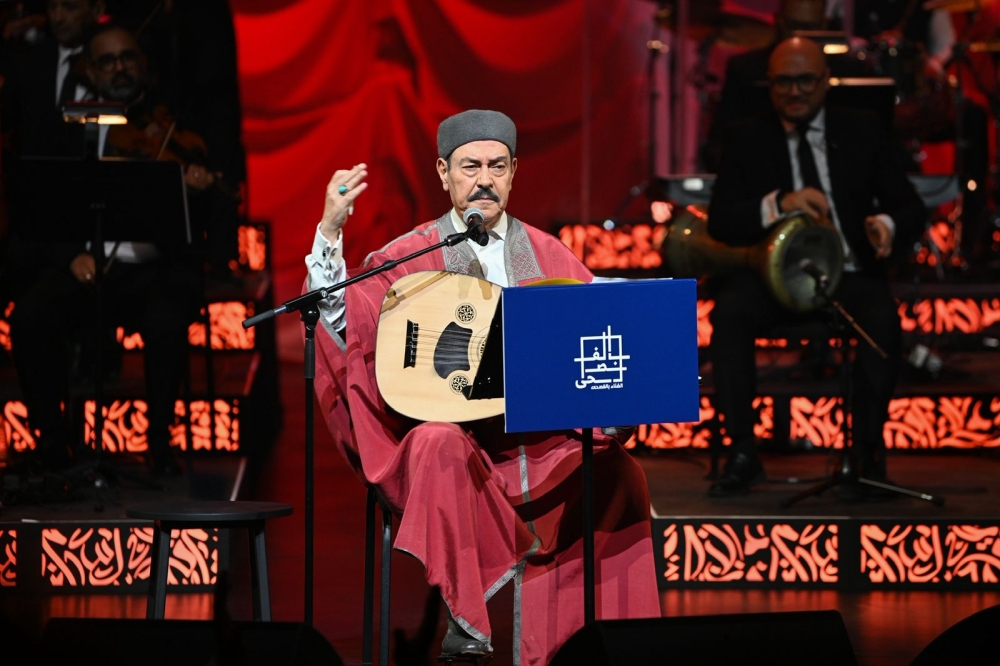
At a cultural and artistic evening at the King Abdulaziz Center for World Culture (Ithra), the renowned Tunisian artist Lotfi Bouchnak affirmed that the Arab audience possesses a refined artistic taste and a highly discerning critical sense that cannot be deceived. He emphasized that sincerity in performance is the only bridge connecting the artist and the listener. During the press conference following his participation in the "Singing in Classical Arabic" evening, Bouchnak stated, "Whatever comes from the heart reaches the heart," noting that the audience can easily distinguish between masterful singing imbued with soul and fleeting artistic works lacking depth. He added, "The audience cannot be fooled; they sense when you put your effort into singing with love and professionalism, and no detail escapes their notice.".
A rich artistic background and a deeply rooted message
Lotfi Bouchnak, sometimes called the “Pavarotti of Tunisia,” is one of the pillars of contemporary Arabic music. His artistic career spans decades, during which he has built a unique bridge between authentic Arabic musical heritage and current human and social issues. He is not merely a singer, but also a composer, oud player, and musicologist, lending his artistic vision considerable depth and weight. His remarks, delivered from Ithra, the prominent cultural center in Saudi Arabia, carry added significance, as the center is considered a leading platform for reviving heritage and promoting the fine arts in the region.
A call for young people to return to their musical roots
Bushnaq also addressed a direct message to the new generation of artists and lovers of classical Arabic music, urging them to arm themselves with authentic musical knowledge. He said, "I advise young people to learn and listen to the correct Arabic maqams: Bayati, Rast, Sikah…" He explained that mastering these maqams is the foundation that enables an artist to express themselves with sincerity and depth, transcending ready-made formulas and overused melodies. Bushnaq criticized the confinement of Arabic song to the theme of love and romance alone, adding, "Love is a great value, and God commanded us to love, but art is not limited to romance alone; rather, it is a vast space for expressing people's issues and the feelings of nations.".
The artist is a mirror of his time and the voice of his people
Bushnaq emphasized the social and cultural role of the artist, stressing that they must be "a witness to their time and the voice of their people." In his view, a true artist is one who honestly reflects reality, connecting the heritage of the past with the spirit of the present and a vision for the future. He added, "The artist is a mirror of their time, conveying the feelings and attitudes of the people." In closing, he affirmed the value of continuous learning as a fundamental characteristic of a true artist, citing the famous Egyptian saying, "The teacher dies while still learning." He explained that despite his long career, he still considers himself a student in the school of art, saying, "A true artist doesn't say, 'I've arrived,' but continues to learn and seeks out masters to benefit from them.".