A new report reveals that the devastating legacy of the nuclear testing continues to cast a long shadow over humanity, with more than 2,400 nuclear tests conducted worldwide causing the deaths of at least four million people from cancer and other chronic illnesses. These shocking figures, published in a report by the Norwegian People's Aid (NPA), highlight the ongoing suffering of entire communities and the harrowing stories of survivors that have remained hidden for decades.
Historical background: An arms race that left a devastating legacy
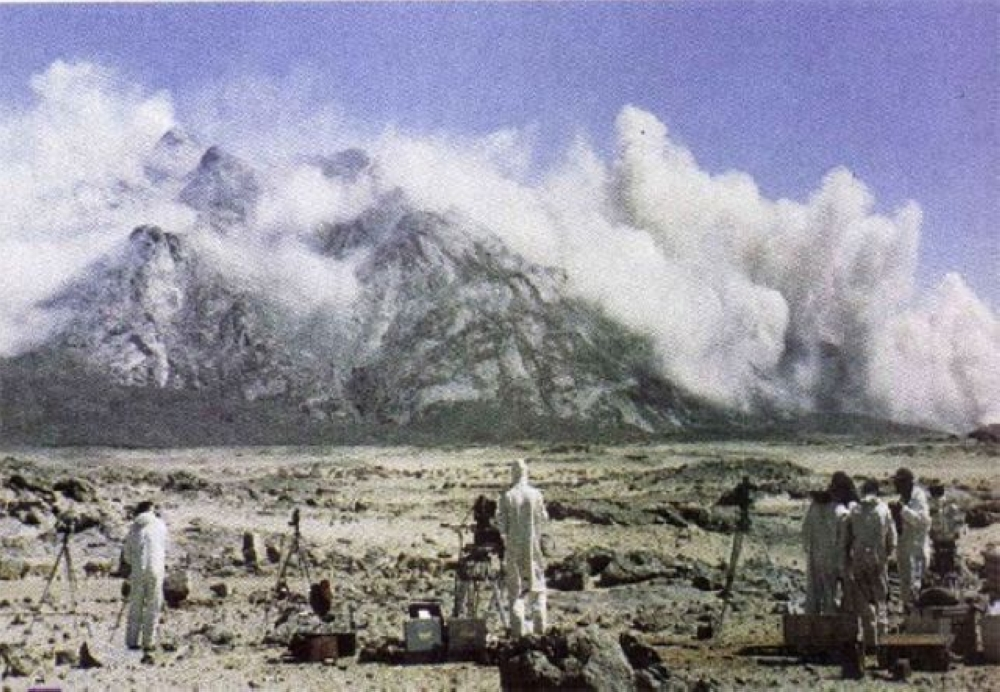
The nuclear age began with the American Manhattan Project during World War II, culminating in the first nuclear explosion in history, known as the Trinity test, on July 16, 1945. This event opened the door to a frenzied arms race during the Cold War between the United States and the Soviet Union, as each superpower sought to demonstrate its nuclear superiority. Between 1945 and 2017, nine nuclear states (Russia, the United States, China, France, the United Kingdom, Pakistan, India, Israel, and North Korea) conducted thousands of tests, both atmospheric and underground, releasing enormous quantities of radioactive material into the environment.
Forgotten victims and shocking stories
The report recounts harrowing human stories, such as that of Henamuera Cross, a Tahitian parliamentarian diagnosed with leukemia at the age of 24. She was only seven years old when France conducted its last of 193 nuclear tests in French Polynesia. “They poisoned us,” Cross says, noting that members of her family also suffered from cancer. Her story is a stark example of how communities near test sites were treated like “guinea pigs,” their health and safety disregarded for decades. The tragedy wasn't confined to Polynesia; it extended to other regions, such as the Marshall Islands, which experienced the 1954 US “Bravo” test, with a yield equivalent to 1,000 Hiroshima bombs, resulting in catastrophic radioactive contamination whose effects are still felt today.
An impact that spans generations and the planet
The impact of nuclear testing was not merely local, but global. The report stated that “every human being alive today carries radioactive isotopes from nuclear tests in their bones.” Tests conducted in the atmosphere up to 1980 alone are projected to cause an additional two million cancer deaths over time, as well as a similar number of premature deaths from cardiovascular diseases. Scientific evidence confirms that exposure to radiation, even in small amounts, damages DNA and increases the risk of serious illnesses, with children and women being the most vulnerable.
Ongoing secrecy and absent accountability
What exacerbates the tragedy is the culture of secrecy practiced by nuclear-armed states. In Kiribati, British and American studies on the health effects remain classified. In Algeria, France refuses to disclose the precise locations where radioactive waste was buried. Despite the immense damage, no nuclear-armed state has offered a formal apology, and compensation programs are often limited and aimed at reducing legal liability rather than effectively assisting victims. This neglect leaves affected communities struggling with deadly diseases and a contaminated environment without access to necessary healthcare or even the basic information to protect themselves.
In light of current geopolitical tensions and the possibility that some countries may resume nuclear testing, this report serves as a stark reminder that the long-term consequences of using these weapons are extremely serious, reinforcing international calls for a complete ban and ensuring that the tragedies of the past are not repeated.