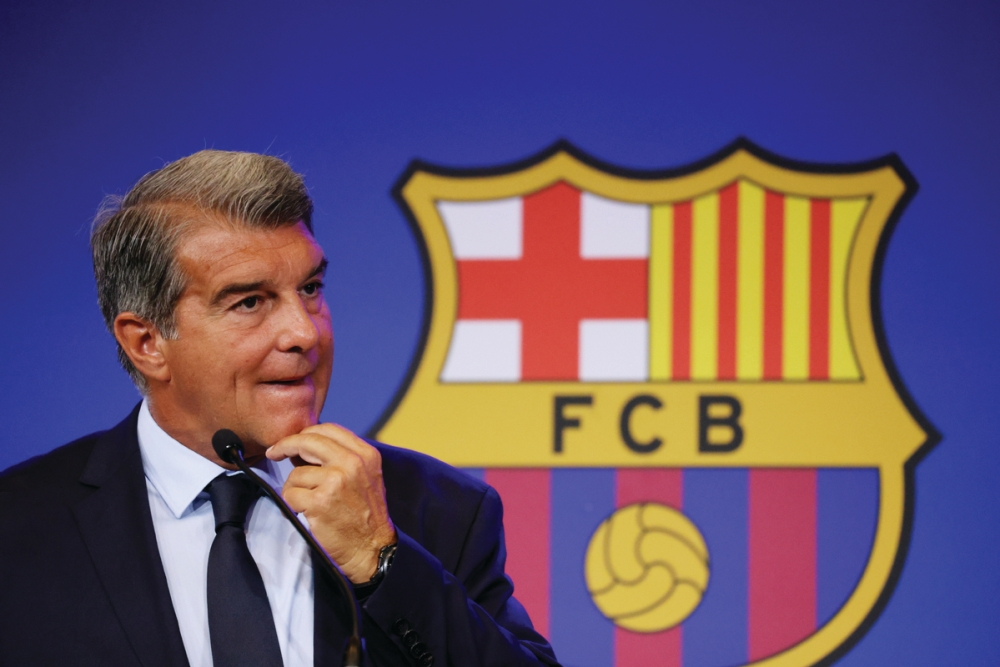
Barcelona president Joan Laporta has reignited the debate surrounding refereeing integrity in Spanish football with fiery remarks, accusing referees of a "consistent pattern" and a systematic attempt to harm the Catalan club. Laporta asserted that what his team is experiencing is no longer a series of isolated errors, but rather a recurring pattern aimed at hindering their progress.
In his remarks, Laporta explained that the adverse refereeing decisions against Barcelona were strikingly frequent and similar, reflecting a systematic approach to managing matches involving the club. He indicated that the recurrence of these incidents sends a clear message, considering the method employed to be "structurally weak" but one that is repeated time and again to harm the club.
A historical context of tension and mutual accusations
Laporta's comments come within a long history of tension between Spain's major clubs, particularly Barcelona and their arch-rivals Real Madrid, and the refereeing system. Accusations of refereeing bias have always been an integral part of the competitive narrative in La Liga. For decades, the two giants have traded accusations of benefiting from refereeing decisions, creating a chronic climate of distrust among fans and the media. These latest remarks are just the latest in a long series of controversies surrounding crucial matches, especially given the increasingly close competition and fierce battle for domestic titles.
The importance of statements in light of the “Nigeria case”
Laporta's accusations take on an additional and more complex dimension given the ongoing "Negrera affair" at the club. Barcelona is facing a judicial investigation into payments made to a company owned by José María Enríquez Negrera, the former vice-president of the referees' committee. While Barcelona insists these payments were for technical consultancy, critics see Laporta's current statements as contradictory, with some even viewing them as an attempt to deflect attention and create a "victim" narrative to counter the immense media and legal pressure the club is under. This timing makes it difficult to separate his accusations from the broader context of the case.
Expected impact on the Spanish sports scene
These statements are expected to increase the pressure on the Spanish Football Federation and its referees' technical committee. Domestically, these accusations could affect referees' performance in Barcelona's upcoming matches, as they will be under even greater scrutiny. They also fuel polarization among club supporters and heighten tensions before major clashes. Regionally and internationally, they damage the image of La Liga as a whole, raising questions about the transparency and integrity of refereeing in one of Europe's biggest leagues, which could negatively impact the reputation of Spanish football globally.
Laporta concluded his remarks sarcastically, implying that opposing players are adept at feigning injury to win penalties, saying, "They've learned to swim and they're good at jumping into the pool," a clear reference to diving to gain penalties and free kicks. With this, Laporta has opened a new chapter of controversy, placing the entire Spanish refereeing system under intense scrutiny.