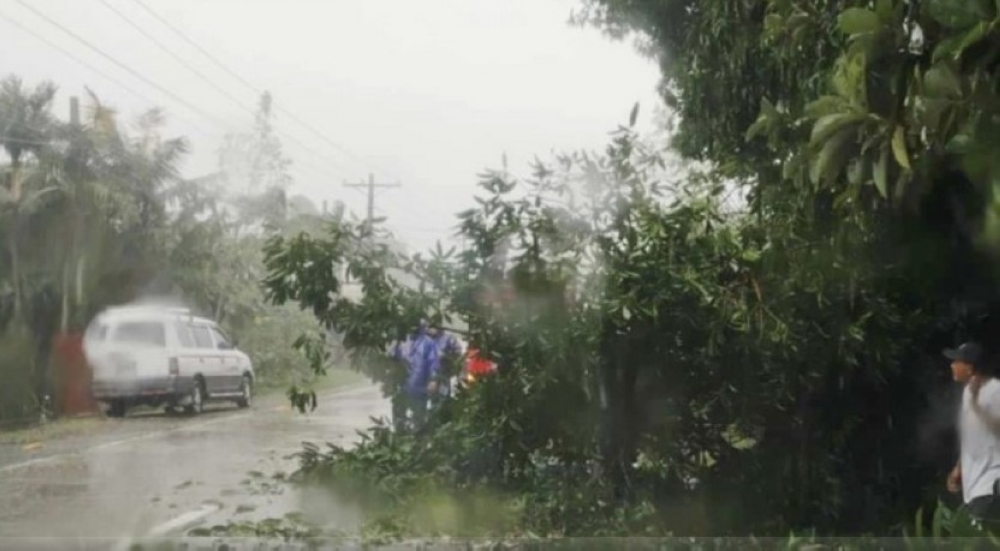
Two people were killed on Sunday in a landslide triggered by Tropical Storm Ada, which swept across large areas of southeastern Philippines, causing significant damage and loss of life. The Philippine National Disaster Risk Reduction and Management Council confirmed the incident, stating that the two victims died as a result of the landslide that struck parts of the Bicol region on Luzon Island.
Details of losses and material damages
The council explained in its official statements that Storm Ada not only caused landslides but also directly impacted the lives of thousands of residents. Initial statistics indicate that approximately 7,170 families were affected in the Bicol and Karaca regions. As a precautionary measure to ensure public safety, 82 people were evacuated from the most vulnerable areas, while flooding was recorded in 71 different locations due to the continued heavy rainfall associated with the storm.
The Philippines and the Typhoon Belt: A Geographical and Climatic Context
This incident occurs within a geographical context that makes the Philippines one of the most disaster-prone countries in the world. The Philippine archipelago, comprising more than 7,600 islands, lies within the Pacific Ring of Fire and also in the path of major tropical cyclones. The country experiences approximately 20 storms and typhoons annually, ranging in intensity from low-pressure systems to devastating cyclones, keeping infrastructure and residents on constant alert.
Landslide risks in mountainous areas
Landslides are among the most dangerous consequences of tropical storms in the Philippines, especially in mountainous areas with waterlogged soil, such as the Bicol region. Constant rainfall erodes the soil, causing massive chunks of mud and rock to slide down into residential areas and villages on the slopes. Local authorities are continuously developing early warning systems and identifying at-risk areas to minimize casualties; however, the rugged terrain and torrential tropical rainfall often pose significant challenges to rescue and evacuation efforts.
Expected economic and social impacts
In addition to the tragic loss of life, these disasters cast a long shadow over the local economy and the lives of residents. Floods and landslides often destroy crops, on which rural populations depend as a primary source of income, and also cut off main roads and damage electricity and communication networks. These circumstances necessitate concerted governmental and international efforts to provide urgent relief to those affected and rehabilitate the disaster-stricken areas to ensure a return to normalcy as soon as possible.