The Democratic Republic of Congo has been struck by a devastating humanitarian disaster, with at least 55 people killed in a landslide at a mining site in the eastern region of Rubaya. This incident adds another chapter to the series of tragedies plaguing the country's mining sector, particularly given the recent harsh weather conditions in the region.
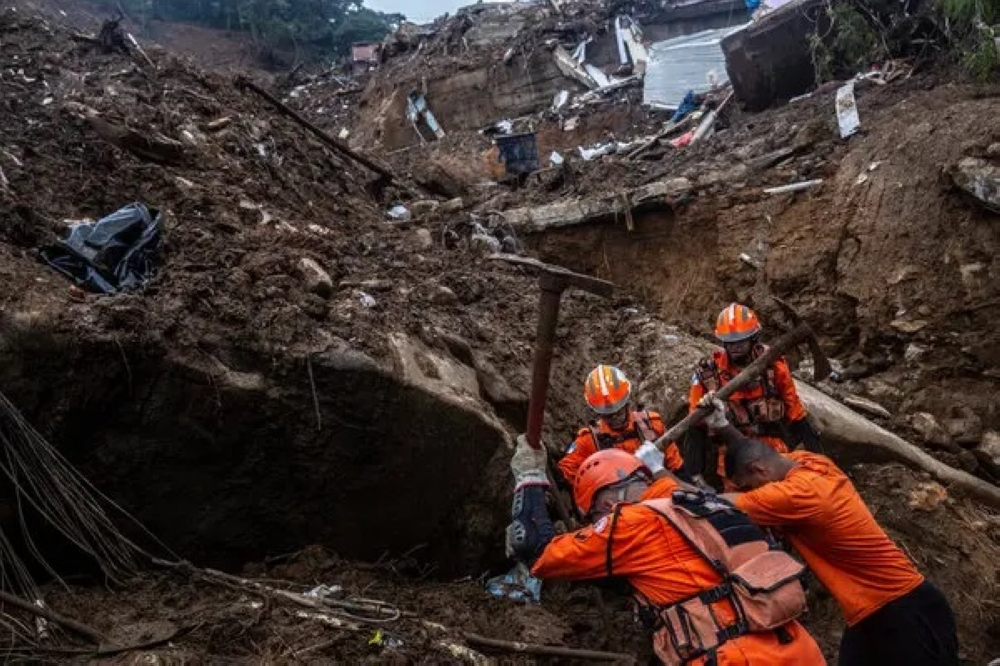
The Congolese News Agency reported that the accident occurred at the Gacombe mining site in the Rubaya region, an area renowned globally as a major source of the strategic mineral coltan. Heavy and continuous rains over the past few weeks had saturated the soil, causing it to become unstable and collapse suddenly onto the workers.
History of mining accidents and recurring landslides in Congo
This incident is not isolated, but rather part of a broader context concerning mining conditions in North Kivu province and the eastern regions of the country. The region's economy relies heavily on unregulated artisanal mining, where thousands of locals, known as "creuseurs," work in extremely dangerous conditions with no regard for occupational safety standards. The region's geography, with its mountainous terrain and fragile soil, coupled with long tropical rainy seasons, makes landslides in Congo a predictable and potentially deadly event, as the hand-dug tunnels are often unsupported and collapse easily when the ground becomes saturated with water.
Economic importance and impact of the disaster globally and locally
This disaster has dimensions that extend far beyond the tragic local human losses, reaching economic and regional repercussions. The Rubaya region is a vital artery for the supply of coltan and manganese, essential minerals for the global technology industry, including smartphones and electric vehicles. This incident once again highlights the ethical challenges in global supply chains and the urgent need to improve working conditions in mining operations. Locally, the loss of dozens of workers represents a severe blow to communities that rely entirely on this activity as their sole source of income, given the lack of alternative economic options. This exacerbates the already dire living and humanitarian crisis in a region plagued by ongoing insecurity.
In a related development, field reports indicated that the landslide buried dozens of miners and residents of the neighboring village of Jatabi. Local residents and officials stated that a large number remain missing, while rescue teams are facing immense logistical challenges due to continued rainfall and the rugged terrain, raising serious concerns that the death toll could rise in the coming hours.