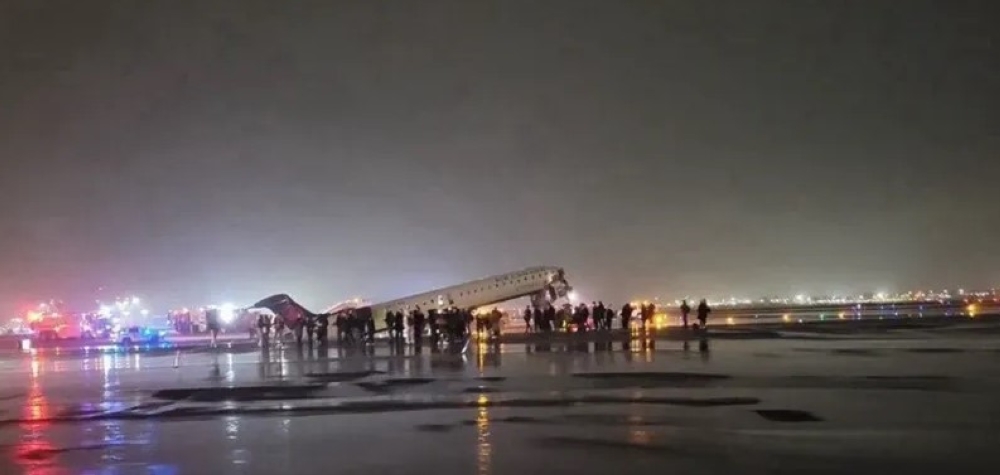
US authorities were mobilized Monday morning following an incident at LaGuardia Airport in New York City, where a passenger plane collided with a fire truck on one of the airport's busy runways. Fire and rescue teams rushed to the scene of the emergency, which caused widespread disruption to air traffic and flight cancellations.
A spokesperson for the New York City Fire Department confirmed in an official emailed statement that emergency crews "responded immediately to a reported incident between an Air Canada aircraft and an emergency vehicle on Runway 4." Despite the swift response, authorities initially did not specify the exact nature of the incident or the extent of the damage caused by the collision.
BREAKING: Several injuries reported after Air Canada plane collided with a firetruck at New York's LaGuardia airport runway pic.twitter.com/vBPtuPKrtT https://t.co/79rlYtBcQ7
— Mario Nawfal (@MarioNawfal) March 23, 2026
Details and repercussions of the LaGuardia airport incident on air traffic
The LaGuardia Airport incident disrupted flight schedules, with the US Federal Aviation Administration (FAA) issuing an emergency order to halt all departing and arriving flights to the airport. The FAA indicated a "high probability" of extending the flight suspension until the runway is cleared and operational safety is fully confirmed.
This crisis coincides with other challenges facing travelers, as passengers are forced to wait longer than usual to pass through security checkpoints. These delays are primarily due to the repercussions of the federal funding crisis, which has directly impacted staffing levels and security personnel. This was officially announced last week, further exacerbating overcrowding and frustration among travelers in airport terminals.
A history fraught with challenges in New York airport infrastructure
LaGuardia Airport is one of the most important and busiest airports in the United States, serving the greater New York area along with John F. Kennedy and Newark Liberty airports. Historically, the airport has faced numerous challenges related to limited space and runway congestion, prompting authorities to launch a multi-billion dollar development and modernization project in recent years to improve infrastructure and enhance safety standards.
Such ground incidents highlight the ongoing challenges faced by air and ground control at busy airports. The Federal Aviation Administration continuously evaluates runway intrusions to develop robust protocols that prevent aircraft from interfering with service and emergency vehicles, especially during peak times or complex weather conditions.
Expected impacts on the domestic and international aviation sector
The repercussions of the LaGuardia airport shutdown extend far beyond the local level, impacting the regional and international aviation network. Once a ground stop is announced at a vital hub of this size, a domino effect occurs, leading to delays and cancellations of hundreds of flights at other airports in the United States and Canada, causing financial losses for airlines and disrupting the travel plans of thousands of passengers.
The National Transportation Safety Board (NTSB) is expected to launch a comprehensive investigation to determine the root causes of the collision. The investigation will include a review of cockpit recordings and air traffic control communications, as well as an assessment of whether the fire truck driver and aircraft crew adhered to designated flight paths. The findings of such investigations typically lead to binding international recommendations aimed at improving safety standards in the global aviation industry and upgrading ground-based radar systems to prevent similar incidents in the future.