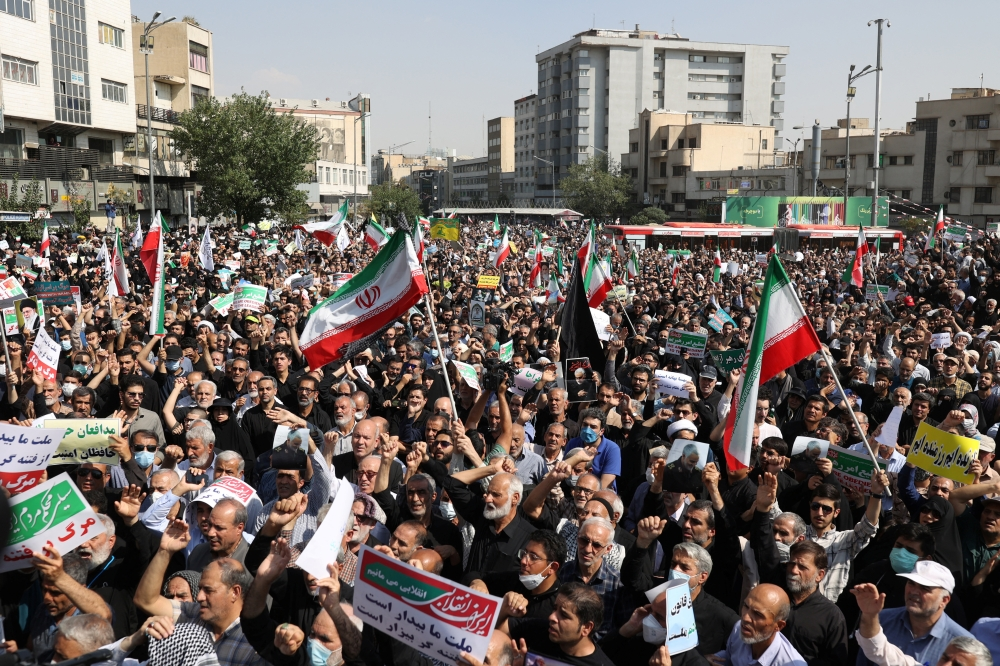
In a new escalation reflecting the depth of the crisis gripping Iran, seven Iranian Kurdish opposition parties have called for a nationwide general strike today, Thursday. This call comes as a strong and unified message of solidarity with the wave of popular protests that has swept the country for the past 11 days, spreading to several cities and provinces.
Unifying the Kurdish ranks
Hassan Rahman Panah, a member of the central committee of the Komala Party, an opposition Kurdish party based in northern Iraq, confirmed that the seven parties agreed on this step to "demonstrate the unified support of the people of Kurdistan for the legitimate struggle and courageous protests waged by the Iranian people against the policies of the Islamic Republic." Tehran considers Komala and several other Kurdish parties to be terrorist organizations and frequently accuses them of fomenting unrest in border regions.
The protests are spreading and the death toll is rising
The first spark of this wave of protests ignited on December 28, when merchants in Tehran's bazaar staged a rare strike—a move with deep historical significance given the bazaar's traditional role as a nerve center of the Iranian economy and politics. The protests quickly spread to other regions, with a notable concentration in the west of the country, home to large Kurdish and Lur populations.
Regarding casualties, the Norway-based organization Iran Human Rights reported that the security crackdown on the demonstrations resulted in the deaths of at least 27 protesters in eight different provinces, in addition to the arrest of more than 1,000 people. In contrast, the official Iranian narrative, as reported by its media outlets, states that only 15 people were killed, including members of the security forces.
Historical context and political significance
This call for a strike takes on particular significance given the geographical and political context; the Kurdish regions of Iran have long been a center of political and social activism. These protests are the largest and most organized since the widespread movement that erupted in September 2022 following the death of young Kurdish woman Mahsa Amini (Jina Amini) in the custody of the morality police, an incident that sparked unprecedented international and domestic outrage.
Observers believe that the Kurdish parties joining forces to call for a strike indicates an attempt to overcome party divisions and direct pressure towards the center in Tehran, taking advantage of the state of popular unrest.
Economic motives and demands for freedom
Rahman Panah pointed out that the crisis is not limited to the political sphere, but extends to include economic collapse and a loss of social trust. He stated, “The Islamic Republic cannot meet the demands of the protesters; its economy is collapsing, and its proxies in the region have been destroyed or significantly weakened.”.
According to the opposition, the demands of the Iranian street today can be summarized as “freedom, dignity, humanity, and peace,” slogans that reflect a deep desire for radical change that goes beyond mere economic reforms to reach the structure of the political system and public freedoms.