A leading role in global humanitarian work
The King Salman Humanitarian Aid and Relief Center, the humanitarian arm of the Kingdom of Saudi Arabia, continues to reaffirm its leading role on the international stage by providing vital assistance to affected communities around the world. Recent projects implemented by the Center in countries such as Yemen, Chad, Lebanon, and Burkina Faso exemplify the Kingdom's unwavering commitment to alleviating human suffering, regardless of geographical boundaries or other considerations.
Background and establishment of the center
The King Salman Humanitarian Aid and Relief Centre was established in May 2015 by order of the Custodian of the Two Holy Mosques, King Salman bin Abdulaziz Al Saud, to serve as a leading international center for coordinating and managing Saudi relief efforts. Operating according to universal humanitarian principles, with a focus on neutrality and transparency, the Centre has implemented thousands of projects in dozens of countries worldwide, targeting vital sectors such as food security, health, shelter, education, and water and sanitation.
Urgent food aid in Africa and Yemen
As part of its ongoing efforts to combat hunger and malnutrition, the center recently distributed various food aid packages in some of the most vulnerable areas. In Chad, the center distributed 1,407 food baskets in the Lake Chad region, benefiting more than 8,442 individuals from displaced families and host communities. This aid is part of a broader project to support food security in Chad, which faces complex humanitarian challenges due to climate change and regional conflicts.
In the same vein, the center's aid reached Burkina Faso, where 1,500 food baskets were distributed in the town of Komselga, benefiting approximately 9,000 people. This aid is of paramount importance in the Sahel region of Africa, which is suffering from food insecurity and escalating displacement.
In Yemen, which is experiencing one of the world's worst humanitarian crises, the center distributed 2,500 cartons of dates in the Tarim district of Hadramawt Governorate, benefiting 15,000 individuals from the poorest families and people with disabilities. Dates are a staple food and highly nutritious, and this distribution is part of Saudi Arabia's ongoing support for the Yemeni people.
Supporting vulnerable communities in Lebanon
The center's efforts were not limited to food aid; they also included livelihood support. In Lebanon, the center concluded the "Kanaf Lebanon 4" project, which aimed to empower the most vulnerable families to cope with difficult economic conditions. Through the project, 11,700 shopping vouchers were distributed, enabling orphans, people with disabilities, and impoverished families to purchase winter clothing, thus helping to preserve their dignity and meet their basic needs.
Strategic partnerships to enhance humanitarian impact
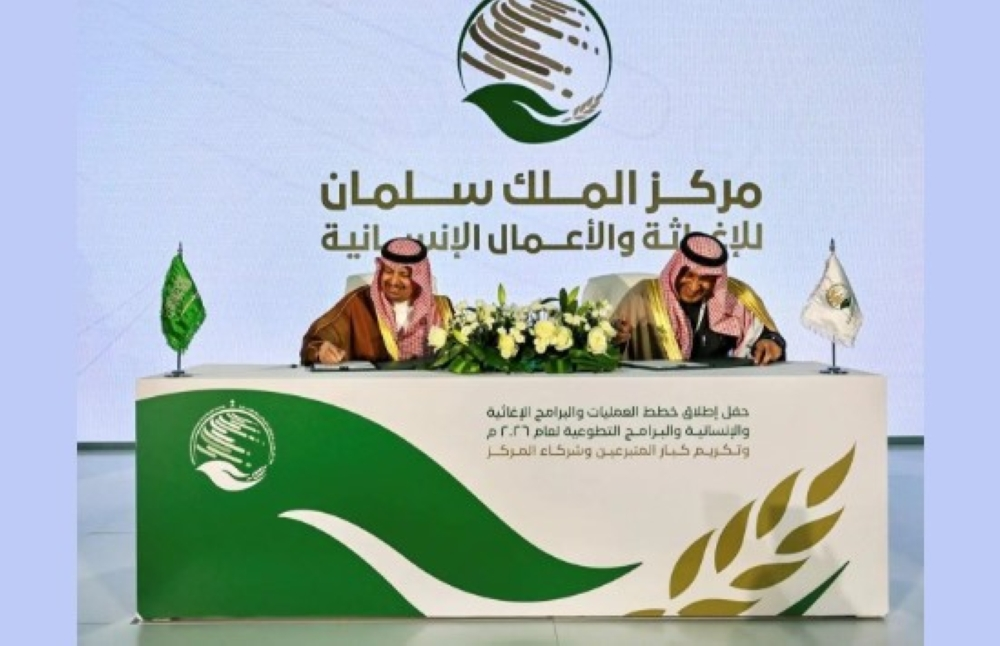
In addition to its direct field operations, the King Salman Humanitarian Aid and Relief Center is committed to building strategic partnerships with civil society organizations to enhance the impact of its programs. In this context, the Center recently signed several memoranda of understanding with specialized Saudi associations, including the Iqraa Educational Association for the Empowerment of People with Disabilities, the Charitable Association for the Care of Rheumatism Patients, the Family Protection Association for Combating Domestic Violence, and the La Bas Health Association for providing voluntary healthcare. These partnerships reflect a comprehensive and integrated approach to humanitarian work, combining emergency relief with sustainable development and local capacity building.