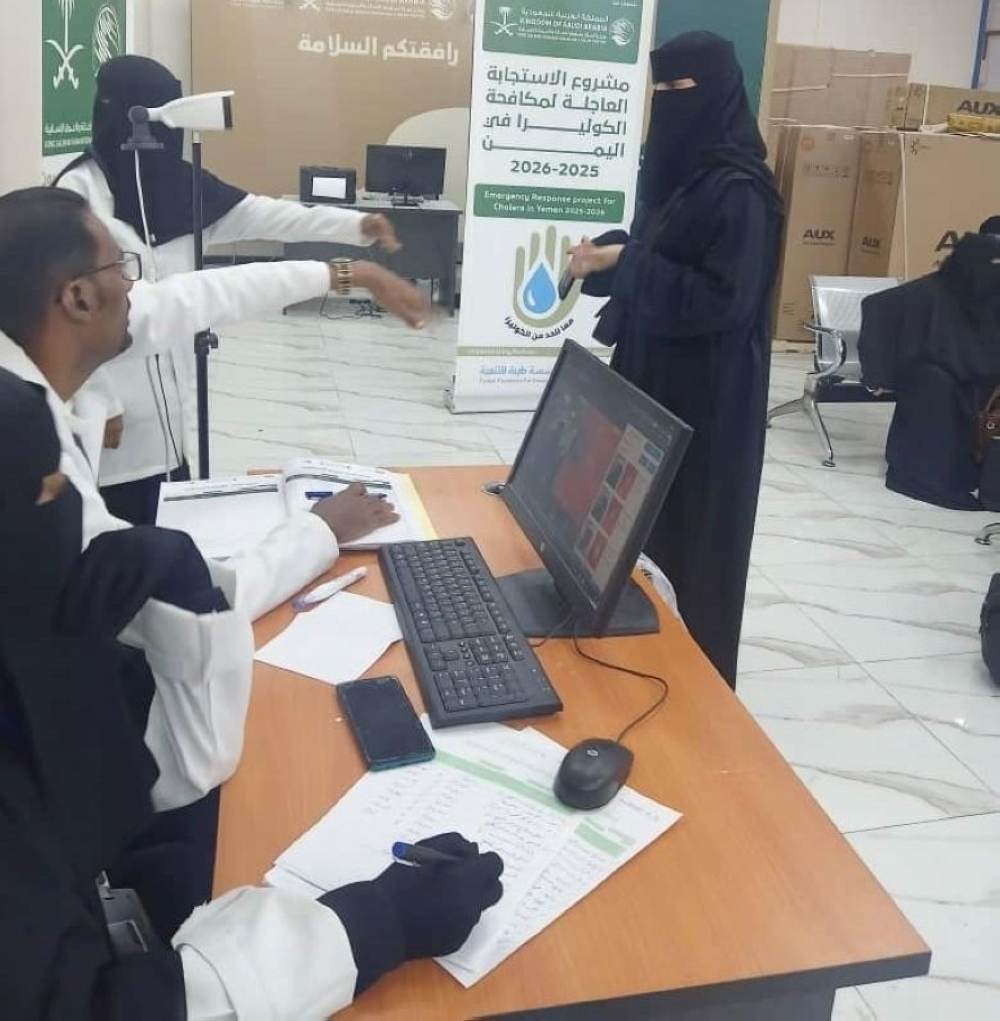
As part of ongoing humanitarian efforts to support Yemen’s struggling health sector, the Emergency Response Project to Combat the Cholera Outbreak , implemented with support from the King Salman Humanitarian Aid and Relief Centre, announced that it provided medical and preventative services to 10,353 individuals during the last week of January 2024. These urgent interventions come at a critical time, as Yemen continues to face severe health challenges exacerbated by years of crisis.
The services provided included comprehensive and thorough screening of travelers at key entry points, including Al-Rayyan and Seiyun airports and the Al-Wadi'ah, Al-Hafiyah, and Razih land border crossings, with the aim of early detection of cases and preventing the spread of infection between governorates. These efforts resulted in the identification of one suspected case, underscoring the importance of health monitoring at border crossings. In addition to screening, 223 health awareness and education sessions , benefiting 4,510 individuals, to raise community awareness about cholera prevention methods and the importance of personal and public hygiene.
Context of the crisis: Cholera as one of the most serious consequences of the conflict in Yemen
The cholera outbreak in Yemen was not a coincidence, but a direct result of the humanitarian crisis that has plagued the country for years. The conflict has led to the near-total collapse of basic infrastructure, including water and sanitation networks and health facilities. This tragic reality has created a fertile ground for the spread of waterborne diseases, most notably cholera. Since 2016, Yemen has experienced one of the worst cholera outbreaks in modern history, with the World Health Organization recording millions of suspected cases and thousands of deaths, placing immense pressure on a health system already suffering from severe shortages of resources, medicines, and medical personnel.
Project importance and expected impact
The project targets the areas most affected by the epidemic and aims to reduce infection and mortality rates and limit the spread of the disease through a multi-pronged strategy. This strategy includes forming specialized medical surveillance teams and supporting health facilities with essential medical supplies such as intravenous and oral rehydration solutions, antibiotics, protective equipment, and sterilization materials. The project also works to expand the bed capacity of cholera treatment centers to accommodate the increasing number of cases.
At the local , these efforts directly contribute to saving lives and alleviating the burden on hospitals and health centers. Regionally and internationally , controlling the outbreak in Yemen is a vital step to prevent its spread to neighboring countries and contributes to strengthening global health security. This aid, which comes as an extension of the humanitarian role played by the Kingdom of Saudi Arabia through its humanitarian arm, the King Salman Humanitarian Aid and Relief Center, stands out as a key element in responding to the world’s largest humanitarian crisis and reaffirms the commitment to supporting the brotherly Yemeni people in overcoming their health crisis.