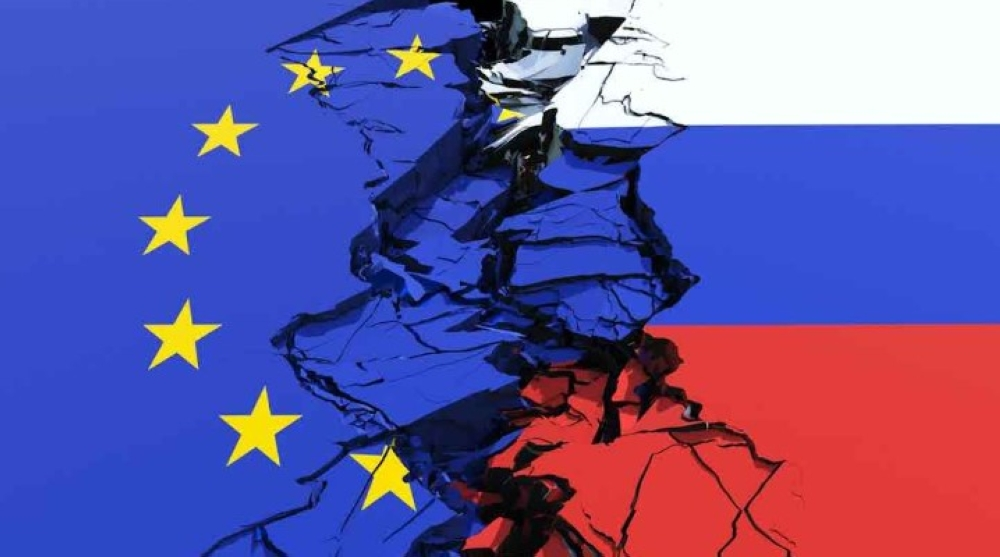
In a significant development that could reshape the diplomatic landscape in Europe, the Kremlin welcomed on Friday the signals emanating from several key European capitals, most notably Rome, Paris, and Berlin, indicating a willingness to resume severed channels of dialogue with Moscow. Russian presidential spokesman Dmitry Peskov described these moves as a "positive development," suggesting they could reflect a return to a European strategic vision that views dialogue as essential for ensuring stability.
Russian welcome and a split in the Western camp
Peskov told reporters that Moscow had taken note of recent statements by European leaders, saying, "If this truly reflects the Europeans' strategic vision, it is a positive development in their position." He added that the calls from Paris, Rome, and Berlin for dialogue with Russia to ensure European security were entirely consistent with Moscow's perspective.
In contrast, a clear division emerged in Western positions, with the Kremlin strongly criticizing the British stance, describing it as "destructive." London remains committed to a hardline approach, with a Downing Street spokesperson confirming that Prime Minister Keir Starmer has no intention of engaging with Russian President Vladimir Putin. The spokesperson emphasized that the priority is to support Ukraine militarily and politically to achieve a "just peace" from a position of strength, arguing that Moscow has shown no genuine intention of ending military operations.
Historical background: From partnership to rupture
These statements gain significance from the complex historical context of Russian-European relations over the past three years. Since the start of the Russian military operation in Ukraine in February 2022, relations have deteriorated to an unprecedented low, reaching their lowest point since the Cold War. The European Union has imposed successive rounds of harsh economic sanctions, expelled hundreds of diplomats, and frozen strategic energy projects.
Throughout this period, Europe adopted a policy of complete diplomatic isolation of Moscow, considering any dialogue not preceded by a Russian withdrawal as a reward for the Kremlin. Therefore, the current talk of "resuming dialogue" represents a qualitative shift in European political discourse, perhaps indicating a growing conviction among some leaders that military solutions alone are no longer sufficient to end the conflict or guarantee the continent's security.
European voices are calling for political realism
These developments come amid a series of statements from prominent European leaders. Italian Prime Minister Giorgia Meloni recently called for the appointment of a special envoy and spoke of the need for dialogue. French President Emmanuel Macron also indicated the benefit of resuming talks with Putin within the framework of a comprehensive dialogue, while German Chancellor Friedrich Merz asserted that finding a long-term balance with Russia is essential for the future of the European Union.
Expected effects of the return of dialogue
This potential shift carries far-reaching strategic implications:
- On a regional level: Resuming dialogue could pave the way for ceasefire negotiations, thus alleviating the military and economic drain the continent is suffering from.
- On the international level: This rapprochement may ease global polarization, but at the same time it may provoke other allies such as the United States, Britain and the Baltic states, which adopt a more hardline stance.
- Energy security and the economy: Observers believe that the economic pressures and the energy crisis that Europe has suffered have been a major impetus for reconsidering the feasibility of a complete break with the large eastern neighbor.